
You work hard for your money. You pay your bills, cover your rent or mortgage, and maybe put a little aside in a savings account. But if that money just sits there, it’s actually losing value over time thanks to inflation. That $100 in your piggy bank today might only buy $95 worth of goods next year. what is investing
This is the problem every American faces: How do you make your money grow instead of shrink? The answer, for millions of people, what is investing.
If you are new to personal finance, the word “what is investing” might sound complicated or risky—something best left to Wall Street traders in New York. But the truth is, investing is simply a tool. A powerful tool that can help you buy a house, retire comfortably, or achieve financial independence.
Here is the simplest way to look at it: what is investing is the process of using your money today to try to generate more money in the future.
What Is Investing in Simple Terms?

Imagine you buy a tomato plant for $5. You water it, care for it, and wait. Over the summer, that plant grows dozens of tomatoes. You sell those tomatoes at a farmer’s market for $20. You turned $5 into $20.
That is investing.
In the financial world, instead of buying a plant, you are buying assets—things like a small piece of a company (stocks) or a piece of a building (real estate). You let that asset grow in value over time, or it pays you cash along the way.
what is investing Different from Saving?
Saving is setting money aside in a safe place, like a bank account. You do this for short-term goals or emergencies. It is safe, but it doesn’t grow much.
Investing is using that money to buy assets that have the potential to increase in value. It comes with some risk, but it offers the opportunity for higher returns.
what is investing Actually Work? (The Mechanics)

To understand investing, you need to understand the three main ways you can make money. We call these “returns.”
1. Capital Appreciation (Buy Low, Sell High) what is investing
This is the most well-known concept. You buy an asset, wait for its price to go up, and then sell it for a profit.
- Real-world example: You buy a vintage baseball card for $50. Ten years later, it’s rare, and someone buys it from you for $200. You made a profit of $150.
2. Income (Getting Paid to Own) what is investing
Sometimes, the asset itself pays you money just for owning it. This is called “income.”
- Dividends: If you own a share of a company (stock), that company might share its profits with you by sending you a cash payment, usually every three months. Many American retirees rely on dividend checks for income.
- Interest: If you lend your money to a company or the government (by buying a “bond”), they pay you interest regularly until they pay you back.
3. Compounding (The Eighth Wonder of the World)
Albert Einstein reportedly called compound interest the most powerful force in the universe. Compounding is when your money earns money, and then that earned money earns its own money.
- Simple Example: You invest $1,000, and it grows by 10% this year. You now have $1,100. Next year, if it grows by another 10%, you don’t just make $100 again. You make $110 (10% of $1,100). You are earning “interest on your interest.”
- Over 30 or 40 years, this turns small, regular investments into large sums of money.
what is investing Can You Invest In? (The Basics)
As a beginner in the USA, these are the main investment types you will hear about.
Stocks (Equities)
When you buy a stock, you are buying a tiny piece of a company like Apple, Coca-Cola, or Walmart. If the company does well, the stock price usually goes up. Stocks can be volatile (prices go up and down a lot), but over long periods, they have historically offered the highest returns.
Bonds (Fixed Income) what is investing
When you buy a bond, you are lending money. You might lend it to the U.S. Government (a Treasury bond) or a big corporation. They promise to pay you back on a specific date and send you interest payments along the way. Bonds are generally considered safer than stocks but usually offer lower returns.
Mutual Funds
A mutual fund is like a big basket. Instead of buying just one stock, you put your money into a fund that pools money from thousands of investors and buys a bunch of different stocks or bonds. This gives you instant diversification (you aren’t relying on just one company).
Exchange-Traded Funds (ETFs)
ETFs are very similar to mutual funds—they are baskets of investments. The main difference is that ETFs trade on stock exchanges just like individual stocks. They are often very affordable and are a favorite starting point for beginners because they offer instant diversification.
Real Estate what is investing
You can invest by buying physical property (like a rental house) or by buying Real Estate Investment Trusts (REITs), which are companies that own real estate and pay out dividends to shareholders.
How to Start Investing: A Beginner’s Roadmap

If you are ready to start, you don’t need a lot of money. Thanks to modern apps and brokerages, you can start with as little as $5. Here is the smart way to begin.
Step 1: Secure Your Financial Foundation
Before you invest a single dollar, make sure you have:
- An emergency fund (3–6 months of living expenses) in a regular bank account.
- Paid off high-interest debt (like credit card debt). The interest you pay on debt is often higher than what you’d earn investing.
Step 2: Define Your Goal
Why are you investing?
- Retirement (Long-term): You have 20+ years. You can take more risk.
- House Down Payment (Medium-term): You have 5 years. You might want a mix of safer investments.
Step 3: Choose an Account Type
In the U.S., where you invest is just as important as what you invest in. You need an account.
- 401(k): Offered by your employer. You invest pre-tax money, and sometimes your company matches your contributions (free money!).
- IRA (Individual Retirement Account): You open this yourself. A “Roth IRA” is very popular for beginners because you pay taxes now, and all the growth is tax-free when you retire.
- Taxable Brokerage Account: A standard account with no special tax benefits. You can withdraw money anytime without penalties.
Step 4: Start Small and Stay Consistent
You do not need to be a stock market genius. A great strategy for beginners is Dollar-Cost Averaging. This means investing a fixed amount of money at regular intervals (like $50 every Friday), no matter what the market is doing. This takes the emotion out of investing and builds a powerful habit.
Understanding the Risks
To be a smart investor, you must understand risk. There is no such thing as a high return with no risk. If someone promises you that, it is a scam.
- Market Risk: The value of your investments can go down because the entire stock market is struggling.
- Inflation Risk: The risk that your money doesn’t grow fast enough to keep up with the rising cost of living.
- Loss Aversion: The biggest risk for many beginners is selling their investments in a panic when prices drop. If you sell during a crash, you lock in your losses.
The goal is not to avoid risk, but to manage it. You manage risk by diversifying (not putting all your eggs in one basket) and by investing for the long term.
Common Mistakes Beginners Make
Avoiding these pitfalls will put you ahead of the curve.
- Trying to time the market: No one knows if the market will go up or down tomorrow. Don’t try to guess.
- Investing in things you don’t understand: If you can’t explain what a company does or how it makes money, don’t buy the stock.
- Checking your portfolio every day: The stock market goes up and down daily. Watching it too closely causes stress and leads to bad decisions.
- Falling for “Hot Tips”: Ignore tips from friends, family, or strangers on social media about the next “sure thing.” Do your own research.
The Long-Term Perspective: Patience Pays insurens
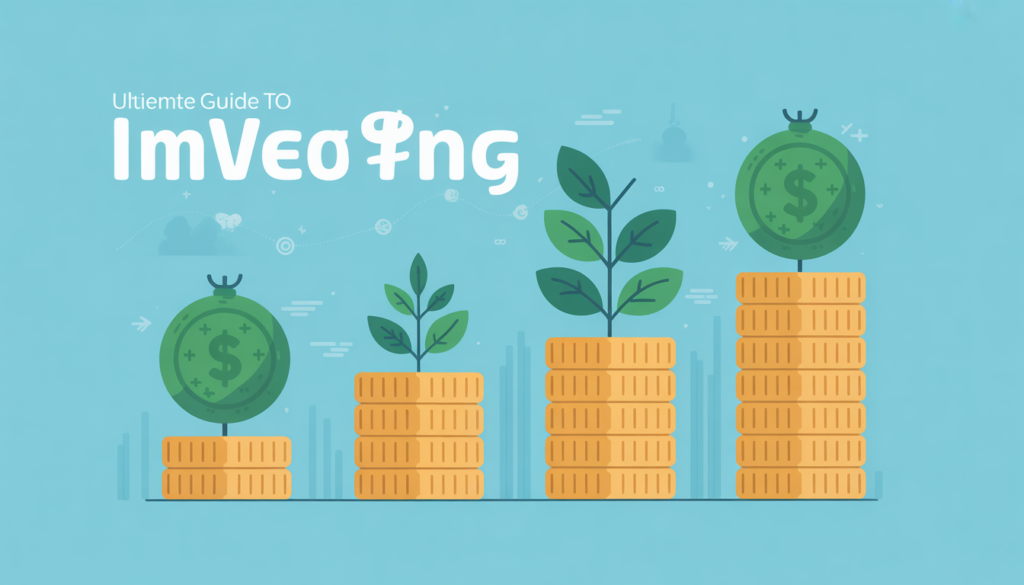
The most successful investors are not the smartest people in the room; they are the most patient. Historically, the U.S. stock market has trended upward over long periods. It goes through cycles—booms and busts—but the general direction has been growth.
Think of investing like planting an oak tree. You plant the seed, you water it, but you don’t dig it up every week to see if the roots are growing. You let time do the work. Your financial future works the same way.
Conclusion
Investing is not about gambling or getting lucky. It is a deliberate strategy to build wealth over time. It is how you make your money work for you so you don’t have to work for money forever.
Start with the basics, focus on the long term, and stay consistent. Whether you are saving for a comfortable retirement in Florida or just want a little extra financial security, investing is the path that gets you there.
Frequently Asked Questions (FAQ)
1. How much money do I need to start investing?
You can start with very little. Many apps and brokerage platforms allow you to buy fractional shares of ETFs and stocks. You can open an account and begin investing with as little as $5 or $10.
2. Is investing safe? Can I lose all my money?
Investing involves risk, and you can lose money, but if you are diversified (owning many different companies via an ETF) you are very unlikely to lose all your money. The risk of losing money decreases significantly the longer you stay invested.
3. What is the difference between a Traditional 401(k) and a Roth IRA?
This is a classic U.S. tax question. A Traditional 401(k) lets you invest money before paying taxes, lowering your tax bill now, but you pay taxes when you withdraw in retirement. A Roth IRA uses money you already paid taxes on, but all withdrawals in retirement are tax-free. Many young people prefer the Roth IRA because they expect to be in a higher tax bracket later in life.
4. Should I wait until the market crashes to start?
No. This is called “timing the market,” and it is nearly impossible to do successfully. If you wait, you might miss the best days of growth. A better strategy is to start now and invest consistently. If the market drops, your next scheduled purchase will simply buy more shares at a lower price.
Table of Contents

What Happens to Stocks During a Market Crashs?
Let’s be honest: turning on the news and hearing that the stock market crashs is “plunging” or “in the red” […]
Market Volatility Explained: Easy steps & Why It Matters
If you’ve just started checking your investment app or your 401(k) balance, you might have noticed that some days the […]
Stock Market Myths Beginners Still Believe Easy (Explained)
Many Americans want to start investing but hesitate because of things they’ve heard about the stock market. Some believe you […]



Pingback: How to Research a Stock Before Investing: 1 Beginner’s Guide