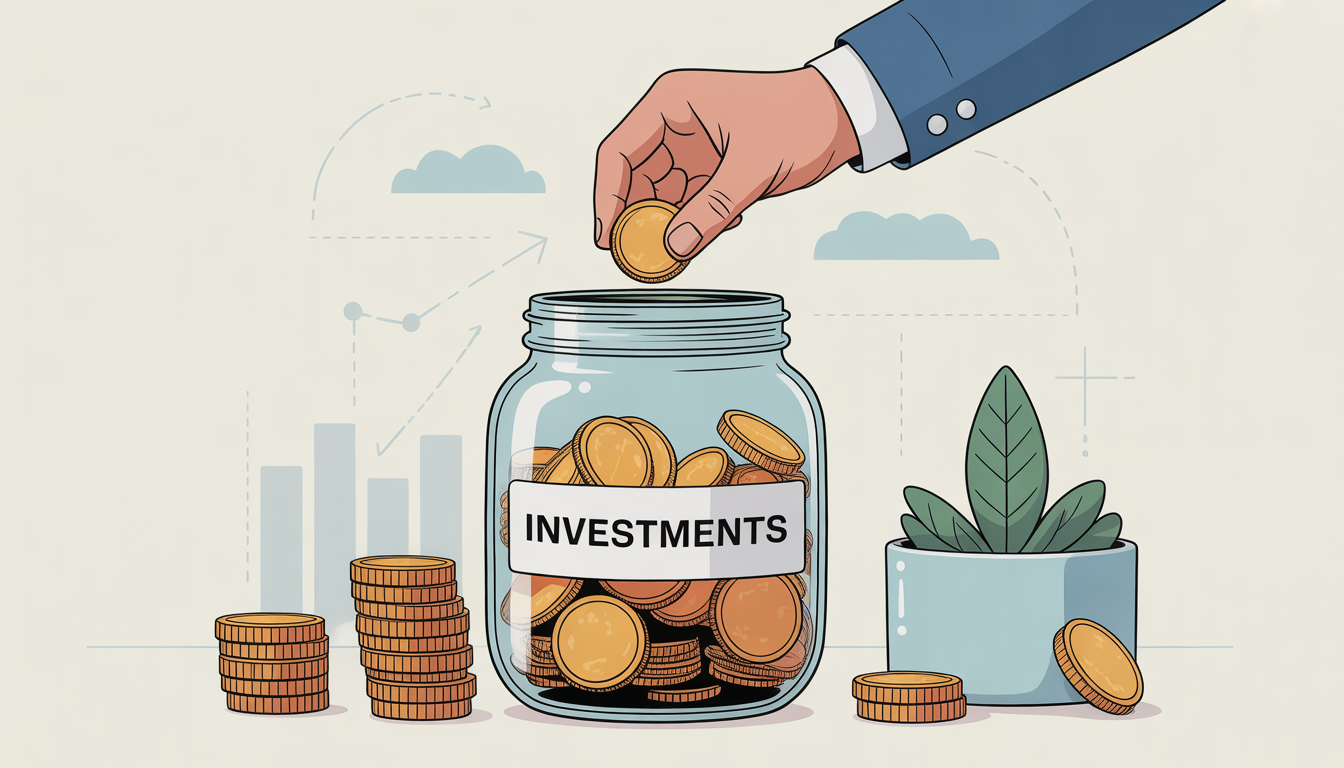
I remember staring at my bank balance about eight years ago, convinced I didn’t have “enough” money to start investing. I thought you needed thousands of dollars, a Wall Street connection, and maybe a fancy calculator just to get in the door. So I just… didn’t do anything. I let that money sit in a checking account earning basically nothing while my friends who started earlier watched their money grow.
Turns out, I wasn’t alone in that hesitation. A lot of people wait because picking a brokerage feels like this huge, permanent decision. Like you’re choosing a financial life partner.
But here’s the thing nobody told me: your first brokerage account doesn’t have to be your forever brokerage. You can switch later if you want. The important part is just starting somewhere.
And the good news? It’s never been easier to find the best brokerage for beginners. The barriers that used to exist—high minimums, ridiculous trading fees, complicated platforms—they’re mostly gone now. The landscape has shifted completely.
What Makes a Brokerage Actually Good for Beginners?
Before I get into specific options, let’s talk about what you should actually look for. Because “best” means different things to different people.
For someone just starting out, the most important features are usually:
Zero account minimums. This is huge. You shouldn’t need $500 or $1,000 just to open an account. Some of the best platforms let you start with whatever you have—even $50.
free finance calculator
Commission-free trading. Most major brokers have eliminated trading fees for stocks and ETFs. If a platform is still charging you to buy basic investments, that’s a red flag.
Fractional shares. This is probably the single most important feature for beginners. Let me explain: if a stock costs $500 per share, and you only have $100 to invest, fractional shares let you buy 0.2 shares instead of waiting until you have enough for a full share. It’s a game-changer for people starting small.
Educational resources. I can’t tell you how many times I’ve opened a platform and felt completely lost. The best beginner-friendly brokers have clear tutorials, articles, and sometimes even practice accounts where you can mess up without losing real money.
A clean, intuitive interface. You don’t need fancy charts and real-time data streams when you’re just getting started. You need something that doesn’t make you feel stupid.
So Who Actually Makes the Cut?
Fidelity: The Old Faithful
If I had to recommend one platform to most beginners, it would probably be Fidelity. I know that’s not a sexy choice. It doesn’t have that startup vibe. But hear me out.
Fidelity is massive. They manage something like $15 trillion in assets. That scale matters because they have the resources to invest in good technology, quality customer support, and educational content.
What I really like about Fidelity for beginners is the combination of zero account minimums, fractional shares (you can start with as little as $1), and their learning center. It’s all there without feeling overwhelming. You can open an account, link your bank, and buy your first fractional share of an S&P 500 ETF in maybe 10 minutes.
One thing that surprised me about Fidelity: their customer service is genuinely helpful. When I had a question about setting up automatic contributions, I called and got an actual person who walked me through it without making me feel dumb.
Charles Schwab: The Runner-Up
Schwab is another industry heavyweight that does most things right. They also have $0 account minimums and commission-free trading.
What sets Schwab apart for beginners is the education and support. Their website has this “Learn” section that’s packed with beginner-friendly content. And they have 24/7 phone support, which sounds like a small thing until you’re trying to figure something out at 10 PM on a Sunday.
The “Schwab Starter Kit” is worth mentioning too—if you open an account and deposit at least $50, they’ll add $50 of free stock to your account. It’s not life-changing money, but it’s a nice little incentive to get going.
One downside: Schwab’s fractional share program (called “Stock Slices”) only works for S&P 500 stocks, starting at $5 per slice. For ETFs, you can only buy whole shares. So if you want to put $20 into a particular ETF each week, it’s trickier.

SoFi: The Mobile-First Option
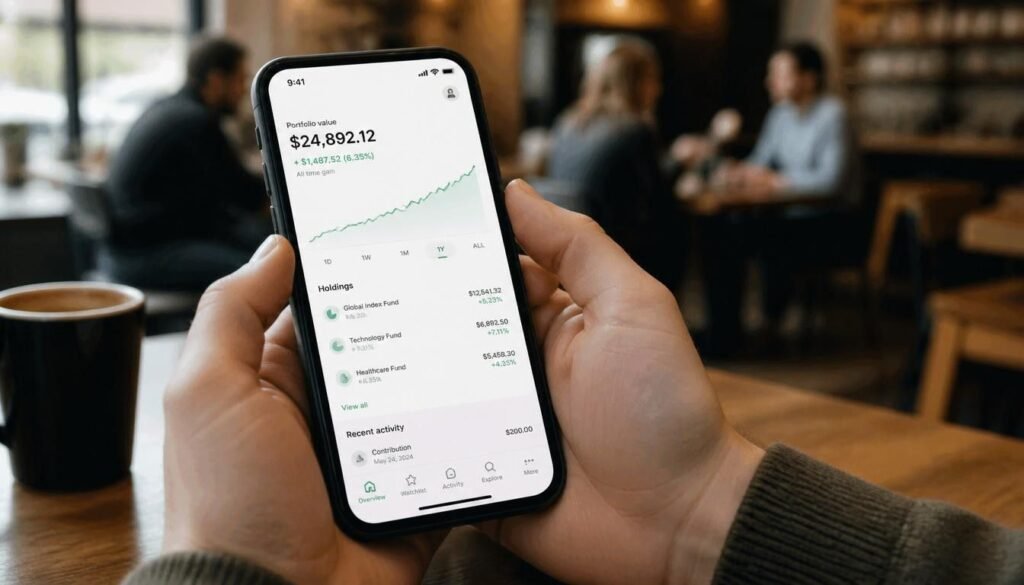
SoFi Active Investing gets mentioned as the best brokerage for beginners in some reviews, and I see why. If you’re comfortable doing everything on your phone—managing your checking account, savings, and investments all in one place—SoFi is extremely convenient.
The interface is clean, modern, and genuinely hard to get lost in. You can open an account in minutes, there’s no minimum, and fractional shares start at just $5.
SoFi also offers a nice perk: a 30-minute consultation session for standard members. For someone who’s totally new to this, having that kind of guidance can make a huge difference.
E*TRADE: The Mobile Experience
ETRADE is often considered one of the best for mobile investing, with two different apps depending on your needs. The basic app is clean and straightforward for beginners, while the Power ETRADE app offers more advanced tools.
Their educational content is solid, and they have 24/7 customer support. One catch: fractional shares aren’t available for direct stock purchases at E*TRADE—you can only get them through their robo-advisor or dividend reinvestment. So if fractional shares are important to you (and they probably should be), keep that in mind.
What About Interactive Brokers and Robinhood?
Interactive Brokers (IBKR) has incredible educational resources through their IBKR Campus platform. Courses, webinars, podcasts—it’s all there. But the main platform can feel overwhelming if you’re just starting out. They’ve introduced IBKR GlobalTrader as a simpler option, but it’s still not as beginner-friendly as Fidelity or Schwab.
Robinhood is the app that made investing feel accessible to a whole generation. The interface is dead simple, which is great for complete beginners. But here’s my concern: the simplicity can sometimes encourage trading rather than long-term investing. It gamifies the experience in a way that might not be best for someone building wealth.
The Thing Nobody Tells You About “Choosing the Best Broker”
Here’s a confession: when I finally opened my first account, I spent way too long researching. I read reviews, compared fee structures, and still felt paralyzed.
I should have just picked one and started.
Because the truth is, among the major players—Fidelity, Schwab, Vanguard, SoFi, E*TRADE—you’re not going to make a disastrous decision. They’re all regulated, all SIPC-insured, and all offer commission-free trading for basic investments.
The difference between them is relatively small for a beginner. What matters more is that you actually start investing and build the habit of putting money aside consistently.
What I’ve learned over the years is that the best brokerage for beginners is the one that gets you to actually invest. Maybe that’s Fidelity because you already have a 401(k) there and it’s convenient. Maybe it’s SoFi because you like having everything in one app. Maybe it’s Schwab because your friend uses it and can show you around.
Whatever gets you to take that first step.
A Few Things to Keep in Mind
Before you open an account, there are a couple of things worth considering:
Don’t chase hot stocks. It’s tempting to buy whatever stock everyone’s talking about. But for most beginners, the better move is starting with index funds or ETFs—baskets of stocks that provide instant diversification without requiring you to pick winners and losers.
Investing is a marathon, not a sprint. The money you put in the market should be money you don’t need for at least a few years. Markets go up and down. If you panic and sell every time the market dips, you’re going to have a bad time.
Watch out for hidden fees. Most platforms are commission-free on stocks and ETFs, but some charge for options trades, mutual funds, or account transfers. Read the fine print.
The platform you start with doesn’t have to be your forever platform. You can transfer accounts later if you find something better. It’s a bit of paperwork, but it’s not a permanent commitment.
Getting Started: The Actual Steps
- Pick a platform. Fidelity, Schwab, SoFi—choose whichever feels right to you.
- Open an account online. You’ll need your Social Security number, address, and some basic information.
- Link your bank account for transfers.
- Fund the account. Start with whatever amount feels comfortable—even $50 is fine.
- Make your first investment. Buy a broad market index fund or ETF.
- Set up automatic contributions if you can. Investing small amounts regularly works better than trying to time the market.
That’s it. The whole process takes maybe 20 minutes once you’ve made a decision.
Do I need a lot of money to start investing with the Best Brokerage for Beginners
Nope. Most top beginner-friendly brokers have zero account minimums and allow fractional shares, so you can start with as little as $1 to $50.
Are online brokerages safe for beginners?
Yes, the major brokers like Fidelity, Schwab, and Vanguard are SIPC-insured, meaning your securities are protected up to $500,000. They’re heavily regulated by the SEC and FINRA.
What’s the difference between a brokerage account and a Roth IRA?
A regular brokerage account has no restrictions but no tax advantages. You can withdraw anytime. A Roth IRA has tax-free growth and withdrawals in retirement, but you generally can’t withdraw earnings before age 59½ without penalties.
Can I switch brokerages later?
Yes. You can transfer your account to another broker at any time. It might take a week or two, but it’s a fairly standard process.
Should I get a robo-advisor or manage my investments myself?
If you want a hands-off approach where the platform manages your investments automatically, a robo-advisor like Betterment or Wealthfront could work well. They’ll build a diversified portfolio for you and handle the rebalancing, but you’ll pay a small management fee for that convenience.