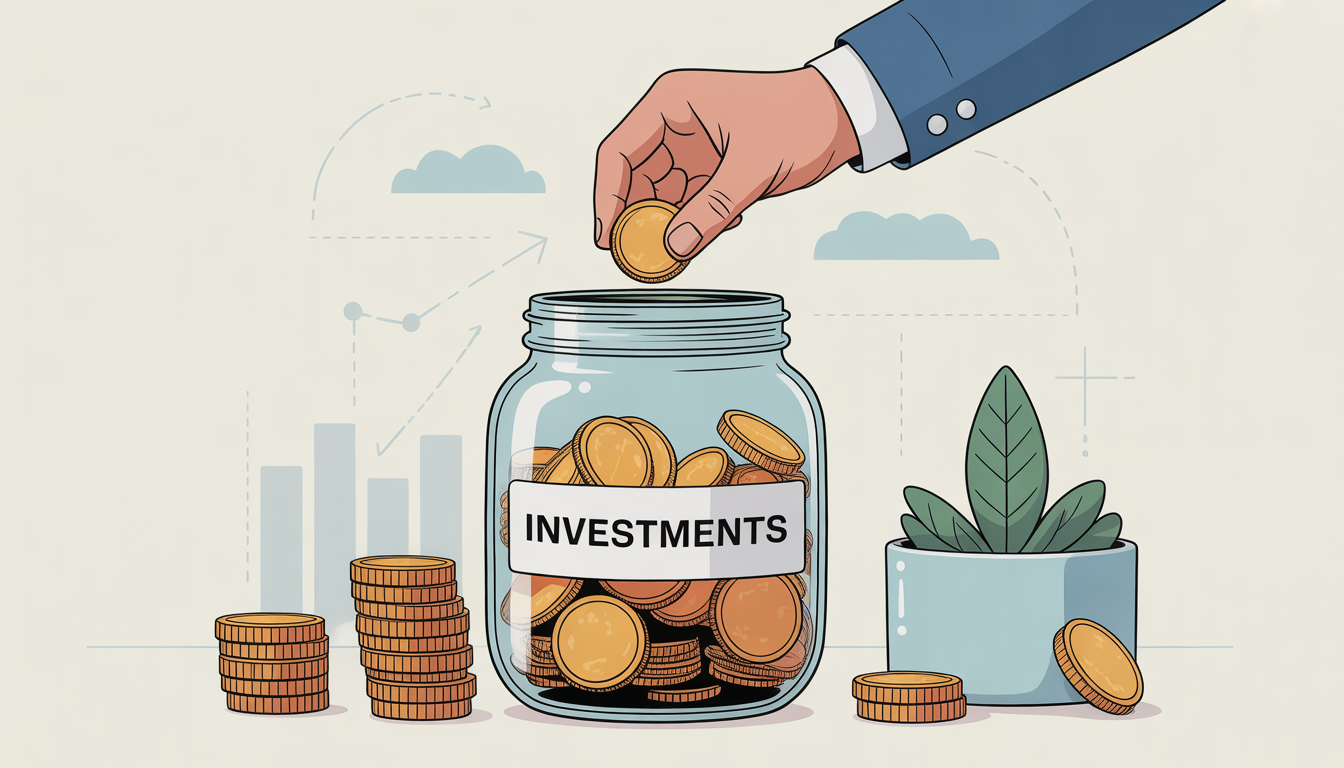
If you are new to investing, the sheer number of financial firms and platforms available can feel overwhelming. You might have heard the name “Steady Capital Solutions” floating around in online forums or social media ads, and now you are searching for steady capital solutions reviews to determine if it is the right place to start your financial journey. Free investment return calculator
As a beginner, your primary concern shouldn’t just be about finding the highest returns; it should be about finding a trustworthy partner that aligns with your long-term goals. In the world of personal finance, “steady” is often better than “flashy.”
This guide will walk you through what to look for in a financial partner, the hallmarks of legitimate investment services, and how to approach investing safely. Whether you are looking into a specific firm or just trying to understand how to manage your first $1,000, this article will help you build a foundation of knowledge.

What Are Investment Advisory Services?
Before diving into specific reviews, it is crucial to understand what a service like Steady Capital Solutions typically offers.
Investment advisory services are professional firms that manage your money in exchange for a fee, helping you allocate assets across stocks, bonds, and other securities based on your financial goals.
Unlike a traditional bank account where you simply deposit money, an advisory firm actively (or passively) manages your portfolio. They act as a fiduciary in many cases, meaning they are legally required to put your interests ahead of their own.
When reading steady capital solutions reviews, you are essentially looking at how well a company performs this role—specifically regarding transparency, customer service, and risk management.
Table of Contents Steady Capital
The Philosophy of “Steady” Investing Steady Capital
The name “Steady Capital Solutions” implies a specific philosophy: stability and consistency. In the United States, the market experiences cycles of highs and lows. A “steady” approach typically involves:
- Diversification: Spreading money across different asset classes (U.S. stocks, international stocks, bonds) so that no single failure ruins your nest egg.
- Risk Management: Focusing on capital preservation. Instead of trying to double your money in a year, the goal is to grow it steadily over 10, 20, or 30 years.
- Low Volatility: Choosing investments that don’t swing wildly in price, which is especially important for investors nearing retirement.
For a beginner, a “steady” approach is often the safest way to enter the market. It allows you to learn how investing works without the emotional whiplash of watching your portfolio lose 50% of its value overnight.

What to Look for in a Financial Partner Steady Capital
Since you are researching steady capital solutions reviews, you likely want to know if they are legitimate and safe. While we do not endorse specific firms, here are the universal criteria you should use to evaluate any investment service:
1. Registration and Credentials Steady Capital
In the United States, legitimate investment advisors must register with the Securities and Exchange Commission (SEC) or state regulators. They should also employ professionals with CFP® (Certified Financial Planner) or CFA (Chartered Financial Analyst) credentials.
- Check: Use the SEC’s Investment Adviser Public Disclosure (IAPD) website to see if the firm is registered.
2. Fee Structure
Transparency is key. Reputable firms charge either:
- AUM (Assets Under Management) Fees: A percentage of the money they manage for you (usually 0.25% to 1.5% annually).
- Flat Fees: A fixed monthly or annual retainer.
- Avoid: Firms that rely heavily on commissions for selling specific products, as this can create conflicts of interest.
3. Fiduciary Duty
Always ask: Are you a fiduciary? If the answer is no, the advisor is only required to recommend products that are “suitable,” not necessarily the best or cheapest for you.
4. Customer Support
Beginners have questions. A good service offers accessible customer support, educational resources, and a clear onboarding process. Many steady capital solutions reviews will mention how easy or difficult it is to get a human on the phone.
How to Start Investing Safely (Without Chasing Hype)
Whether you decide to use a managed service like Steady Capital Solutions or go it alone, the mechanics of starting are the same. Here is a step-by-step guide for U.S. beginners:
Step 1: Establish an Emergency Fund
Before investing a single dollar, ensure you have 3 to 6 months of living expenses in a high-yield savings account (HYSA). Investing is for long-term goals; you shouldn’t be forced to sell stocks at a loss because your car broke down.
Step 2: Utilize Tax-Advantaged Accounts
The U.S. government offers accounts specifically to help you invest for retirement without paying excessive taxes.
- 401(k): Often offered by employers. If your employer matches contributions, that is free money—always take it.
- Roth IRA: An individual retirement account where you contribute after-tax money. The magic of a Roth IRA is that when you withdraw money in retirement, you pay $0 in capital gains tax.
Step 3: Understand Risk Tolerance
Risk tolerance is how much volatility you can stomach. If you are 25, you can afford to take more risk because you have decades to recover from a market crash. If you are 55, you likely want a “steady” portfolio with more bonds and fewer stocks.
Step 4: The Power of Dollar-Cost Averaging (DCA)
Instead of trying to “time the market” (buying low and selling high), beginners should use DCA. This means investing a fixed amount of money every month, regardless of market conditions. When prices are low, your money buys more shares; when prices are high, it buys fewer. Over time, this averages out your cost basis and removes the stress of “buying at the peak.”

Risk Awareness: No Returns Are Guaranteed
One of the most important aspects of reading steady capital solutions reviews is filtering out unrealistic expectations. If you see a review claiming someone “guaranteed 20% returns” or “never lost a penny,” that is a red flag.
Market Risk: All investments carry risk. Even diversified portfolios can lose value during a recession (like 2008 or 2020).
Inflation Risk: If you keep all your money in cash, you lose purchasing power over time.
Fraud Risk: Unfortunately, the finance industry has bad actors. Be wary of:
- Unsolicited investment offers
- Pressure to “act now”
- Promises of high returns with “no risk”
A legitimate firm will always provide you with a disclosure document (Form ADV) that clearly states the risks involved. They will discuss “worst-case scenarios” with you, not just best-case scenarios.
Common Misconceptions Among Beginners
As you continue your research, be aware of these common traps:
Misconception 1: “I need a lot of money to start.”
Reality: Thanks to fractional shares and low-cost ETFs (Exchange-Traded Funds), you can start investing with as little as $5 or $10. Many robo-advisors and services have no minimum balance requirements.
Misconception 2: “Investing is like gambling.”
Reality: Gambling is based on luck; investing is based on ownership. When you buy a stock or a fund, you own a piece of a real business. Over long periods (10+ years), the stock market has historically trended upward, rewarding patience.
Misconception 3: “I need to watch the market every day.”
Reality: For beginners, checking your portfolio daily is a recipe for anxiety. Long-term investors often check their accounts quarterly. Obsessing over daily fluctuations leads to emotional selling, which is the number one way investors lose money.
Misconception 4: “Reviews tell the whole story.”
Reality: When looking at steady capital solutions reviews or any other firm, remember that unhappy customers are often louder than happy ones. Look for patterns. Are multiple people complaining about hidden fees? Or are they complaining about normal market downturns (which aren’t the firm’s fault)? Context matters.

Long-Term Perspective: The 30-Year Horizon
To truly benefit from “steady” investing, you need to adopt a long-term perspective.
Consider the S&P 500 (a benchmark of the 500 largest U.S. companies). Historically, it has returned an average of about 10% per year before inflation. However, that doesn’t mean it goes up 10% every year. It might go up 30% one year and down 20% the next.
The magic happens through compound interest. If you invest $500 a month starting at age 25, assuming a 7% annual return (adjusted for inflation), you could have over $500,000 by age 55. If you wait until 35 to start, you might have only half that.
Best Practices for the Long Haul:
- Rebalance Annually: Once a year, adjust your portfolio to match your original risk tolerance. If stocks did well and now make up 90% of your portfolio, sell some and buy bonds to get back to 70/30.
- Ignore the Noise: Financial news channels profit from panic. Stick to your plan.
- Increase Contributions: As your salary increases, increase your investment rate. Aim to save at least 15% of your gross income for retirement.
Frequently Asked Questions (FAQ)
Are services like Steady Capital Solutions safe for beginners?
Yes, provided they are registered with the SEC and act as fiduciaries. Beginners often benefit from professional management because it removes the guesswork and emotional decision-making from investing. However, always verify their registration status and fee structure before signing up.
What is the minimum amount I need to start investing?
It varies by platform. Some traditional advisors require $25,000 to $100,000 to open an account. However, many modern robo-advisors and online brokers allow you to start with $0 to $500. If you are a beginner with a small amount of money, look for services with low or no minimum balance requirements.
How are investment fees taxed in the United States?
Investment fees paid to advisors are generally not tax-deductible for individuals (following the Tax Cuts and Jobs Act of 2017). However, if you hold investments in a tax-advantaged account like a 401(k) or Roth IRA, you avoid paying capital gains tax on the growth within the account until withdrawal (or never, in the case of a Roth).
What is the difference between a financial advisor and a robo-advisor?
A financial advisor (human) provides personalized advice, financial planning, and can help with complex situations like estate planning or tax strategy. A robo-advisor is an algorithm that automatically builds and manages a diversified portfolio based on your risk tolerance. Robo-advisors are usually cheaper and are a great starting point for beginners who just want to save for retirement without human interaction.
ADHD Budget Planner App | Debt Tracker, Bill Organizer (Digital Download)
Debt Payoff Tracker 💳 Debt Payoff Tracker Auto-savedFREE DEMO ⭐ Instructions 💳 My Debts 📊 Dashboard ❄️ Snowball Plan 🏔️ Avalanche Plan 📅 Payment Log 🎯 Debt-Free Countdown 🔒 This is a FREE DEMO — you can add up to 2 debts to test it out. Get the full version for unlimited debts, saved data,…
Free Debt Payoff Tracker — Try the Snowball & Avalanche Calculator
Paying off debt feels overwhelming when you don’t know where to start, which balance to attack first, or how much interest you’re really losing each month. That’s exactly why we built the Debt Payoff Tracker — a simple, visual tool that turns your credit cards, loans, and balances into a clear, step-by-step payoff plan. Instead…

Free Vehicle Bill of Sale Template & Generator | Fillable PDF
What Is a Vehicle Bill of Sale Template? A vehicle bill of sale is a document that records the private sale of a car, truck, SUV, motorcycle, ATV, UTV, van, RV, boat, or trailer. It confirms who bought and sold the vehicle, the price paid, the vehicle’s condition, and any disclosures both parties agreed to…