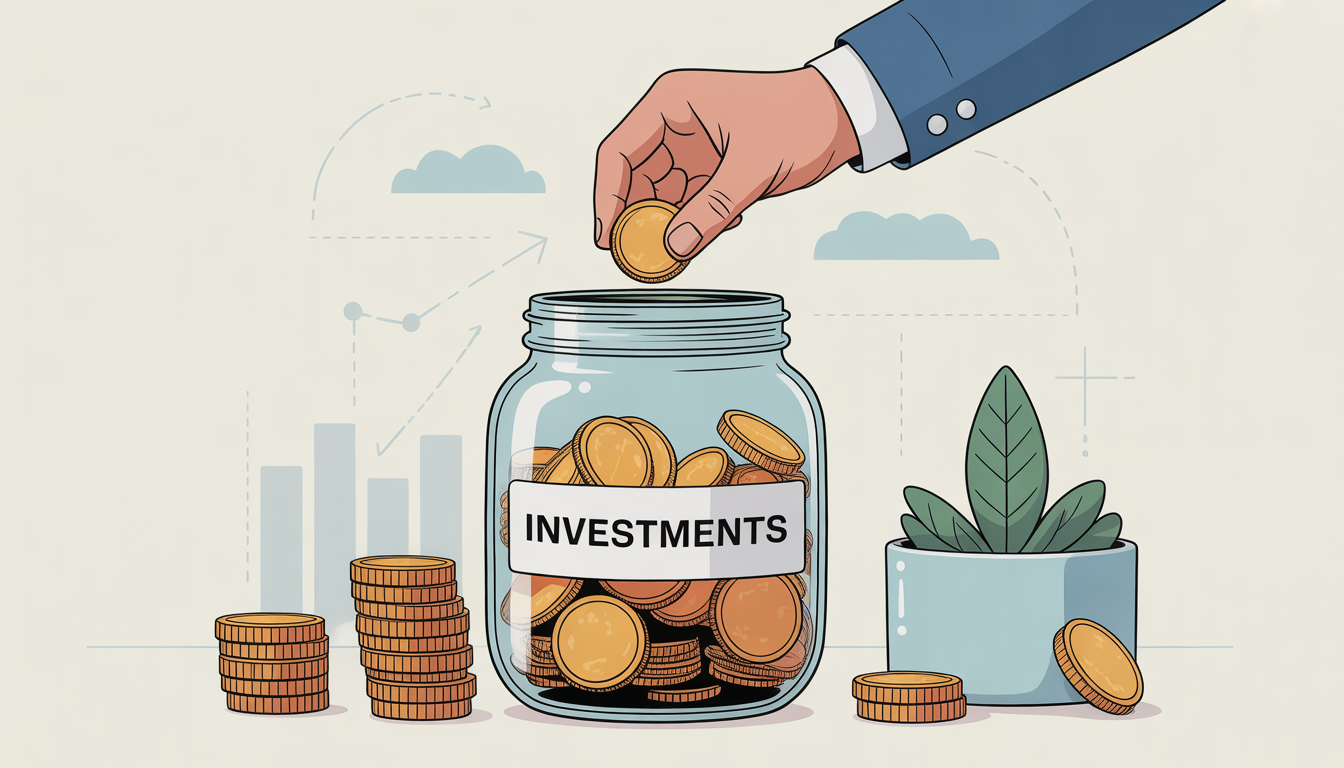
We have all seen the headlines: “From Rags to Riches” and “How I Made Millions by 30.” If you are currently staring at a bank account that feels stuck at zero, the concept of building wealth can feel like a fantasy reserved for lottery winners or tech entrepreneurs. You might be asking yourself: How do you get rich with no money? SEE VIDEO ON YOTUBE
The truth is, while you cannot invest what you don’t have, wealth is rarely built by luck. It is built by systems, behavior, and leveraging resources that aren’t always cash. You don’t need a six-figure salary to start; you need a roadmap.
This guide will walk you through the realistic, safe, and legal ways to build wealth from the ground up. We will focus on financial education, smart habits, and leveraging U.S. financial systems like the 401(k) and Roth IRA to turn your time into money.

How Do You Get Rich with No Money
What Does “Getting Rich” Really Mean? (Definition)
Before we dive into the “how,” we need to define the destination.
In personal finance, “getting rich” typically does not mean winning the lottery. It means achieving financial independence. This is the point where your assets (investments, savings, real estate) generate enough income to cover your living expenses.
For the purposes of this article, building wealth with no money means starting from a position of low capital but high intention. It is about converting your most abundant resource—usually time and skills—into assets that eventually work for you.
The Foundation: Mindset Over Money
If you have zero capital, your greatest asset is your human capital. This includes your time, energy, skills, and knowledge. Before you can invest a single dollar in the stock market, you must invest in yourself.
1. Shift from Consumer to Producer
When you have little money, the fastest way to change your trajectory is to increase your income. This doesn’t require a degree; it requires identifying problems you can solve for others. In the digital age, this often means freelancing, starting a side hustle, or acquiring a high-income skill (like coding, sales, or digital marketing) through free resources like YouTube or your local library.
2. The Velocity of Money
When funds are limited, every dollar must work twice as hard. This is often called the “velocity of money.” A dollar spent on a depreciating asset (like a new car) is gone. A dollar spent on education, a tool for a side business, or an investment account is a seed planted for future wealth.

Step 1: Master Cash Flow Management How Do You Get Rich with No Money
You cannot build wealth if your expenses are higher than your income, regardless of how much you make. Since you are starting with no money, you must first create a surplus.
Create a Surplus
To have money to invest, you need a gap between what comes in and what goes out.
- Track your spending: Use a free app or a simple spreadsheet to see where your USD is going.
- Cut the “Latte Factor”: This doesn’t mean you can’t enjoy life. It means identifying small, recurring expenses (unused subscriptions, excessive takeout) that add up to $100 or $200 a month.
- Automate savings: Even if it is only $5 a week, automate it. Humans are behavioral creatures. If the money moves to a savings account before you see it, you learn to live without it.
Step 2: Leverage Free Money (Employer Benefits)
One of the most effective ways to get rich with no initial money is to use other people’s money. In the United States, the most common vehicle for this is the employer-sponsored 401(k) .
The 401(k) Match
If your employer offers a 401(k) match (e.g., they match 100% of your contributions up to 3% of your salary), this is free money.
- How it works: If you earn $50,000 a year and contribute $1,500 to your 401(k), your employer adds another $1,500.
- The result: You have just doubled your money instantly with zero investment risk.
- No money? If you feel you have “no money” to contribute, start with 1% of your paycheck. You likely won’t notice the deduction on your net pay, but you will capture the employer match.
Step 3: Harness the Power of Compound Interest
Albert Einstein reportedly called compound interest the “eighth wonder of the world.” When you start with zero, time is your only weapon.
Compound interest is the process of earning returns on your returns. It is a snowball effect. The earlier you start, the less total money you need to contribute to reach a million dollars.
A Simple Example How Do You Get Rich with No Money
Imagine two friends:
- Alex starts investing $100 a month at age 22 in a Roth IRA.
- Jordan starts investing $200 a month at age 32.
Assuming a 7% annual return, Alex will likely have more money at retirement age than Jordan, despite contributing half the monthly amount. This is because Alex’s money had ten extra years to compound.
The Lesson: If you are young, your lack of money is offset by your abundance of time. Do not wait until you feel “rich enough” to start investing.
Step 4: Choose the Right Investment Vehicles
Once you have $10 or $100 to invest, you need to know where to put it. As a beginner, you should focus on tax-advantaged accounts.
Roth IRA
The Roth IRA is a powerful tool for U.S. beginners. You contribute after-tax dollars (money you’ve already paid income tax on), and it grows tax-free. When you withdraw the money in retirement, you pay $0 in capital gains tax. This is ideal for young people who are likely in a lower tax bracket now than they will be in the future.
Low-Cost Index Funds
Since this is a beginner-friendly guide and we do not recommend specific stocks, the safest way to start is with index funds or Exchange-Traded Funds (ETFs) . These are baskets of hundreds of companies (like the S&P 500). Instead of betting on one company, you are betting on the overall U.S. economy, which has historically grown over long periods.
Step 5: Invest in Yourself (Education & Skills) How Do You Get Rich with No Money
If you truly have no money to invest in the market, you must invest in your income potential.
High-Income Skills
Some of the wealthiest people in the U.S. started with nothing but a skill. Skills like:
- Sales: The ability to sell a product or service is the highest-paid skill in the world.
- Digital Literacy: Learning how to build websites, run ads, or manage databases.
- Trades: Plumbing, electrical, and HVAC technicians are in high demand and often earn six figures without student loan debt.
Resource: Utilize free government resources, local community colleges, or online platforms like Coursera and edX to upskill for free or low cost.
Step 6: Risk Awareness (The Safety Net)
Finance content often focuses on the upside. However, building sustainable wealth is more about risk management than hitting home runs.
When you have no money, you have no margin for error. A single emergency—a car repair or a medical bill—can wipe out your progress if you aren’t careful.
Build an Emergency Fund First How Do You Get Rich with No Money
Before you go all-in on stocks, focus on saving $1,000 . This is your buffer against life.
- Goal: Once you have $1,000, aim for 3–6 months of living expenses.
- Where to keep it: A High-Yield Savings Account (HYSA). This is safe (FDIC insured) and accessible.
Beware of “Get Rich Quick” Schemes How Do You Get Rich with No Money
When people are desperate to get rich with no money, they become targets for scams. If something sounds too good to be true (day trading systems, crypto “pump and dumps,” or multi-level marketing schemes promising luxury cars), it is likely a trap. Real wealth is boring and slow.

Common Mistakes and Misconceptions How Do You Get Rich with No Money.
Many beginners sabotage their financial future not because they lack money, but because they lack information. Here are the most common traps:
- Misconception: “I need to be an expert to start.”
- Reality: You don’t need to understand options trading to buy an S&P 500 index fund. Keep it simple.
- Misconception: “Investing is just gambling.”
- Reality: Gambling is short-term speculation. Investing is long-term ownership in productive businesses.
- Mistake: Carrying high-interest debt.
- Reality: Credit card debt often charges 20–25% interest. Paying this off is the best “guaranteed return” you can get. It is mathematically impossible to get rich if you are paying 25% interest on a credit card while earning 7% in the stock market.
- Mistake: Trying to time the market.
- Reality: Waiting for a “crash” to invest usually leads to missing the best days of growth. Consistency (dollar-cost averaging) beats timing every time.
Long-Term Perspective: The Wealth Ladder How Do You Get Rich with No Money
Building wealth from zero is a ladder. You cannot skip steps.
- Survival: Budgeting, cutting expenses, building a $1,000 emergency fund.
- Stability: Paying off high-interest debt, maximizing employer 401(k) match.
- Accumulation: Maxing out Roth IRA, investing in low-cost index funds.
- Growth: Increasing income through career advancement or side business.
- Independence: Assets generate passive income to cover lifestyle.
If you are currently at step 1, focus on getting to step 2. Do not worry about step 5 right now. Consistency over years is what moves the needle.

Conclusion: The Real Secret to Getting Rich How Do You Get Rich with No Money
So, how do you get rich with no money? You do it by turning your time into skills, your skills into income, and your income into assets. You leverage systems like the 401(k) match to get free money, and you harness compound interest over decades to let your money grow.
There is no secret code or magic bullet. The “secret” is discipline. It is the willingness to live below your means for a period of time so that later, your means can live above your needs.
You don’t need a large inheritance or a lucky break. You just need to start today, with whatever you have, and commit to staying the course. Your future self will thank you for the patience.
Frequently Asked Questions (FAQ) How Do You Get Rich with No Money
1. What is the minimum amount of money I need to start investing?
Technically, zero. However, in practical terms, you can start investing with as little as $5 or $10 today. Many brokerage apps and Roth IRA platforms allow you to buy fractional shares of ETFs. The most important factor is not the amount, but the habit of consistency.
2. Is it better to pay off debt or invest?
It depends on the interest rate. If you have high-interest debt (credit cards above 10%), pay that off first. It is a guaranteed “return” on your money. If you have low-interest debt (like a mortgage or student loans below 5%) and have access to a 401(k) match, it is generally better to invest while making minimum debt payments.
3. What is the safest way to invest for a beginner?
The safest approach for long-term wealth is diversification. Instead of picking individual stocks, beginners should look at low-cost index funds that track the entire U.S. stock market (like the S&P 500). This spreads your risk across hundreds of companies. For money you need in the next 3-5 years (like an emergency fund), a High-Yield Savings Account (HYSA) is the safest option.
4. Can I really get rich without taking huge risks?
Yes. In fact, the wealthiest self-made individuals usually avoid huge risks. “Getting rich” through investing is not about hitting a home run with one risky stock; it is about hitting singles consistently over 30 years. Using tax-advantaged accounts (Roth IRA, 401(k)) and investing in broad market funds is a low-risk, high-probability strategy for building long-term wealth.
Table of Contents
ADHD Budget Planner App | Debt Tracker, Bill Organizer (Digital Download)
Debt Payoff Tracker 💳 Debt Payoff Tracker Auto-savedFREE DEMO ⭐ Instructions 💳 My Debts 📊 Dashboard ❄️ Snowball Plan 🏔️ Avalanche Plan 📅 Payment Log 🎯 Debt-Free Countdown 🔒 This is a FREE DEMO — you can add up to 2 debts to test it out. Get the full version for unlimited debts, saved data,…
Free Debt Payoff Tracker — Try the Snowball & Avalanche Calculator
Paying off debt feels overwhelming when you don’t know where to start, which balance to attack first, or how much interest you’re really losing each month. That’s exactly why we built the Debt Payoff Tracker — a simple, visual tool that turns your credit cards, loans, and balances into a clear, step-by-step payoff plan. Instead…

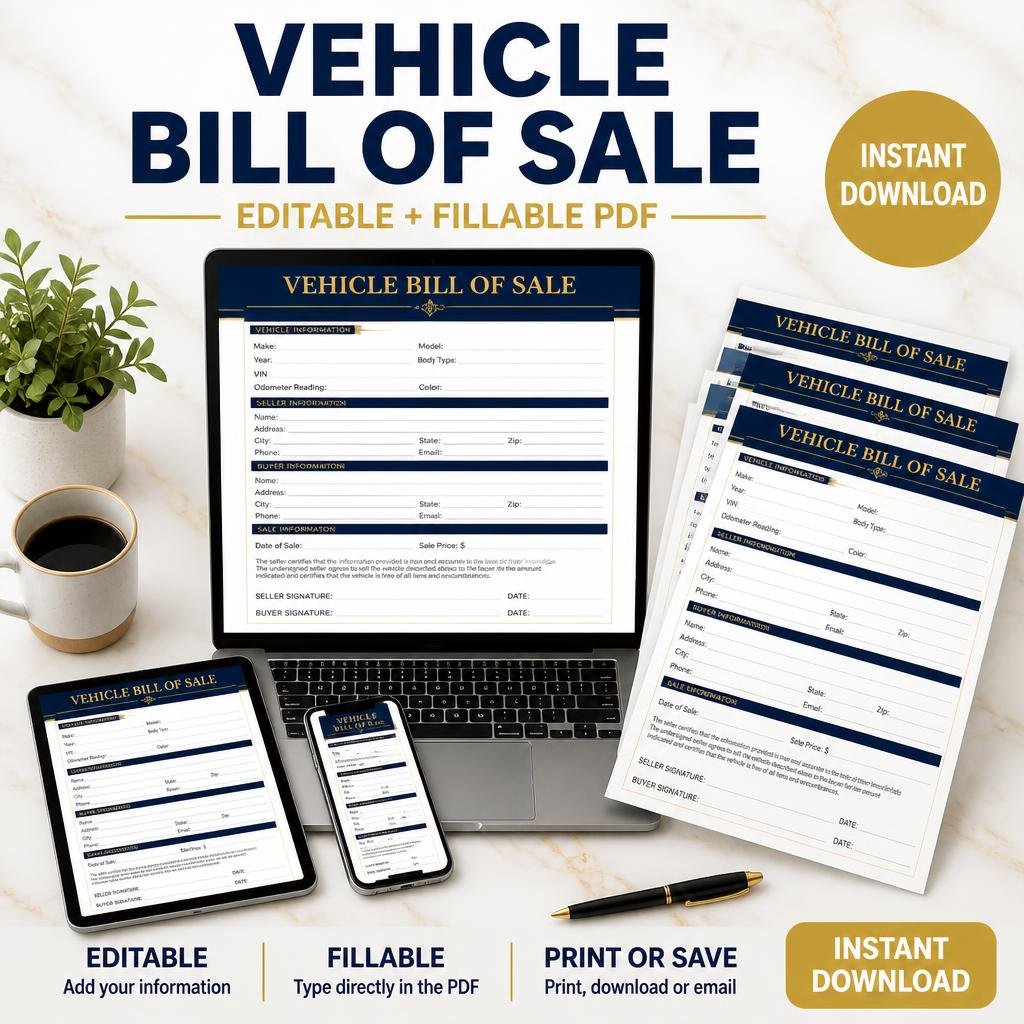
Free Vehicle Bill of Sale Template & Generator | Fillable PDF
What Is a Vehicle Bill of Sale Template? A vehicle bill of sale is a document that records the private sale of a car, truck, SUV, motorcycle, ATV, UTV, van, RV, boat, or trailer. It confirms who bought and sold the vehicle, the price paid, the vehicle’s condition, and any disclosures both parties agreed to…

Best Brokerage for Beginners: Top 5 Picks for 2026
I remember staring at my bank balance about eight years ago, convinced I didn’t have “enough” money to start investing. I thought you needed thousands of dollars, a Wall Street connection, and maybe a fancy calculator just to get in the door. So I just… didn’t do anything. I let that money sit in a…
Stock Profit Calculator USA Capital Gains & Commission Tool
📊 Stock Profit Calculator USA 📈 Number of shares 💰 Buy price ($) 💸 Sell price ($) 🛒 Buy commission ($) 🏷️ Sell commission ($) 🏛️ Tax rate (%) 0% (No tax)15% (Long-term)20% (High income)37% (Short-term) 💰 Calculate My Profit Net Buy Cost: $0 Net Sell Proceeds: $0 Profit Before Tax: $0 Tax Amount: $0…
IUL vs Roth IRA vs 401k | Honest Take for Beginners
Here’s the thing nobody tells you when you first start hearing about retirement accounts: there are about a million ways to save for the future, and half of them come with acronyms that sound like government surveillance programs. IUL vs Roth IRA vs 401k free investment return calculator If you’ve ever stared at a benefits…
7 Best Side Hustles for Beginners in 2026
Let me be real with you for a second. Most “side hustle” articles you’ll find online were written by someone who’s never actually done any of them. They list the same seven things, slap some numbers on it, and call it a day. You read it, feel motivated for about eleven minutes, and then do…
Side Hustles for Nurses in 2026: 9 Real Ways to Earn Extra Income
why Start Side Hustles for Nurses Long shifts. Emotional exhaustion. The physical toll. And yet, depending on where you live in the U.S.—say, a coastal city or even a growing spot like Nashville or Austin—that paycheck might vanish faster than a turkey sandwich on a 12-hour night shift. How Much Can Nurses Realistically Earn From…
The Retirement Spending Gap (Real Math)
I used to think retirement was simple math. You save. You stop working. Then you spend what you saved until it runs out. That feels logical, right? Like filling a bathtub and then pulling the drain plug. So Retirement Spending Gap Video is Here But here’s the thing. That’s not what actually happens for a…

I saved $10 per day for 30 days—here’s how much I made
It started as a bet with myself. Not the kind of bet Where you put money on a game or talk yourself into buying something dumb. The boring kind. The kind where you look at your bank account on a random Tuesday and think, surely I can find ten bucks somewhere. So I tried it.…













Pingback: Passive Income Ideas: A Beginner’s Guide (USA) 2026