You just got your paycheck. You paid your rent, covered your groceries, and there is still some money left in your checking account. Good job. Difference Between Save or Invest (With Real Examples)
Now comes the hard part: What do you do with that extra cash?
If you ask your parents, they might say, “Put it in a savings account, just in case.” If you scroll through social media, you might see influencers talking about “getting in on the ground floor” of some hot new stock.
Both pieces of advice come from a good place, but they are pointing you in completely different directions. One is about saving. The other is about investing.
For most beginners in the USA, these two words get mixed up constantly. In fact, financial experts estimate that over 90% of people think saving and investing are the same thing . They are not.
Understanding the difference between saving and investing is the first real step toward taking control of your financial future. Mix them up, and you might end up with money that isn’t growing when it should be, or money at risk when you need it safe.
Here is the simplest way to look at it: Saving is protecting your money. Investing is growing your money.
What Is Saving? (The Safety Net)

Saving is the act of putting money aside in a safe, easily accessible place for short-term needs or emergencies .
Think of saving as building a shelter. Your goal is to keep your cash dry, safe from the elements, and close by so you can grab it whenever you need it.
The Farmer’s Seed Analogy
Imagine a farmer after the harvest. He takes some of the best seeds and stores them in a dry barn. He isn’t planting them yet; he is just keeping them safe. He knows that if a harsh winter comes or an emergency happens, he has those seeds to fall back on .
That is saving. You are accumulating resources for future use without taking your hands off them.
Real-World Example of Saving
Meet Sarah. She wants to buy a car next year. She calculates she needs $3,000 for a down payment. Every month, she transfers $250 from her paycheck into a high-yield savings account at her bank. After 12 months, she has her $3,000 (plus a tiny bit of interest). The money was safe, it was easy to get to, and she met her goal.
Where Do People Save?
- Savings Accounts: Offered by banks and credit unions.
- Certificates of Deposit (CDs): You lock your money away for a set period (like 1 year) in exchange for a slightly higher interest rate.
- Money Market Accounts: A hybrid that often pays a bit more than regular savings.
What Is Investing? (The Growth Engine)

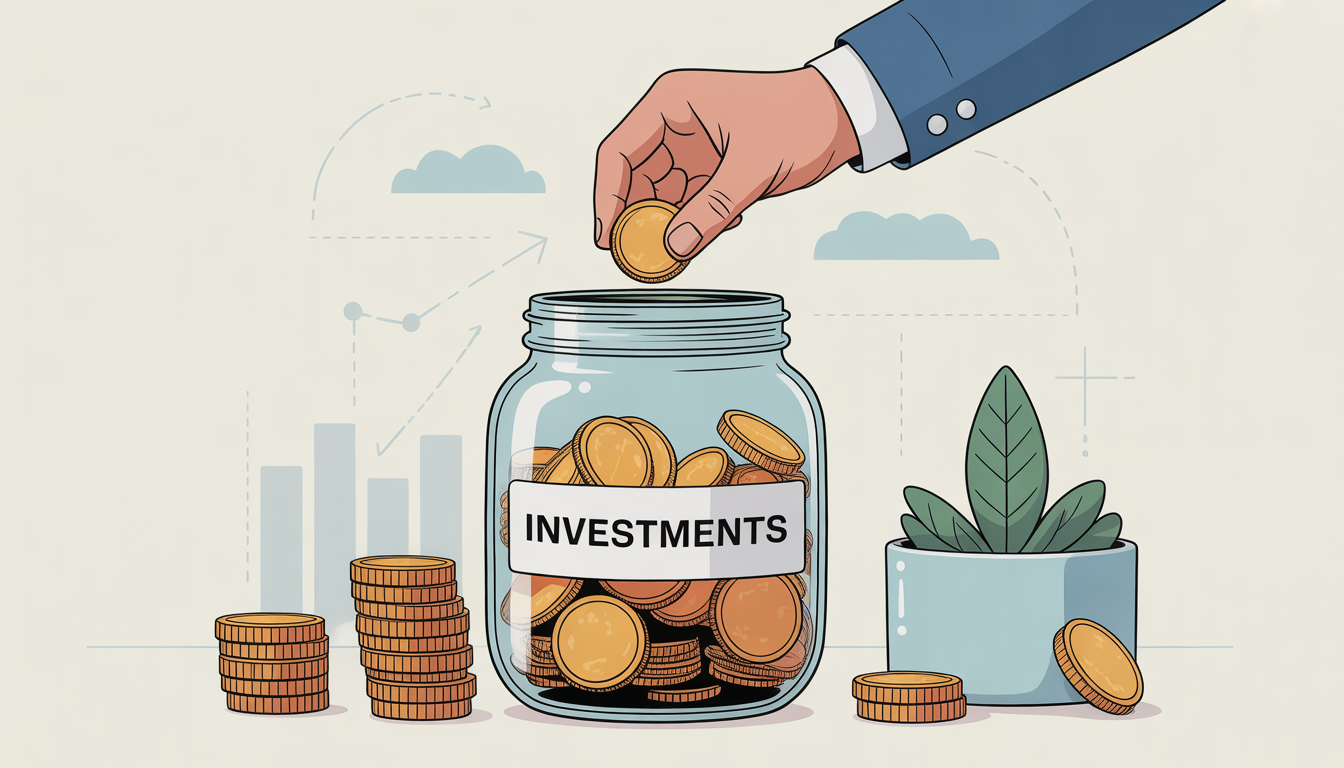
Investing is using your money to buy assets—like stocks, bonds, or real estate—with the expectation that they will generate more money over time .
If saving is storing seeds in a barn, investing is planting those seeds in the ground, watering them, and waiting for them to grow into plants that produce even more seeds .
You are taking your money (the seed) and exposing it to the “elements” of the economy. There is risk involved—there might be a drought, or a pest problem—but if things go well, your money grows into something much bigger.
Real-World Example of Investing
Meet David. He is 30 years old and wants to retire when he is 65. He buys $3,000 worth of a low-cost ETF that tracks the entire U.S. stock market. Over the next 35 years, the companies in that ETF grow, pay dividends, and increase in value. By the time David retires, his initial $3,000 might be worth $20,000 or more, even though the market went up and down along the way.
Where Do People Invest?
- Stocks: Small pieces of ownership in a company (like Apple or Coca-Cola).
- Bonds: Loans you give to a company or the government that are paid back with interest.
- ETFs / Mutual Funds: Baskets that hold dozens or hundreds of different stocks or bonds to spread out risk.
Key Differences at a Glance Save or Invest
To make this crystal clear, let’s look at how saving and investing stack up against each other.
| Feature | Saving | Investing |
|---|---|---|
| Goal | Short-term needs and emergencies | Long-term wealth building |
| Risk | Very low (FDIC insured up to $250,000) | Varies from low to high, but always some risk of loss |
| Returns | Low, predictable interest | Potentially higher returns, but never guaranteed |
| Access | High liquidity (easy to get money quickly) | Less liquid; selling might take time or result in losses |
| Time Horizon | 0–5 years | 5+ years (often decades) |
| Inflation | Money may lose purchasing power over time | Has potential to outpace inflation and grow wealth |
Why the Difference Matters So Much

Understanding this split is crucial because using the wrong tool for your goal can cause real problems.
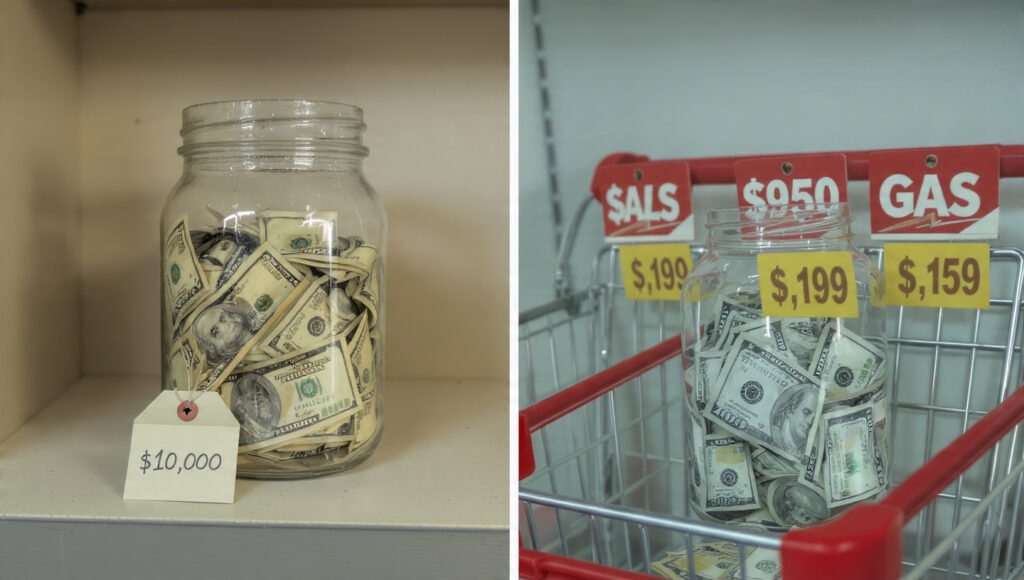
The Risk of Saving Too Much: If you put all your money in a savings account for 30 years, you are playing it safe. But you are also playing it expensive. Inflation—the slow rise in prices—eats away at what your money can buy. That $10,000 you saved for retirement in 2024 might only have the buying power of $5,500 in 2054 if it never gets invested .
The Risk of Investing Too Soon: On the flip side, if you take money you need next year for a house down payment and invest it in the stock market, you are gambling. If the market drops 20% right before you need to write that check, you either have to delay your dream or take a loss .
The Smart Strategy: When to Save and When to Invest
So, how do you decide? Financial experts recommend a simple, two-step process based on your timeline and your financial health .
Step 1: Save for Stability (The 0–5 Year Window)
Before you even think about buying stocks, you need a foundation. You should save for:
- Emergency Fund: This is rule number one. You need 3–6 months of living expenses in a regular savings account. This money is not for “growth.” It is for “life happens”—car repairs, medical bills, or a job loss .
- Known Short-Term Goals: Are you buying a car next year? Taking a vacation in 6 months? Paying tuition in the fall? Keep this cash in a savings account or a short-term CD .
- Paying Off High-Interest Debt: If you have credit card debt with 20% interest, paying that off is the best “return” you can get. Do that before you invest.
Step 2: Invest for Growth (The 5+ Year Window) Save or Invest or insurens
Once your emergency fund is full and your short-term goals are funded, you can look at investing.
- Retirement: If you are in your 20s, 30s, or 40s, retirement is decades away. This money must be invested. Saving alone will never keep up with inflation over 40 years.
- Long-Term Dreams: Buying a house in 10 years? Funding a child’s college education in 15 years? Investing is the engine that makes those goals achievable .
Putting It All Together: A Tale of Two Goals
Let’s look at two different people to see the strategy in action.
- Maria (The Saver): Maria is getting married in 18 months. She needs $15,000 for the venue deposit. She puts her money in a high-yield savings account. She earns 4% interest guaranteed. She sleeps well knowing the money will be there when the wedding bells ring.
- James (The Investor): James is 25 and just started his first job. He wants to retire at 65. He opens a Roth IRA and invests in a diversified stock ETF. The market goes up and down over the years, but because he has 40 years, time smooths out the bumps and allows compounding to work its magic.
Maria saves. James invests. Both are making the right move.
Common Mistakes Beginners Make
- Thinking they are the same: Believing a savings account is an “investment” or that stocks are just “risky savings.” They serve different purposes.
- The “All-or-Nothing” Mentality: You don’t have to pick one. You need both. You save for safety and invest for growth.
- Investing before you’re ready: Putting money into the market before you have an emergency fund is a recipe for disaster. If you lose your job and the market is down, you have to sell your investments at a loss just to pay rent.
Conclusion
Saving and investing are not enemies; they are teammates.
Saving is your anchor. It keeps you stable during life’s storms. Investing is your sail. It catches the wind of economic growth and propels you toward your long-term dreams.
Start with saving. Build that cushion. Then, and only then, start investing for the future. Get this balance right, and you set yourself up for a lifetime of financial security.
Frequently Asked Questions (FAQ)
1. Is it better to save or invest?
Neither is “better” overall. It depends on your goal. If you need the money in the next few years, saving is better because it’s safe. If you are planning for a goal that is 5+ years away (like retirement), investing is better because it offers the potential for growth that outpaces inflation .
2. How much of my income should I save vs. invest?
A common rule of thumb is the 50/30/20 budget. 50% goes to needs, 30% to wants, and 20% to savings. Within that 20%, you should first build an emergency fund (saving), then direct the rest toward retirement accounts (investing) .
3. Can I lose money in a savings account?
In a bank account insured by the FDIC (Federal Deposit Insurance Corporation), you cannot lose your principal (the money you put in) up to $250,000. However, you can lose purchasing power if the interest rate is lower than inflation .