Here’s the Expense Ratio Mean in ETFs: everyone loves how easy they are to buy. You open an app, type a ticker, click a button, and bam—you own a slice of hundreds of companies. Feels almost too simple. See video on Youtube
And that’s where the trouble starts.
Because buried in that simplicity is a little number that most people scroll right past. It’s called the expense ratio. And honestly? It might be quietly eating more of your returns than you realize. See More Blog Post
I remember the first time I bought an ETF without checking the expense ratio. I was 24, renting a small apartment outside Austin, making $48k a year. My thought process went something like: Low cost? Check. Diversified? Check. Let’s go. I didn’t dig deeper. And that cost me more than I’d care to admit over the next few years.
So let’s talk about what an expense ratio actually means—not the textbook definition,
But what it does to your money while you sleep.
The Short Version (For the Impatient)
An expense ratio is the annual fee an ETF charges to cover operating costs. You don’t write a check for it. They just quietly take it out of the fund’s assets each day. If an ETF has a 0.10% expense ratio, that means for every $1,000 you have invested, they’re skimming about $1 per year.
That sounds tiny. And that’s exactly why people ignore it.
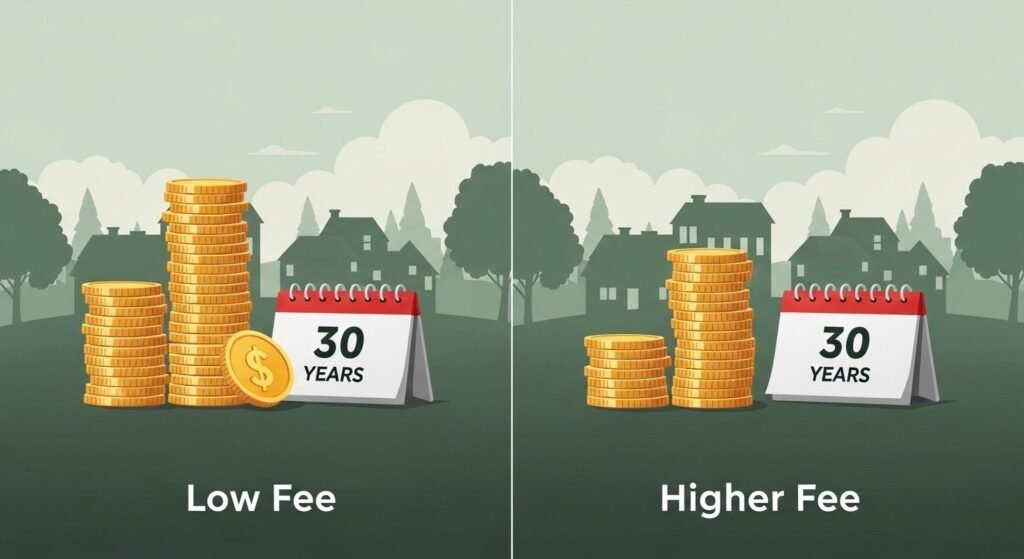
But here’s the part that surprises most beginners: that fee compounds against you. Not in your favor. Against you. Over 20 or 30 years, the difference between 0.10% and 0.75% can be the difference between a comfortable retirement and a frustrating “what if” conversation with yourself.
What You’re Actually Paying For (And Why Some Are Higher)
You’d think a higher expense ratio means a better fund, right? Not necessarily.
That fee covers things like:
- The fund manager’s team (even passive ETFs need some oversight)
- Administrative costs (legal, accounting, filing paperwork)
- Marketing and distribution (yeah, ETFs advertise too)
- Trading costs inside the fund
Some ETFs charge more because they track weird or complicated
stuff—like leveraged strategies, niche sectors, or foreign markets that require extra legwork. Others charge more simply because they can. Brand recognition is a real thing in finance.
I’ve seen perfectly average ETFs with expense ratios above 0.70% that do almost the same thing as another ETF charging 0.08%. Same exposure. Same risk. Just… more expensive.
That’s not illegal. It’s just not smart money management.

A Real-World Example That Actually Hits Home
Let’s say you invest $10,000 in an S&P 500 ETF. Nothing fancy.
Option A: Expense ratio of 0.03% (common for giant funds like VOO or IVV)
Option B: Expense ratio of 0.50% (common for actively managed or brand-name funds)
After 30 years, assuming a 7% annual return before fees:
- Option A grows to about $74,500
- Option B grows to about $65,000
That’s nearly $10,000 difference. For doing absolutely nothing different. You didn’t trade more. You didn’t take more risk. You just paid more in fees.
Now imagine that with $50,000 or $100,000. The gap gets painful fast.
Wait, Do I Actually See This Fee Anywhere?
Great question. And no—you won’t see a line item on your brokerage statement that says “fee deducted.” That’s part of what makes expense ratios sneaky.
Instead, the ETF’s net return is what you see. So if the fund’s holdings gained 10% in a year, but the expense ratio is 0.50%, you’ll see something like a 9.5% return. They take their cut before you ever lay eyes on the number.
Some people like that. Out of sight, out of mind. But I personally think that’s dangerous. Hidden costs are still costs.
The One Time a Higher Expense Ratio Might Make Sense
Okay, I’ll be fair. Not every high-expense ETF is a rip-off.
There are ETFs that focus on specific strategies—like small-cap value stocks, emerging

markets, or dividend growers—that genuinely cost more to run. They might have higher turnover (buying and selling more often) or need specialized research.
The question isn’t “is this ETF’s expense ratio low?” The question is “am I getting something valuable for that extra cost?”
If a fund charges 0.60% but consistently beats its benchmark after fees? That might be worth it. But here’s the hard part: consistently beating the market is incredibly rare. Most actively managed funds don’t. Even the ones with fancy names and smart-sounding prospectuses.
So my rule of thumb? Start with the cheapest option that does what you need. Then ask yourself why you’d pay more.
How to Find an ETF’s Expense Ratio (Without Going Crazy)
This takes about 15 seconds.
Go to any ETF’s page on your brokerage’s website. Look for a section called “Fees” or “Expense Ratio.” Sometimes they hide it under “Fund Details” or “Pricing.” But it’s always there.
You can also check the fund’s official prospectus—but let’s be real, almost no one reads those. I don’t. What I actually do is type “ETF ticker expense ratio” into a search engine. Reliable sites like Morningstar or ETF.com will show it clearly.
Just make sure you’re looking at the gross expense ratio, not a temporary fee waiver. Some funds offer discounted rates for the first year to look cheaper than they really are. That’s marketing. Look past it.
The Difference Between ETFs and Mutual Funds (Since People Always Ask)
Mutual funds also have expense ratios. Often much higher. It’s not unusual to see mutual funds with expense ratios of 1% or more.
The reason? Mutual funds are older, clunkier, and often actively managed by people in suits who need salaries. ETFs are usually passive (tracking an index) and have lower overhead.
But here’s where it gets fuzzy: there are actively managed ETFs now. And there are passively managed mutual funds. So the line is blurring.
The important thing is: don’t assume an ETF is automatically cheaper than a mutual fund. Check both. I’ve seen ETFs that charge more than a comparable index mutual fund from the same company. It’s rare, but it happens.
A Few Subtle Risks No One Talks About
Expense ratios are straightforward. But there’s nuance.
For example, in a down year—say the market drops 15%—you’re still paying that expense ratio. The fund doesn’t waive fees just because you lost money. So in a bad year, the fee effectively makes your loss slightly worse.
Also, some specialized ETFs have low expense ratios but high “tracking error.” That means the fund doesn’t actually follow its index very well. So you save on fees but lose on accuracy. That’s a trade-off worth knowing about.
And one more thing: expense ratios are taken daily. A 0.30% fee isn’t taken all at once. It’s something like 0.0008% per day. You’ll never notice it. That’s by design. But over decades, those tiny daily slices add up.
Why Some People Obsess Over This (And Others Don’t)
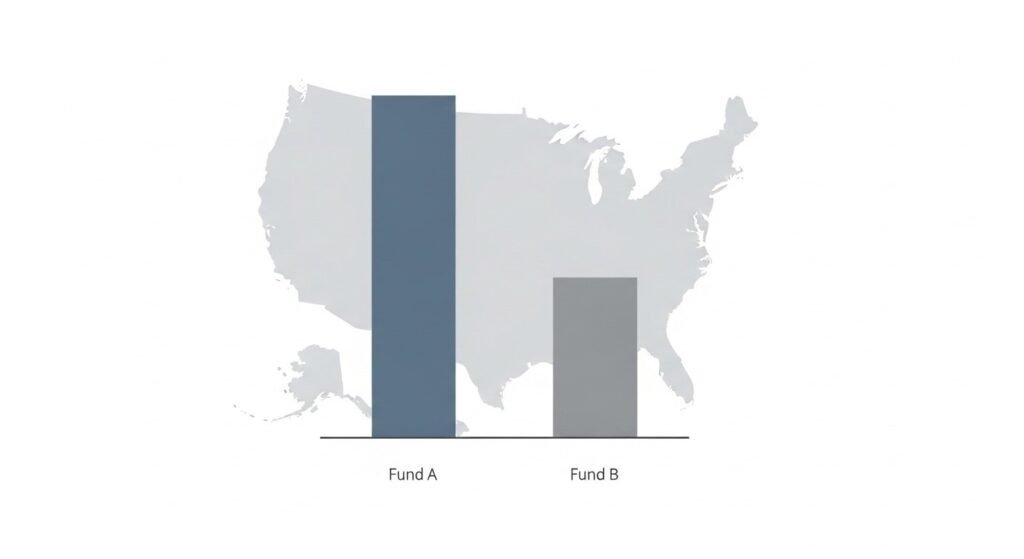
I have a friend who checks expense ratios like he checks his tire pressure—religiously, every time. Another friend has never looked at a single one. Both have made money in the market.
The difference? The first friend is retiring at 58. The second is… still working.
That’s not a guarantee. Markets vary, life happens, and nobody has perfect timing. But controlling what you can control—like fees—is one of the few things in investing that’s completely within your power.
You can’t control the stock market. You can’t control interest rates. You can control whether you pay 0.05% or 0.55% for essentially the same exposure.
That feels worth paying attention to.
So What Should You Actually Do? Expense Ratio Mean in ETFs
Don’t panic. Don’t sell everything and rearrange your portfolio tonight.
But next time you’re looking at an ETF—whether it’s for your Roth IRA, a taxable account, or just some money you’re setting aside—take 30 seconds. Find the expense ratio. Compare it to a couple alternatives.
Ask yourself: is this fund doing something unique that justifies the cost? Or am I just buying the one that showed up first in my search results?
Most of the time, the boring answer is the right one: go with the lowest-cost fund that tracks the market you want. For U.S. large caps, that’s often in the 0.03% to 0.10% range. For international or bonds, maybe a bit higher. For weird niche stuff? Proceed with curiosity and a little skepticism.
FAQs (The Questions I Actually Get From Friends) Expense Ratio Mean in ETFs
1. Do I pay the expense ratio even if my ETF loses value?
Yeah, unfortunately. The fee comes out of the fund’s assets no matter what. If the market drops 10% and the expense ratio is 0.20%, your return is basically -10.20%. It’s not a huge difference, but it’s worth knowing you don’t get a break during bad years.
2. Can an expense ratio change over time?
It can. Fund providers can lower fees to stay competitive (happens often with big ETFs) or, less commonly, raise them. They have to disclose changes in advance, but it’s not something most people track. That’s why checking once a year isn’t a bad habit.
3. Is a 0.30% expense ratio “bad”?
Not automatically. For a simple U.S. large-cap ETF? Yeah, that’s high—you can find the same thing for 0.03%. For an emerging markets or small-cap value ETF? 0.30% might be reasonable. Context matters more than the number itself.
4. Do ETFs ever have zero expense ratios?
A few do, temporarily. Some brokerages offer loss-leader ETFs with 0% fees to attract customers. But they’re rare, and sometimes the zero fee applies only up to a certain amount. Read the fine print—there’s almost always a catch, even if it’s small.
5. What’s a good expense ratio for a beginner just starting out?
For a basic total market or S&P 500 ETF, aim under 0.10%. Many solid options are under 0.05%. If you’re paying more than that for a plain vanilla fund, you’re probably leaving money on the table over time.
One last thought: don’t let the perfect be the enemy of the good. If you’re in a high-cost ETF right now, it’s not the end of the world. Just make a note to swap it for a lower-cost alternative next time you rebalance. No rush. No panic.
But starting today? Check the expense ratio before you buy. That tiny number matters more than most people ever realize. And now you’re not most people.