Most people who start investing—especially young people finally ditching their latte-and-avocado-toast guilt—obsess over the wrong number. They stare at the big bold return percentage on a fund’s front page. 10% average annual return?
But here’s what nobody puts on the billboard: fees. ETF fees
I remember my first 401(k) rollover. I was 26, making $48k as an editorial assistant in Austin,
and felt like a grownup finally moving my $9,000 from a previous job. I picked a mutual fund that sounded smart—something about growth and technology. The returns looked great. The fee? Buried on page 47 of a PDF. 1.2% “expense ratio.” I had no idea what that meant. I figured, eh, small number, no big deal.
That small number quietly ate probably $15,000 over the next decade. And I didn’t even notice until a coworker who was way too into spreadsheets showed me the math.
Let me save you the same rude awakening.

The “invisible tax” nobody warns you about
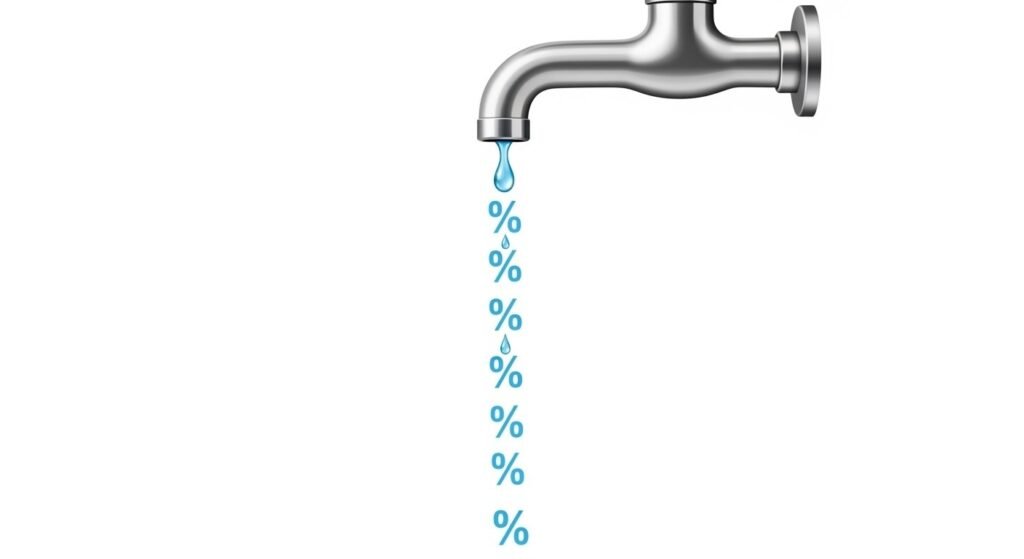
Think of ETF fees like a leaky faucet. One drip? Barely registers. But let that drip run for twenty years, and you’ve basically paid for someone’s swimming pool.
ETF fees come wrapped in something called an expense ratio. It’s the annual percentage the fund takes just for existing. Covers marketing, management, administration—whatever. You never write a check for it. They just quietly skim it off the top before your returns even show up in your account. That’s why so many people never feel the pain directly. Out of sight, out of mind.
Here’s where it gets real.
Say you put $10,000 into an ETF that averages 7% annual returns before fees. Not guaranteed—markets do whatever they want—but historically that’s a reasonable ballpark for a balanced portfolio over long stretches.
Fee Option A: 0.03% (ultra-low, think broad market index ETFs)
Fee Option B: 0.75% (pretty standard for “actively managed” or niche ETFs)
After 30 years:
- Option A grows to about $76,000
- Option B grows to about $61,000
That 0.72% difference cost you fifteen grand. Fifteen thousand dollars. For what? In many cases, a fund manager who didn’t beat the market anyway. (Most don’t. That’s not my opinion—that’s decades of data from the SPIVA scorecards.)
I’m not saying all higher-fee ETFs are bad. Some do specialized things—leveraged strategies, commodities, very specific sectors—that genuinely cost more to run. But most people don’t need those. Most people need simple, boring, cheap.

Why ETFs changed the game (and why your dad might still be in mutual funds)
ETFs used to be the underdog. Now they’re basically everywhere, and for good reason: they’re usually cheaper than mutual funds.
Not always. But usually.
A typical actively managed mutual fund might charge 1% or more. An equivalent ETF tracking the same index might charge 0.10% or less. Same exposure. Same companies. Very different cost.
Why? ETFs mostly track indexes passively. No star fund manager picking stocks. No research team flying first class to interview CEOs. Just a computer rebalancing a basket of stocks according to simple rules.
Lower overhead → lower fee → more money stays in your pocket.
Simple math. But emotionally? Hard for some people to accept. Because paying more feels like you’re getting better quality. Like buying the $80 bottle of bourbon instead of the $35 bottle. Sometimes that works. Sometimes you’re just paying for marketing.
Same with ETFs. A higher fee doesn’t guarantee better returns. In fact, over long periods, lower-cost ETFs tend to outperform higher-cost ones purely because they’re not dragging a heavy anchor.
The sneaky ones: trading costs and spreads
Here’s where beginners get tripped up.
You see an ETF with a 0.05% expense ratio. Amazing, right? But if you’re buying an ETF that trades thinly—low volume, not many people buying and selling—you might get clobbered on the bid-ask spread.
Quick explainer: Every ETF has two prices. The price someone will buy it from you (bid) and the price someone will sell it to you (ask). The difference is the spread. For popular ETFs like SPY or VTI, the spread might be a penny or two. For some weird lithium-mining ETF nobody’s heard of? Could be 0.50% or more.
You pay that spread every time you buy or sell. So if you’re someone who trades frequently—please don’t—those small costs add up fast.
My rule of thumb? If an ETF trades less than a few hundred thousand shares per day on average, I personally get nervous. Not saying it’s always bad. Just saying you should know what you’re walking into.
A real-life scenario that might hit close to home
Let’s say you’re 35. You live in Denver. Rent’s $2,100. You make $85k as a project manager. You’ve finally automated $500 a month into a brokerage account—good for you.
You pick an ESG-focused ETF because you care about climate stuff. Nothing wrong with that. But that ETF charges 0.45%. The plain vanilla S&P 500 ETF charges 0.03%.
After 25 years, assuming 6% returns before fees (conservative), that 0.42% difference costs you roughly $28,000.
Twenty-eight thousand dollars.
Could you use that for something else? A down payment? A year of your kid’s college? A seriously nice used car? Absolutely.
Does that mean you shouldn’t invest according to your values? Not what I’m saying. Just know the trade-off. Some ESG ETFs have come down in price—some are even below 0.10% now. Shop around.
How to think about fees without losing your mind
I talk to friends who freeze up when researching ETFs. “There are thousands of them. How do I pick?” They get overwhelmed and do nothing. That’s worse than paying a slightly higher fee.
So here’s my messy but practical approach:
- Start with broad market ETFs. Total U.S. stock market, S&P 500, total international. These are usually the cheapest because they’re commoditized.
- Look for expense ratios under 0.20% for most of your portfolio. Under 0.10% is even better.
- If an ETF charges more than 0.50%, ask yourself why. Really. Write down the reason. If it’s “because it might outperform,” that’s not a reason—that’s a hope.
- Check the spread if you’re buying something less common. Your brokerage probably shows “bid” and “ask” somewhere.
- Don’t trade ETFs frequently. Buy and hold. Every trade costs you something, even if it’s just a few bucks in spread and commission.
One thing nobody tells you about fee math
Compounding works both ways.
We love hearing about compounding returns—your money growing on top of previous growth. Beautiful.
But fees compound too. A 1% fee doesn’t just take 1% of your returns. It takes 1% of your portfolio every year, and that lost 1% never gets to compound for you. Over decades, the damage is way worse than the simple subtraction suggests.
There’s a reason Jack Bogle (founder of Vanguard) hammered on costs more than almost anything else. He wasn’t being cheap. He understood that in investing, what you don’t pay is just as important as what you earn.
So what do you actually do?
Look up the expense ratios of whatever you currently own. Takes two minutes. If you see numbers above 0.30% on plain vanilla ETFs, ask yourself if there’s a cheaper version of roughly the same thing.
Schwab, Vanguard, iShares, Fidelity—they all race to the bottom on fees. That’s good for you.
Don’t chase the absolute lowest fee if the ETF is weird or illiquid. But for core holdings? Cheap is almost always better.
And please—don’t beat yourself up if you’ve been paying higher fees. I did for years. Most people do. The investing industry is designed to make fees feel invisible. That’s not your fault. But now you see them.
Frequently asked questions (casual version)
Wait, do I pay ETF fees directly from my bank account?
No. You’ll never get a bill. The fund just slowly reduces the share price to account for the fee. That’s why you don’t “feel” it—and why so many people ignore it.
Are free ETFs actually free?
Some brokerages offer commission-free trading, which means you don’t pay a fee to buy or sell. But the ETF itself still has an expense ratio. Nothing is truly free. “Free” just means no trading commission, which is great, but the internal fee still exists.
Is it worth paying more for an ETF that might perform better?
History says probably not. Most actively managed funds don’t beat their benchmark after fees. Some do, for a while. But predicting which ones is basically luck. For most beginners, cheap and broad is the smarter bet.
Do ETF fees matter if I’m only investing for a few years?
They matter less, but they still matter. If you’re saving for a house in three years, a 0.50% fee on $20k is only about $300. Not nothing, but not life-changing. The real killer is decades of compounding. Long-term investors should care the most.
Can fees ever be too low?
Interesting question. Extremely low fees—like 0.00% to 0.03%—are fine as long as the ETF is from a reputable provider. The only risk is if the fund has very low assets under management and closes down. But that’s rare for major providers. So no, “too low” isn’t really a thing you need to worry about.