You have a great business idea. You can see the logo in your mind, and you know there is a market for what you want to sell. But when you look at your bank account, the excitement fades. You assume that starting a business requires a massive loan, expensive office space, or a huge inventory order. See videos on Youtube
The truth is, that assumption keeps many potential entrepreneurs stuck. What Happens to Stocks During a Market Crashs?
In the modern economy, starting a business with little capital is not only possible; it is often the smartest way to begin. Low-cost startups force you to be creative, efficient, and focused on what truly matters: solving a problem for your customers.
Whether you have $100 or $1,000 to spare, this guide will walk you through how to launch a sustainable business in the United States without taking on crippling debt.

What Is a Low-Capital Business?
A business with little capital is an enterprise that requires minimal financial investment to launch and operate. Instead of relying on heavy upfront spending on physical assets, these businesses leverage skills, digital tools, sweat equity, and lean operational models to generate revenue.
Key characteristics:
- Low overhead: No expensive leases or large payrolls.
- Digital-first: Uses free or low-cost software and social media.
- Service-based: Sells expertise or time rather than physical products initially.
- Scalable: Starts small but has the potential to grow as profits are reinvested.
For beginners, this is the safest entry point into entrepreneurship. It minimizes risk while maximizing learning.
Why Starting Lean Is a Competitive Advantage
When you start a business with limited funds, you are forced to adopt principles that most successful startups envy. You don’t have the luxury of wasting money on unnecessary branding or expensive software you don’t need yet. This scarcity mindset is actually a superpower.
It Forces Product-Market Fit
When you have little money, you cannot afford to build a product nobody wants. You have to talk to potential customers before you spend money. This ensures that the first dollar you spend is on something people are ready to buy.
It Preserves Equity
If you bootstrap (self-fund) your business, you own 100% of it. You don’t have to give away a chunk of your company to investors or take out a high-interest loan just to get started.
It Builds Resilience
Learning to market, sell, and deliver services yourself gives you a deep understanding of every aspect of your business. This experience is invaluable when you eventually hire employees or scale up.
The Best Business Models for Low Capital
If you are looking to start a business with little capital, the model you choose matters more than the industry. Here are three models that work best for beginners in the U.S. market.
1. Service-Based Entrepreneurship
This is the lowest-risk category. You are selling your time, skills, or labor. There is no inventory to buy upfront.
- Freelancing: Writing, graphic design, web development, virtual assistance.
- Local Services: Lawn care, power washing, pet sitting, house cleaning.
- Consulting: Using expertise from a previous job to advise other businesses.
Why it works: You can start with just a smartphone and a website. Marketing can be done via local Facebook groups or Nextdoor (a hyperlocal social network) for free.
2. Digital Products
Instead of shipping physical boxes, you ship files. Once you create a digital product, you can sell it thousands of times without manufacturing costs.
- Printables (planners, art) on Etsy.
- Notion templates or spreadsheets.
- E-books or short guides.
Why it works: Platforms like Etsy, Gumroad, and Amazon Kindle Direct Publishing handle the payment processing and traffic for you. Your initial capital goes toward a laptop and software subscriptions (which often have free trials).
3. Drop servicing or Agency Model
This is often misunderstood. Drop servicing is where you sell a service (like SEO or video editing) but outsource the actual work to a freelancer. You act as the project manager and customer service representative.
Why it works: You don’t need to be the expert; you just need to be good at sales and organization. You only pay the freelancer after the client pays you, making cash flow positive from day one.
A Step-by-Step Guide to Launching on a Budget
Here is a practical roadmap to go from idea to first sale with very little money.
Step 1: Validate Before You Spend
Most new entrepreneurs fail because they spend money on a product nobody asked for.
- Action: Create a simple landing page using a free tool like Carrd or Canva. Describe your service or product. Add a “Book Now” or “Pre-Order” button.
- Goal: See if people click. Ask friends, family, or local Facebook groups if they would pay for this.
Step 2: Choose a Lean Business Structure
In the U.S., you do not need a fancy corporation to start.
- Sole Proprietorship: You can operate under your own name or a “Doing Business As” (DBA) name. It costs under $100 in most states to register.
- Action: Wait to form an LLC until you have consistent revenue (usually after $3,000–$5,000 in sales). For beginners, this saves on annual state fees.
Step 3: Build a Minimal Digital Presence
You do not need a $5,000 custom website.
- Social Media: Instagram, TikTok, or LinkedIn are free. Focus on one platform where your target audience hangs out. Post valuable content consistently.
- Website: Use Squarespace, Wix, or WordPress with a low-cost template. For a service business, a simple one-page site with your contact info is sufficient.
Step 4: Use Free Tools
Keep your overhead at zero for as long as possible.
- Accounting: Wave Accounting (free) or spreadsheets.
- Email Marketing: Mailchimp or Brevo (free tiers up to 500 subscribers).
- Design: Canva (free tier).
- Payments: Venmo, CashApp, or Square (for in-person).
Step 5: Get Your First Customer
Do not wait for the perfect logo. The fastest way to get cash flow is to ask.
- Strategy: Reach out to your network. Offer a “friends and family” discount. Ask for referrals.
- Pro Tip: In the U.S., local networking events (often free at libraries or coffee shops) are excellent places to find your first client.

Understanding the Financial Side
Even when starting a business with little capital, you need to separate your personal finances from your business finances to avoid tax headaches and to track your profitability accurately.
Open a Separate Bank Account
Once you have your first $100 in revenue, open a free business checking account (many online banks like Bluevine or Novo offer $0 fees). This makes tax time much easier.
Know Your Taxes
In the United States, when you are self-employed, you are responsible for:
- Self-Employment Tax: This covers Social Security and Medicare (roughly 15.3% of your profit).
- Quarterly Estimated Taxes: Unlike employees who have taxes withheld, freelancers and business owners must pay the IRS every quarter (April, June, September, January).
- Action: Set aside 25–30% of every payment you receive into a separate savings account for taxes. This prevents a shocking bill in April.
Risk Awareness: Protecting Yourself
Finance is about managing risk, not eliminating it. Starting a business is risky, but you can control how much risk you take on.
The Danger of Personal Liability
As a sole proprietor, if your business gets sued, your personal assets (car, savings, home) are at risk.
- Mitigation: Once you start making money, consider forming a Limited Liability Company (LLC). This legally separates your personal assets from your business debts. It typically costs between $50 and $800 depending on your state.
The “Friends and Family” Trap
It is tempting to borrow money from relatives to fund your inventory or marketing. However, mixing money and relationships can strain personal bonds.
- Recommendation: If you must take money, treat it like a formal loan. Write a contract specifying interest and payment terms, or structure it as a gift. Better yet, save up the money from your day job or start with a service business that requires no upfront investment.
Debt Awareness
Avoid using high-interest credit cards to fund your startup costs. If you cannot afford a piece of equipment, consider renting it, buying used, or finding a workaround until you have the cash.
Common Mistakes Beginners Make
When launching a business with little capital, avoiding these pitfalls will save you thousands of dollars and months of frustration.
- Spending Too Much on Branding
You don’t need a $2,000 logo when you have zero customers. A clean, simple logo from Canva is fine until you hit $10,000 in revenue. Customers care more about the solution you provide than the font in your logo. - Buying Inventory Prematurely
Many new entrepreneurs buy thousands of dollars of products (clothing, candles, gadgets) assuming they will sell. When they don’t, they are left with a garage full of unsellable items. Solution: Start with print-on-demand or made-to-order models so you only pay for inventory after a sale. - Underpricing Services
Beginners often price too low because they lack confidence. If you charge $20 for a service that takes two hours, you are working for $10/hour and burning out.- U.S. Context: Remember your self-employment tax and health insurance costs. You need to charge a rate that covers these hidden expenses.
- Neglecting Legal Basics
Operating without a contract is a recipe for disaster. Always use a simple service agreement (you can find templates online) that outlines the scope of work, payment terms, and cancellation policy.

Long-Term Perspective: Building Wealth, Not Just a Hustle
Starting a business with little capital is often viewed as a “side hustle,” but it can be the foundation for long-term wealth creation. The goal is to move from trading time for money to building an asset.
Reinvest Profits
In the early stages, treat your business like a savings account for growth. Instead of spending your first $1,000 on a new phone, reinvest it into:
- A better website to convert more visitors.
- A course to sharpen your skills.
- Hiring a virtual assistant to free up your time.
Tax-Advantaged Retirement Accounts
One major advantage of being self-employed in the U.S. is access to retirement accounts with higher contribution limits than a traditional 401(k).
- SEP IRA: Allows you to contribute up to 25% of your net earnings from self-employment (up to a high annual limit).
- Solo 401(k): Ideal if you have no employees other than a spouse.
Using these accounts reduces your taxable income today while building wealth for the future. It is a crucial step in moving from a “gig” to a legitimate business.
Conclusion
You do not need a trust fund or a bank loan to become a business owner. The modern economy is built for the lean entrepreneur. By focusing on skills, leveraging free digital tools, and validating your ideas before you spend money, you can start a business with little capital and grow it into a sustainable source of income.
The path is not always easy. There will be months where revenue is slow, and you will have to wear many hats—marketer, accountant, and customer service representative. However, the skills you learn during this bootstrapped phase will serve you for the rest of your career.
Remember, the goal is progress, not perfection. Start small, stay consistent, and keep your costs low. Your future self will thank you for taking that first step today.
Frequently Asked Questions (FAQ)
1. What is the absolute cheapest business to start?
The cheapest businesses are service-based businesses that rely on skills you already possess. Examples include freelance writing, virtual assisting, or pet sitting. These require $0 to $50 to start (usually just the cost of a website domain or business license). You are selling your time and expertise rather than physical goods.
2. Do I need an LLC to start a business in the US?
No, you do not need an LLC to start. You can operate as a Sole Proprietorship using your Social Security Number. However, an LLC is recommended once you have consistent revenue (typically after a few thousand dollars) because it provides legal protection, separating your personal assets from business liabilities. You can always convert to an LLC later.
3. How do I handle taxes if I’m just starting out?
You must report all income to the IRS, even if you don’t receive a 1099 form. As a sole proprietor, you will file a Schedule C with your personal tax return (Form 1040). If you expect to owe more than $1,000 in taxes for the year, you need to make estimated quarterly tax payments to avoid penalties. It is wise to consult a CPA or use tax software designed for freelancers.
4. Can I get a business loan with no money?
While traditional bank loans are difficult to secure without a track record, there are alternative ways to fund a low-capital business. You can use a 0% APR introductory credit card (if you are disciplined enough to pay it off before interest accrues), apply for microloans from non-profits like Kiva (which offers $0% interest loans), or utilize crowdfunding platforms. However, for a business with little capital, it is usually best to bootstrap with savings first to avoid debt risk.
Table of Contents

Dave Ramsey Investment Calculator: How to Build Wealth
The Dave Ramsey investment calculator is a powerful financial planning tool designed to help investors estimate the long-term growth of […]

What Is a Collective Investment Trust? 401(k) Guide
If you’ve ever looked at your 401(k) statement and felt a little knot in your stomach—not because of the balance, […]
Passive Income Ideas: A Beginner’s Guide (USA)
For many Americans, the traditional 9-to-5 job is the primary source of income. You trade your time for a paycheck, […]
How To Start Up Business With Little Capital & Easy Money
You have a great business idea. You can see the logo in your mind, and you know there is a […]
How Do You Get Rich with No Money? Beginner’s Guide
We have all seen the headlines: “From Rags to Riches” and “How I Made Millions by 30.” If you are […]
What to Know Before Choosing Steady Capital Solutions
If you are new to investing, the sheer number of financial firms and platforms available can feel overwhelming. You might […]
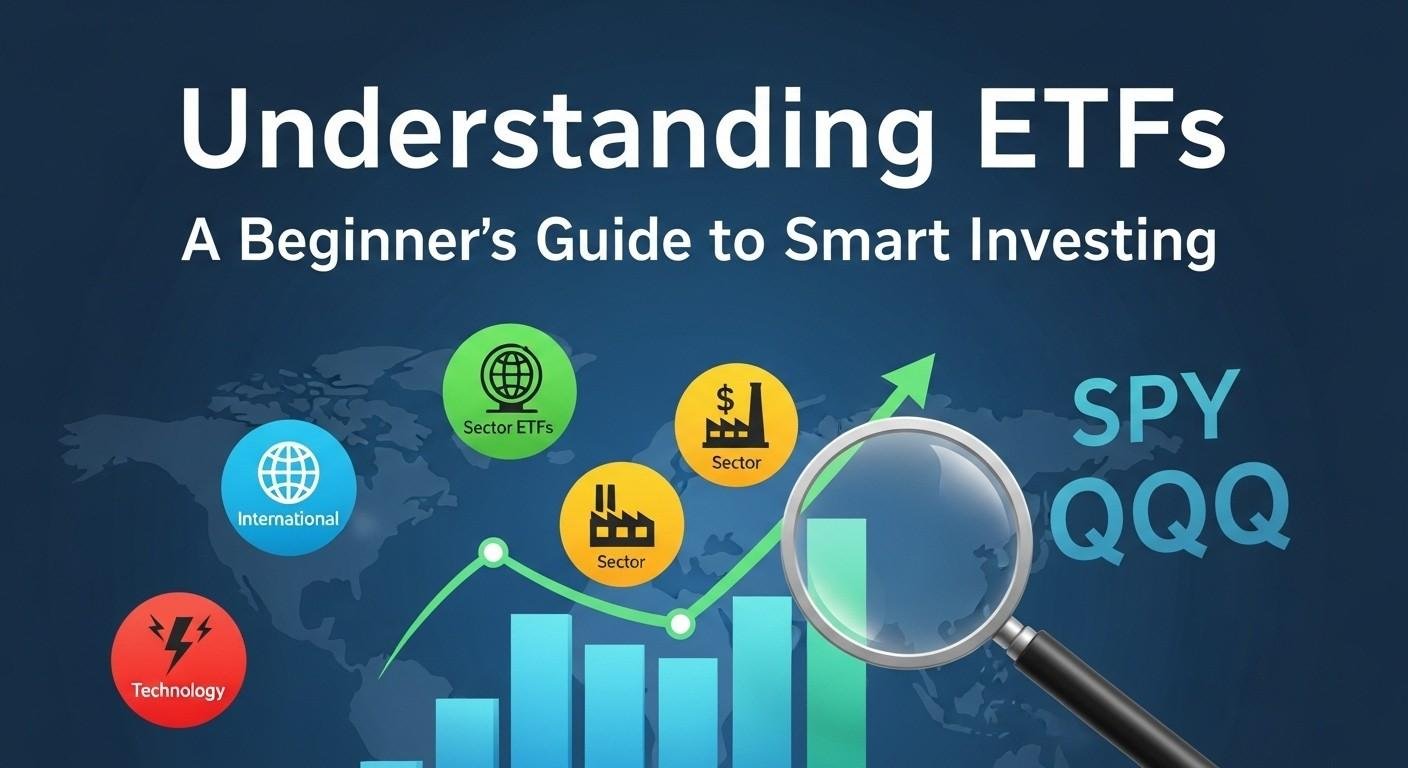
Understanding ETFs: Easy Beginner’s Guide Investing
Imagine a world where investing in the stock market feels as easy as shopping for groceries online. In recent years, […]
What Happens to Stocks During a Market Crashs?
Let’s be honest: turning on the news and hearing that the stock market crashs is “plunging” or “in the red” […]
Market Volatility Explained: Easy steps & Why It Matters
If you’ve just started checking your investment app or your 401(k) balance, you might have noticed that some days the […]
Stock Market Myths Beginners Still Believe Easy (Explained)
Many Americans want to start investing but hesitate because of things they’ve heard about the stock market. Some believe you […]