Managing money shouldn’t feel complicated, $100 budgeting rule yet for millions of Americans, budgeting feels overwhelming, frustrating, and ineffective. You get paid, feel financially stable for a moment, and then somehow your bank balance drops faster than expected. Bills, subscriptions, food delivery, impulse purchases—it all adds up quietly.
The problem isn’t that people don’t earn enough.
The real issue is how decisions are made before spending.
That’s where the $100 budgeting rule comes in—a simple but powerful system that helps you control spending before money leaves your account.
This article explains exactly what the $100 Budgeting rule is, why it works, how to use it in real American life, and how to customize it for long-term financial success.
What Is the $100 Budgeting Rule?
The $100 budgeting rule is straightforward:
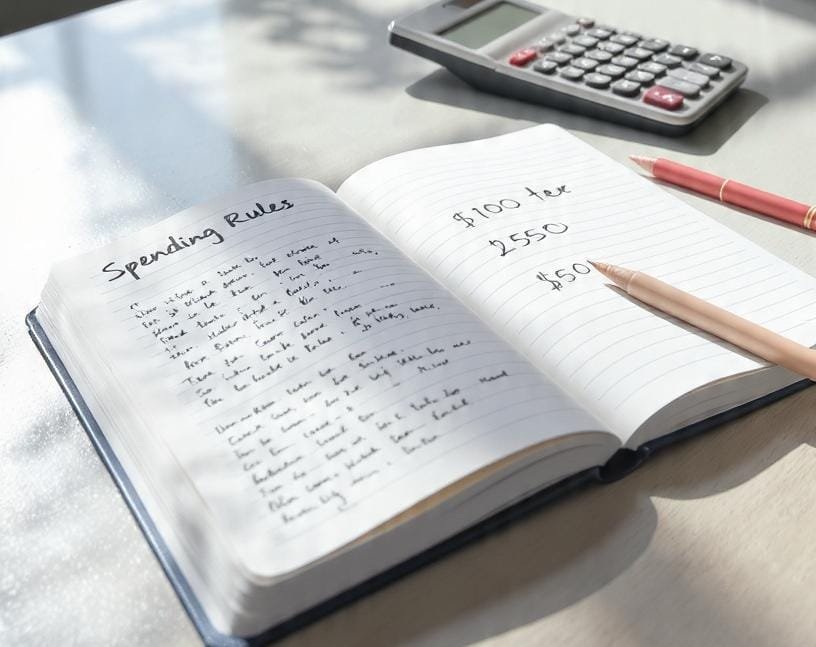
Any time you’re about to spend $100 or more, you pause before buying.
No instant decisions.
No emotional purchases.
No “I’ll figure it out later” thinking.
Instead, you stop and evaluate whether the purchase is truly worth it.
This rule applies to:
- Shopping
- Dining
- Subscriptions
- Gadgets
- Online purchases
- Lifestyle expenses
It does not mean you can never spend more than $100.
It means you must intentionally decide, not react.
Why Budgeting Fails for Most Americans
Traditional budgeting systems often fail because they focus on tracking spending after it happens. Apps, spreadsheets, and expense logs rely heavily on discipline and consistency—two things humans are bad at when life gets busy.

Here’s why most people struggle:
- Spending is frictionless (cards, apps, one-click checkout)
- Impulse purchases feel small but add up fast
- Subscriptions quietly drain money every month
- Lifestyle inflation grows with income
- Budgeting feels restrictive instead of empowering
The $100 rule works because it adds friction back into spending.
And friction is what slows bad financial decisions.
Why the $100 Rule Is So Effective
The power of this rule comes from psychology, not math.
When you delay a purchase—even by 24 hours—you remove emotional urgency. The excitement fades. Logic takes over. And suddenly, many purchases don’t feel necessary anymore.
Key reasons it works:
- Interrupts impulse spending
- Forces awareness before money leaves your account
- Reduces emotional decision-making
- Simplifies budgeting without tracking every dollar
- Helps prevent lifestyle inflation
Instead of tracking hundreds of small expenses, you focus on the decisions that matter most.
How to Use the $100 Rule in Real Life (USA Examples)
1. Technology Purchases
A new phone costs $1,000+ in the U.S. The rule forces you to ask:
- Is my current device broken or just outdated?
- Can I delay this purchase?
- Is there a cheaper alternative?
Many people realize they’re upgrading out of boredom—not necessity.
2. Dining Out and Food Delivery
A $150 dinner doesn’t feel extreme until it happens multiple times a month.
Applying the $100 rule helps you:
- Reduce unnecessary restaurant spending
- Plan intentional dining experiences
- Cook more at home without feeling deprived
This alone can save hundreds per month.
3. Clothing and Shopping
Sales create false urgency. A $140 jacket feels cheap because it’s not $300.
The rule breaks comparison spending and helps you buy:
- Less often
- Higher quality
- With intention
4. Subscriptions
Subscriptions are one of the biggest money leaks in American households.
Apply the $100 rule annually:
“Would I buy this again today for $120 a year?”
If the answer is no, cancel it.
What Counts as a ‘Necessary’ Expense?
True necessities are fewer than most people think.
Generally necessary:

- Housing
- Basic food
- Utilities
- Insurance
- Medical expenses
Most other purchases are convenient, not essential.
Convenience should still be evaluated—especially if it costs more than $100.
The Hidden Psychological Benefits of the $100 Rule
This rule does more than save money—it changes how you think.
1. You Stop Confusing Spending With Progress
Buying things feels productive. The rule exposes this illusion and shifts focus to real financial growth.
2. You Become Harder to Market To
Sales tactics, flash deals, and “limited time offers” lose power when you pause before buying.
3. You Build Financial Self-Trust
When you stop impulse spending, guilt disappears. Confidence replaces it. You start trusting your decisions.
That’s when budgeting stops feeling restrictive and starts feeling empowering.
How to Customize the $100 Rule for Your Income
The rule is flexible—not rigid.
Adjust the Threshold
- Lower income → $100 works well
- Higher income → $250 or $500 may be more realistic
The goal is forcing a pause, not limiting success.
Pre-Approve Smart Exceptions
Allowed:
- Medical expenses
- Emergencies
- Planned investments
- Long-term income tools
Not allowed:
- Emotional spending
- “I deserve this” purchases
- Boredom spending
Track What You Avoid Spending
Instead of tracking expenses, track avoided purchases.
This reinforces progress and keeps motivation high.
When Breaking the $100 Rule Is Actually Smart
Breaking the rule is acceptable when spending:
- Saves time long-term
- Increases income
- Reduces recurring expenses
- Improves health or safety
The rule exists to prevent bad decisions—not good investments.
Who Should Use the $100 Budgeting Rule?
This rule works especially well for:
- Budgeting beginners
- People living paycheck to paycheck
- Anyone struggling with impulse spending
- Americans trying to build savings
- People paying off debt
- Those wanting a simple budgeting system
It’s simple, adaptable, and sustainable.
Try the $100 Rule for 30 Days
The real test isn’t reading about it—it’s using it.
Commit for 30 days:
- Pause before $100+ purchases
- Delay decisions
- Remove emotion
- Observe your habits
Most people notice changes within the first week.
Final Thoughts
Budgeting doesn’t need to be complicated to be effective.
The $100 budgeting rule works because it focuses on decision control, not restriction. It helps you stop leaking money, build awareness, and regain confidence with your finances.
Table of Contents
if you are read $100 Budgeting Rule
Stop buying this things if you want to rich
ADHD Budget Planner App | Debt Tracker, Bill Organizer (Digital Download)
Debt Payoff Tracker 💳 Debt Payoff Tracker Auto-savedFREE DEMO ⭐ Instructions 💳 My Debts 📊 Dashboard ❄️ Snowball Plan 🏔️ Avalanche Plan 📅 Payment Log 🎯 Debt-Free Countdown 🔒 This is a FREE DEMO — you can add up to 2 debts to test it out. Get the full version for unlimited debts, saved data,…
Free Debt Payoff Tracker — Try the Snowball & Avalanche Calculator
Paying off debt feels overwhelming when you don’t know where to start, which balance to attack first, or how much interest you’re really losing each month. That’s exactly why we built the Debt Payoff Tracker — a simple, visual tool that turns your credit cards, loans, and balances into a clear, step-by-step payoff plan. Instead…

Free Vehicle Bill of Sale Template & Generator | Fillable PDF
What Is a Vehicle Bill of Sale Template? A vehicle bill of sale is a document that records the private sale of a car, truck, SUV, motorcycle, ATV, UTV, van, RV, boat, or trailer. It confirms who bought and sold the vehicle, the price paid, the vehicle’s condition, and any disclosures both parties agreed to…