why Start Side Hustles for Nurses Long shifts. Emotional exhaustion. The physical toll. And yet, depending on where you live in the U.S.—say, a coastal city or even a growing spot like Nashville or Austin—that paycheck might vanish faster than a turkey sandwich on a 12-hour night shift.

How Much Can Nurses Realistically Earn From a Side Hustle?
Legal nurse consulting: $75–150/hour part-time from home. NCLEX tutoring: $40–70/hour. PRN nursing shifts: $45–80/hour depending on specialty and state. Health content writing: $30–60/hour for medical blogs and telehealth companies. CPR/First Aid instructor: $300–600 per class day.
Realistically, adding one side hustle and working 5–8 hours per week, most nurses can generate an extra $500–1,200 per month without burning out.
| Side Hustle | Hours/Week | Monthly Income | Uses Nursing License? |
|---|---|---|---|
| Legal nurse consulting | 3–5 | $400–750 | Yes |
| NCLEX tutoring | 4–6 | $640–1,050 | No |
| PRN shifts | 4–12 | $500–1,500 | Yes |
| Health content writing | 4–8 | $400–900 | Partially |
| CPR instructor | 1–2 days/month | $300–600 | No |
I’ve talked to ER nurses pulling down $75k a year who still feel like they’re one broken water heater away from trouble. And I’ve talked to ICU nurses making six figures who just want to pay off student loans before they turn 40 without living like a broke college kid.
So the side hustle question comes up a lot. free investment calculator
Not because nursing doesn’t pay. It does. But because burnout is real, and sometimes what you need isn’t more overtime at the same bedside. Sometimes you need something different. Something that uses a different part of your brain. Or something that doesn’t feel like work at all.
Let me walk you through some good side hustles for nurses that actually make sense. Not the generic “drive for a rideshare” stuff (though hey, no judgment if that’s your thing). I mean ideas that lean into what you already know, plus a few curveballs that might surprise you.
First, a quick reality check Good Side Hustles for Nurses
Before we dive in, here’s something nobody says enough: your time is not infinite.
You work three twelves. Or four tens. Or some chaotic mix of nights, weekends, and holidays that makes normal people wince. So any side hustle you pick should not make your life measurably worse. That’s the rule. If it leaves you more exhausted than that post-shift drive home, it’s not a side hustle—it’s a second job you’ll quit in six weeks.
Also, check your hospital’s policy. Some have strict rules about outside work, especially if it involves patient care or anything that could create a conflict. Don’t skip that step. Seriously.
Okay. Now the good stuff.
Legal nurse consulting (sounds fancy, but hear me out)

This one sounds like a whole career change. It’s not.
Attorneys who handle medical malpractice, personal injury, or even worker’s comp cases need someone to translate medical records into plain English. That’s you. You don’t need to be a lawyer. You just need to read a chart and say, “Hey, this timeline doesn’t add up” or “Actually, that’s not how wound care works.”
Some nurses charge $100–150 an hour for this. Part-time. From their living room.
I’m not saying it’s effortless—you have to learn how attorneys think and how to write a clear report. But compared to another 12-hour shift? A lot of nurses find this refreshing. You’re still using clinical knowledge, but you’re not wiping anyone or dodging confused family members.
Downside: cases can be sporadic. One month you might have three attorney requests. Then nothing for six weeks. So don’t quit your day job over it. But as a low-pressure, high-dollar-per-hour option? Hard to beat.
Tutoring nursing students (this one’s sneaky good)
Think back to nursing school. Remember how terrified you were of the NCLEX? How some topics just didn’t click until a classmate explained them differently?
That’s a side hustle sitting right there.
Current nursing students will pay $40–70 an hour for help with pharmacology, med-surg, or NCLEX prep. You don’t need a teaching degree. You just need patience and the ability to explain something like acid-base balance without making someone cry.
You can do this over Zoom. Half hour here, an hour there. I know a cardiac nurse who tutors two students a week, four hours total, and makes almost $1,000 a month. She says it actually helps her own practice because teaching forces her to stay sharp.
The weird bonus? It reminds you how far you’ve come. Nursing school is brutal. Helping someone survive it feels surprisingly good.
Shift key nursing or PRN gigs (the obvious but overlooked option)
Okay, this one isn’t “creative.” But hear me out.

Instead of picking up overtime at your main hospital (where you’re probably underpaid for extra shifts anyway), some nurses sign up with a PRN agency or a per-diem gig at a different facility. Different pace. Different patient population. Sometimes even better pay.
The advantage here is flexibility. You pick up shifts when you want. No minimum. And because it’s a change of scenery, it doesn’t always feel like “more work.” Sometimes a lower-acuity setting—like an outpatient clinic or a rehab facility—feels almost relaxing compared to the chaos of the floor.
The catch? You’ll have to get credentialed at another place, and that’s annoying paperwork. But once it’s done, it’s done.
One ICU nurse I know does two PRN shifts a month at a small psychiatric hospital. She says it’s totally different stress—more talking, less running—and she actually looks forward to it. Weird, right?
Freelance health writing (if you can string sentences together)
This one surprises people.
Hospitals, health websites, insurance companies, and even device manufacturers need content written by someone who actually understands healthcare. Not a general blogger who Googled “what is sepsis.” Someone who has held a patient’s hand during a code.
You don’t need to be a great writer. You need to be a nurse who can write clearly. That’s different.
There are nurses making $0.50 to $1 per word writing blog posts, patient education materials, or even social media content for healthcare brands. A 1,000-word article at 75 cents a word is $750. For maybe three hours of work.
I’m not saying you’ll land that rate immediately. You might start at $150–200 per post. But here’s the thing—once you have a few samples, you can raise rates quickly because your clinical background is rare.
Downside? Pitching takes time. You’ll get ignored sometimes. But if you’re even a little bit curious about writing, this is worth exploring.
In-home private duty (not what you think)
I’m not talking about 24/7 live-in care. That’s a recipe for burnout.
But there’s a niche: families who need a nurse for a few hours after a procedure, or to help with a medically complex child so parents can sleep. Sometimes it’s just sitting with an older adult who needs meds monitored for a few hours in the evening.
These gigs often pay $50–80 an hour because it’s private pay. And the pace is usually slow. You’re there for safety, not to run around.
One pediatric nurse does this twice a week for a family with a trach-dependent toddler. She goes after her hospital shift, spends three hours hanging out, doing trach care once, and helping with bedtime. Says it doesn’t even feel like work because the family is grateful and the kid is adorable.
But—and this is important—make sure you’re covered by liability insurance. Your hospital’s policy won’t follow you home.
Teaching CPR or BLS classes
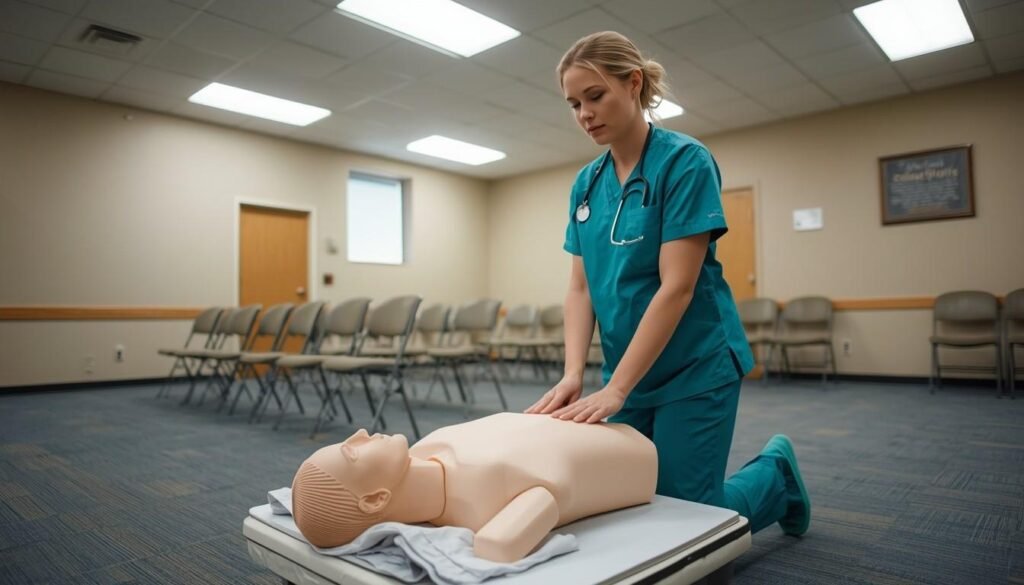
You already know the material. The American Heart Association and Red Cross are always looking for instructors.
You don’t have to teach full classes. Some nurses just teach the renewal courses, which are shorter and attract healthcare workers who already know 80% of it. You’re really just verifying skills and running a few scenarios.
A four-hour class might pay $200–300. Do two of those a month, and that’s a car payment.
The setup cost is real though—you need your instructor certification and manikins. But after that, you can rent space at a church, community center, or even a coffee shop’s back room if they’re cool. Some nurses teach out of their own garage in a pinch (check your local regulations on that one).
The stuff I’m skeptical about (but you might love)
You’ll see lists online suggesting things like:
- Selling study guides on Etsy
- Making nurse-themed stickers or t-shirts
- Doing telehealth triage from home
Some nurses crush these. Truly. I know a guy who makes $2k a month selling NCLEX flashcards he designed on Canva.
But here’s my honest take: those usually turn into more work than you expect. Selling physical products means packaging and shipping. Telehealth triage sounds easy until you’re on the phone with someone who won’t stop talking and you have 12 minutes per call.
Not saying no. Just saying go in with eyes open.
A word about taxes (sorry, I have to)
Side hustle money is taxable. Shocker, I know.
If you make more than $600 from any single platform or client, they’ll send you a 1099. But even if they don’t, you’re supposed to report it. I’m not the IRS, so do what you want with that information.
What actually matters: set aside 20–25% of every side hustle payment. Put it in a separate savings account. Pay estimated taxes quarterly if this becomes real money. Otherwise, April will hurt.
Also, track your expenses. If you buy a blood pressure cuff for a private duty client, that’s deductible. Mileage to a tutoring session? Deductible. Stethoscope upgrade? Probably not, but ask an actual tax person. I’m just a writer.
How to actually start without getting overwhelmed
Pick ONE. Not two. Not three.
You have limited bandwidth. Trying to launch legal consulting while also teaching CPR and writing freelance articles is how you end up doing none of them.
Give yourself a small test: “I will spend four hours this week exploring one hustle.” That’s it. Make one call. Write one pitch. Email one attorney. Nothing more.
Most nurses I see fail at side hustles don’t fail because the idea was bad. They fail because they tried to do too much at once.
One last thing nobody mentions
Sometimes the best side hustle isn’t more work.
Sometimes it’s figuring out why you need a side hustle in the first place. If you’re chasing side income because your hospital pay hasn’t kept up with rent and groceries, that’s one thing. But if you’re chasing it because you’re bored or restless, maybe what you really need is a different specialty or a travel contract.
Travel nursing is its own beast—better pay, housing stipends, total chaos—but for some nurses, that’s the real solution. Not a side hustle. A whole different setup.
I’m not saying one is better. Just worth asking yourself the question.
FAQ – Because I know you’re wondering
How many hours a week should a nurse realistically dedicate to a side hustle?

Start stupid small. Like three to five hours. See how you feel after a month. Some nurses can handle ten hours without issue. Others burn out fast because their main job is already draining. There’s no medal for pushing too hard.
Do I need to tell my employer about my side hustle?

Depends. If it involves patient care or any kind of medical work, yes—many hospitals have non-compete or outside employment clauses. If you’re just tutoring or writing articles, probably not, but read your employee handbook anyway. One phone call to HR can save you a huge headache.
What’s the fastest way to make extra money as a nurse without a long setup?

Pick up a PRN shift at a different facility. No waiting. No learning new skills. Just credentialing paperwork (which takes a couple weeks, not months). Or tutor nursing students if you already know the material—you can literally start tomorrow with a Zoom account.
Can I do these if I’m a new grad with one year of experience?

Some of them, yes. Tutoring? Totally fine. CPR teaching? Usually fine. Legal consulting? Probably wait until you have 3–5 years under your belt. Attorneys want credibility, and one year isn’t enough to catch subtle charting errors or deviations from standards of care.
What if I try a side hustle and hate it?

Then stop. Seriously. No shame in that. The whole point is to improve your life, not add more stress. Quitting something that isn’t working isn’t failure—it’s information.