
Here’s the thing nobody tells you when you first start hearing about retirement accounts: there are about a million ways to save for the future, and half of them come with acronyms that sound like government surveillance programs.
IUL vs Roth IRA vs 401k
free investment return calculator
If you’ve ever stared at a benefits enrollment form and felt your brain leave your body, you’re not alone. I’ve been there. Sitting at a crappy office desk, fluorescent lights buzzing overhead, trying to decide between a Traditional 401(k) and a Roth while a coworker talks too loudly about their keto diet.
So let’s actually break this down. Not like a textbook. Like we’re grabbing coffee and I’m trying to save you from the confusion I went through.
Quick Comparison Table: IUL vs Roth IRA vs 401k
| Feature | Roth IRA | 401(k) | IUL (Indexed Universal Life) |
|---|---|---|---|
| What is it? | An individual retirement account | A workplace retirement plan | Life insurance + an investment-like component |
| How you fund it | You deposit money yourself (after taxes) | Comes straight from your paycheck (pre-tax usually) | You pay monthly or annual insurance premiums |
| Tax when you put money in | You already paid taxes | No tax today (lowers your taxable income) | You pay taxes on the premium money |
| Tax when you take money out | $0 tax. Seriously. Zero. | Taxed as ordinary income | Loans and withdrawals can be tax-free if structured right (but tricky) |
| Employer match? | No | Yes – free money. Don’t skip this. | No |
| Contribution limit (2025) | 7,000(8,000 if 50+) | 23,500(31,000 if 50+) | No legal limit, but high premiums trigger taxes |
| Income limits? | Yes – single ~$160k+ can’t contribute directly | No | No |
| Can you access money early? | Yes – withdraw your contributions anytime, no penalty | Not really – penalties + taxes before 59½ | Yes – but surrender charges apply in first 10-15 years |
| Market risk | Full market risk (stocks go down) | Full market risk (stocks go down) | Capped gains, but a floor protects you from losses |
| Typical fees | Very low (~0.03% to 0.20%) | Low (0.50% to 1.50% depending on plan) | High (2% to 3.5%+ in internal fees) |
| Who is this best for? | Most people. Especially younger earners. | Anyone with a 401(k) and an employer match | High earners who’ve already maxed other accounts |
| Complexity level (1=simple, 5=confusing) | 1 – Super straightforward | 2 – Easy once you pick your percentage | 4 – Read the fine print carefully |
| Biggest risk beginners miss | Income creep – you might earn too much later to contribute | Not contributing enough to get the full match | Policy lapses if you stop paying premiums. You can lose everything. |
That time I almost bought into the IUL pitch
A few years back, a friend of a friend who sold insurance (surprise) wanted to “grab lunch.” You know the drill. Twenty minutes into sandwiches, he pulls out a brochure for an IUL—Indexed Universal Life. He made it sound like a secret hack the wealthy use. Tax-free growth, market protection, life insurance thrown in like a bonus.
It was tempting. Really tempting.
But here’s what I figured out after actually reading the fine print (and annoying a few honest advisors with questions): IULs are complicated. Like, genuinely complicated. They tie your cash value growth to a stock market index—say the S&P 500—but with a cap and a floor. The floor means you won’t lose money when the market tanks. Cool, right? But the cap means when the market soars 20%, you might only get 8% or 10%.
And the fees? Oh man. Cost of insurance, administrative fees, surrender charges if you need to bail early. Those fees quietly eat into your returns for years before the tax benefits even matter.
I’m not saying IULs are evil. For a tiny slice of people—high earners who’ve already maxed out every other account and need more tax diversification—they might make sense. But for most of us? It’s like buying a tour bus when you just need a ride to the grocery store.
The 401(k) is boring. That’s actually good.
Let’s talk about the 401(k) first because it’s the one you probably already have access to through your job. And yes, it’s boring. There’s no sales pitch. No one gets a commission when you sign up. Which honestly should tell you something.
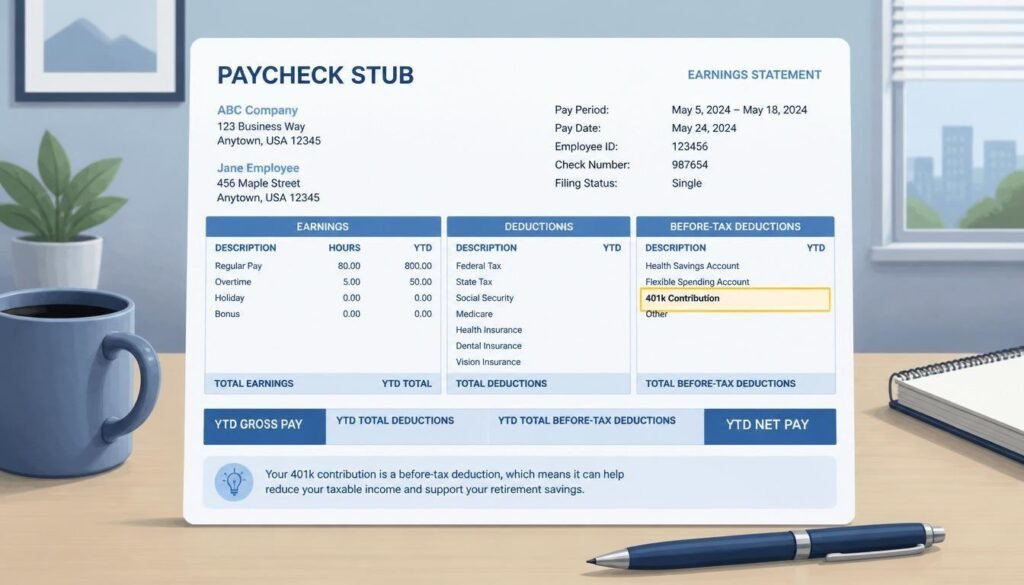
With a 401(k), money comes straight out of your paycheck before you even see it. That’s psychologically brilliant—you can’t miss what never hits your checking account. Some employers match part of what you put in. That match is free money. Literally free. If your company offers a 4% match and you’re not taking it, you’re leaving cash on the table. I did that for two years because I was “too busy” to log into the portal. Still mad at myself.
The trade-off? You can’t touch that money until you’re 59½ without paying a penalty (plus taxes). And when you withdraw in retirement, you pay ordinary income tax on everything. How much? Depends on your tax bracket then, which is the big unknown nobody can predict.
A 401(k) is straightforward. Maybe too straightforward for some people. But that’s kind of the point.
Roth IRA is the darling of personal finance Twitter
Open any finance forum and people will evangelize the Roth IRA like it’s a religion. There’s a reason.
You fund a Roth IRA with money you’ve already paid taxes on. Then it grows. And when you pull it out in retirement? Zero taxes. Not “lower taxes.” Zero. Every dollar of growth, every dividend reinvested over decades—tax-free.

Here’s a real example because examples help: Say you put $6,000 into a Roth IRA at age 25. You never add another dime. By 65, at a 7% average return, that’s roughly $90,000. All of it tax-free when you withdraw. If that same money sat in a regular brokerage account, you’d owe capital gains taxes on about $84,000 of growth. That’s real money.
But—and this is a big but—there are income limits. In 2025, if you’re single and make more than roughly $160,000, you can’t contribute directly to a Roth IRA. There’s a backdoor method people use, but that’s a whole other conversation.
Also, the contribution limit is relatively small. $7,000 in 2025 if you’re under 50. That’s not nothing, but it’s also not enough for most people to retire on alone.
So which one actually wins? (Spoiler: it depends)
I wish I could give you a clear winner. But anyone who says “always do X” either doesn’t understand nuance or is trying to sell you something.
Let me walk through three different people I actually know. Names changed because they’d kill me.
Sarah, 28, marketing manager. Makes $75k. Her employer matches 5% into a 401(k). She contributes exactly 5% to get the match, then puts whatever she can into a Roth IRA. Why? She’s young, her tax rate is relatively low right now, and she wants tax-free income later. That’s a smart play.
Marcus, 45, freelance designer. No employer plan. He uses a Roth IRA and a taxable brokerage account. He looked into an IUL but decided the fees didn’t make sense for his situation. He likes knowing exactly what he’s paying for.
Linda, 52, senior director at a tech company. Makes $220k. She maxes her 401(k) ($30,000 catch-up included) because the tax deduction lowers her massive tax bill today. She also does a backdoor Roth IRA. An IUL? Her advisor mentioned it once. She passed. Too many moving parts when she already has access to cheap, simple accounts.
Three different people. Three different answers.

The hidden stuff nobody mentions
Okay, here’s where I get real with you.
First: Liquidity. A Roth IRA lets you withdraw your contributions (not earnings) anytime without penalty. That’s a huge, underrated feature. If life blows up—job loss, medical emergency, whatever—you can access that money. A 401(k) is much stricter. Loans are possible but messy. IULs have surrender periods where pulling money early costs you.
Second: Fees matter more than you think. A 1% fee difference over 30 years eats about 25% of your returns. No joke. Most 401(k)s have low fees if your employer picked a decent plan. Roth IRAs at a brokerage are basically free. IULs… not free. The average IUL has internal fees that can run 2-3% or more. That’s brutal.
Third: Complexity kills consistency. Here’s a truth people don’t say enough: The best account is the one you’ll actually use. If an IUL is so confusing you put off funding it for three years, that’s worse than just using a simple Roth IRA. Don’t let perfect be the enemy of good.
What about using all three?
You can. Some people do. But unless you’re saving $30k+ per year, you probably don’t need to spread yourself that thin.
A common middle-class approach that actually works:
- Put enough into your 401(k) to get the full employer match (that’s immediate 100% return on that money—nothing beats that)
- Max a Roth IRA if your income allows
- If you still have money left, go back and increase your 401(k) contribution
That’s it. That’s the play for most people reading this. No IUL required.
The tax guessing game
Here’s something nobody talks about enough: choosing between Roth and Traditional is basically gambling on future tax rates. If you think taxes will be higher when you retire, Roth wins. If you think taxes will be lower, Traditional wins. Or a mix.
I don’t know what tax rates will look like in 2050. Neither does anyone else, no matter how confident they sound on a podcast. That’s why having both types of accounts—some tax-free (Roth) and some tax-deferred (Traditional 401(k))—gives you flexibility.
Think of it like this: Would you want all your food in one refrigerator? No. You’ve got a freezer, a fridge, maybe a pantry. Different tools for different situations.
A quick word on life insurance (because IUL includes it)
People often buy IULs partly for the death benefit. If you have kids or a spouse who depends on your income, life insurance matters. Totally fair.

But here’s my opinion: separate your investing from your insurance. Buy cheap term life insurance if you need coverage. It costs a fraction of what you’d pay for an IUL. Then invest the difference in a Roth IRA or 401(k). You’ll almost certainly end up with more money and fewer headaches.
The only exception? Extremely high net worth people using advanced estate planning. And I’m guessing if that’s you, you’re not reading this on a random blog at 10pm.
Realistic risks (because nothing is guaranteed)
Markets go down. They just do. A Roth IRA or 401(k) invested in stocks can lose 30-40% in a bad year. That’s terrifying when it happens. But historically, over decades, they’ve recovered and grown.
IULs don’t lose money in a crash because of that floor. But they also won’t capture full market upside. And if you stop paying premiums, the policy can implode. People don’t talk enough about that—an IUL requires ongoing payments to keep the life insurance part active. Miss enough payments and the whole thing collapses.
There’s no free lunch. There never is.
Frequently asked questions (the ones people actually ask)
Can I have both a Roth IRA and a 401(k)?
Yeah, absolutely. Tons of people do. The contribution limits are separate, so you can max both if your income and budget allow. Just watch the Roth IRA income limits.
What happens to my 401(k) if I leave my job?
You’ve got options. Leave it there, roll it into your new employer’s plan, or roll it into an IRA. Rolling into an IRA usually gives you more investment choices and lower fees. Just don’t cash it out—taxes and penalties will gut you.
Is an IUL better for rich people?
Sometimes. The main appeal is for people who’ve already maxed their 401(k) and Roth IRA and still want more tax-advantaged growth. Also for estate planning if you have millions. For regular savers, it’s usually overkill.
What if my employer doesn’t offer a 401(k)?
Then focus on a Roth IRA (or Traditional IRA). The limit is lower, but something is better than nothing. Also look at a taxable brokerage account. No tax advantages, but total flexibility.
How much should I actually be saving?
The common rule is 15% of your gross income toward retirement. But start where you can. 5% is better than 0%. 10% is better than 5%. Don’t let perfectionism paralyze you.