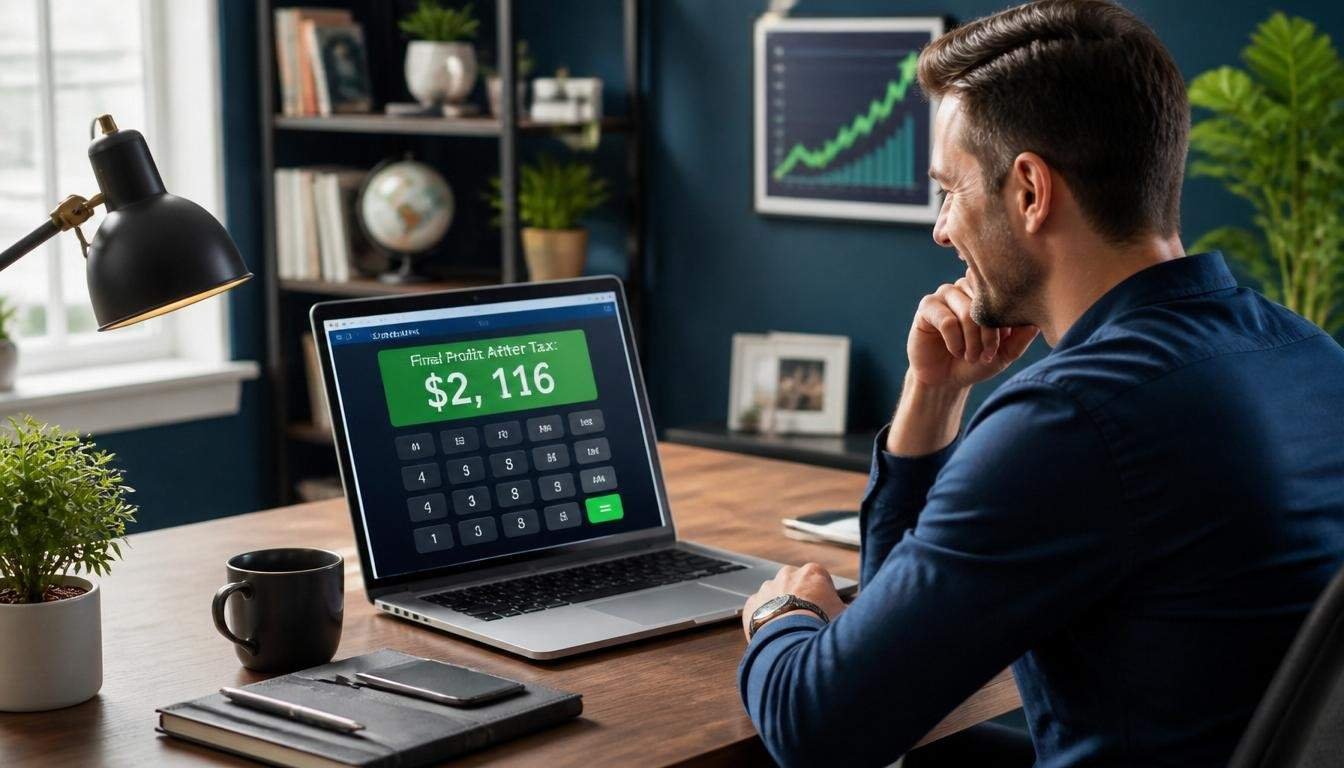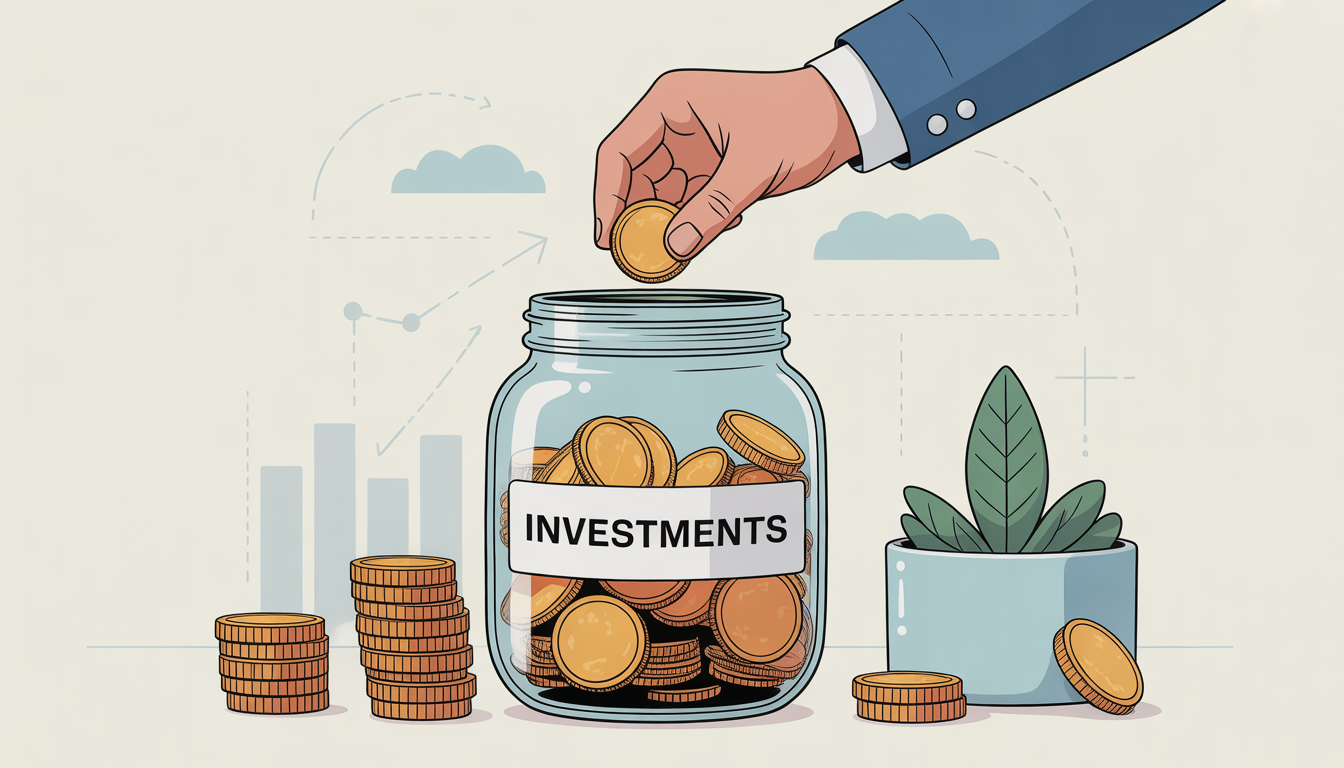
The good news? Yes, beginners can absolutely start investing without a financial advisor. In fact, for many young Americans just starting out, going it alone is not only possible but often the smarter financial move.
In this guide, we’ll walk you through exactly how you can begin your investment journey independently, the tools available to you, and—most importantly—how to do it safely. Free investment return calculator
What Does “Invest Without Financial Advisor” Mean?
Simply put, investing without a financial advisor means you take on the role of the decision-maker. You are the one who opens the brokerage account, chooses what to buy, and decides how long to hold onto your assets. Instead of paying a human being an hourly fee or a percentage of your assets (known as “Assets Under Management”), you use digital tools and your own research to build wealth.
This approach is often called DIY investing. It has become incredibly popular in the United States over the last decade thanks to the rise of “fintech” apps and commission-free trading.
The Big Shift: Why It’s Easier Than Ever to Go Solo
Twenty years ago, if you wanted to buy stocks or mutual funds, you likely had to call a broker or walk into a physical bank branch. Trading fees were high, and information was harder to find. Today, the landscape is completely different.
Here is why the independent route is thriving:
- Zero Commissions: Most major online brokers have eliminated trading fees for stocks and Exchange-Traded Funds (ETFs).
- Fractional Shares: You can now buy a piece of a stock like Amazon or Google with as little as $1, rather than needing thousands for a full share.
- Access to Information: High-quality educational content (like this blog!) is freely available. You don’t need to pay a premium for basic knowledge.
- Automation: Technology has automated much of the “advice” part, allowing beginners to set up portfolios that run on autopilot.

Investing Without an Advisor
4 Ways Beginners Can Invest Without an Advisor
If you’ve decided you want to manage your own money, you need to choose a vehicle to do it. Here are the four most common paths for U.S.-based beginners.
1. Robo-Advisors: The “Set It and Forget It” Method
A robo-advisor is an automated platform that manages your money for you using algorithms. Think of it as a financial advisor in a box.
- How it works: You fill out a questionnaire about your goals and risk tolerance. The robo-advisor then builds a diversified portfolio of low-cost ETFs and automatically rebalances it for you.
- Best for: Beginners who want a hands-off experience but don’t want to pay a human.
- Cost: Usually 0.25% to 0.50% of your account balance per year.
- Examples: Betterment, Wealthfront, or the robo-advisor services offered by major firms like Vanguard or Charles Schwab.
2. Target-Date Funds (TDFs)
This is the ultimate “one-and-done” investment. A Target-Date Fund is a mutual fund offered inside most 401(k) plans and IRAs.
- How it works: You pick a fund with a date close to your expected retirement year (e.g., “Target Retirement 2055”). The fund manager handles everything—diversifying your money across U.S. stocks, international stocks, and bonds, and gradually making it more conservative as you get closer to retirement.
- Best for: Beginners investing through a workplace retirement plan like a 401(k).
3. Index Funds and ETFs
If you want a little more control but still want to keep it simple, you can build a portfolio using just one or two Index Funds.
- How it works: Instead of trying to pick the next winning stock, you buy an S&P 500 Index Fund. This fund simply buys shares in the 500 largest companies in the U.S. By doing so, you instantly own a tiny piece of the entire U.S. economy.
- Best for: Beginners who want to understand their investments but prefer a “buy the whole market” strategy.
- Why it works: It provides instant diversification and historically low costs. Legendary investor Warren Buffett has famously instructed trustees to invest 90% of his estate in an S&P 500 index fund.
4. Micro-Investing Apps
These apps are designed to lower the barrier to entry by connecting to your daily spending.
- How it works: Apps like Acorns round up your purchases to the nearest dollar and invest the “spare change.” Others allow you to set up small, recurring daily or weekly deposits.
- Best for: Beginners who struggle to save and want to invest small amounts regularly.

The Core Concepts You Need to Know (The “Boring” Stuff)
To invest safely without an advisor, you don’t need a finance degree, but you do need to understand a few bedrock principles. Mastering these concepts is what separates successful DIY investors from those who lose money.
1. Asset Allocation
This is just a fancy term for “how you split your money up.” The main categories are:
- Stocks (Equities): Higher risk, higher potential return over time.
- Bonds (Fixed Income): Lower risk, lower return. Acts as a cushion.
- Cash: Money in the bank.
A common rule of thumb for beginners is to hold a high percentage of stocks (like 90%) if you are young and have decades until retirement.
2. Diversification
Never put all your eggs in one basket. If you only buy stock in one company and that company goes bankrupt, you lose everything. If you buy an S&P 500 Index Fund and one company goes bankrupt, you barely notice it because you own 499 others.
- Example: Instead of buying $100 of Tesla stock, buy $100 of a “Total Stock Market ETF.” That one purchase gives you exposure to thousands of companies.
3. Compound Interest
Albert Einstein reportedly called this the “eighth wonder of the world.” Compound interest is when you earn returns on top of your previous returns.
- Example: If you invest $1,000 and it grows 10% in year one, you have $1,100. If it grows another 10% in year two, you don’t just make $100 again; you make $110 because you earned interest on that extra $100. Over 30 years, this math turns small savings into large nest eggs.
4. Cost Awareness
When you use a human advisor, you might pay a 1% fee. When you buy some mutual funds, you pay an “expense ratio.” These fees eat into your returns.
- The Rule: Stick to low-cost providers. If an index fund charges 0.03% and another charges 1.00%, choose the cheaper one. Over decades, that difference could cost you tens of thousands of dollars.
The Risks: What You Must Watch Out For
To maintain trust with our readers, we have to be honest: investing without an advisor removes a layer of emotional protection. Here are the risks of the DIY route.
- Emotional Trading: This is the biggest risk. When the market drops 20% (which it does, regularly), a financial advisor might call you to calm you down. Without one, your gut reaction might be to panic and sell everything. Locking in losses by selling during a dip is the fastest way to sabotage your wealth.
- The “Shiny Object” Syndrome: Without an advisor, you might be tempted by hot stock tips on social media or gamble on cryptocurrencies. Sticking to a boring, diversified plan is harder than it sounds.
- Behavioral Mistakes: Beginners often check their portfolios too often. If you check every day, you’ll see losses frequently, which causes stress and leads to bad decisions.
Common Mistakes Beginners Make When Going Solo

Let’s look at a few pitfalls to avoid on your journey.
- Trying to Time the Market: Waiting for the “perfect” moment to invest. The truth is, “time in the market” beats “timing the market.”
- Investing Before Paying Off High-Interest Debt: It rarely makes sense to invest if you are carrying a credit card balance with 20% interest. Pay that off first.
- Not Utilizing Tax-Advantaged Accounts: A huge mistake is starting a standard taxable brokerage account before maxing out your Roth IRA or 401(k) . These accounts allow your money to grow tax-free or tax-deferred, which is a massive advantage.
- Confusing Price with Value: A $5 stock is not “cheaper” than a $500 stock. You need to look at the company’s value, not the share price.
Long-Term Best Practices for the DIY Investor
If you want to manage your own money successfully for the next 20 or 30 years, follow these simple rules:
- Automate It: Set up automatic transfers from your checking account to your investment account every payday. Treat it like a bill.
- Dollar-Cost Average (DCA): Invest the same amount of money at the same time every month, regardless of what the market is doing. When prices are low, you buy more shares. When prices are high, you buy fewer. It removes the guesswork.
- Rebalance Annually: Once a year, look at your portfolio. If your stocks have grown to be 90% of your portfolio when you only wanted 80%, sell a little stock and buy a little bond to get back to your target. This forces you to “sell high and buy low.”
- Stay the Course: Ignore the news headlines. The stock market will have bad years. It will have crashes. Historically, it has always recovered and gone on to make new highs.
Conclusion: Is DIY Investing Right for You?
So, can beginners invest without a financial advisor? Yes, absolutely.
For the vast majority of Americans in their 20s, 30s, and 40s who are just starting out, paying a traditional financial advisor is overkill. The simplicity and low cost of a Target-Date Fund in your 401(k) or a simple two-fund portfolio using ETFs is all you need to build significant long-term wealth.
However, there is a time and place to hire an advisor. If your financial situation becomes complex (you inherit a large sum, start a business, or need help with complex tax strategies), paying for a fee-only fiduciary advisor can be worth the cost.
But for now? Open that Roth IRA, buy that S&P 500 index fund, and let time and compound interest do the heavy lifting.
Frequently Asked Questions (FAQ)
How much money do I need to start investing without an advisor?
Practically zero. Many apps and brokers like Fidelity, Charles Schwab, and Robinhood allow you to open an account with no minimum deposit. With fractional shares, you can start investing with as little as $5 or $10.
What is the difference between a Roth IRA and a 401(k)?
A 401(k) is an employer-sponsored retirement plan. Contributions are taken from your paycheck before taxes (traditional), which lowers your taxable income now. A Roth IRA is an individual account you open yourself. You contribute money you’ve already paid taxes on, but the money grows tax-free, and you pay no taxes on withdrawals in retirement. For most beginners, starting with a Roth IRA is a great move.
Is it dangerous to invest money in the stock market right now?
There is always risk in the stock market. However, if you are investing for the long term (5+ years), short-term volatility shouldn’t scare you. If you need the money next year for a car or a house, the stock market is a dangerous place. But if you are investing for retirement 30 years from now, a dip today is just a “sale” on shares.
4. What is a “fiduciary,” and do I need one?
A fiduciary is a financial professional legally required to act in your best interest, not just sell you products that earn them a high commission. If you ever do decide to hire a human advisor, you should only work with a fee-only fiduciary. But again, for a beginner with a simple portfolio of index funds, you likely don’t need one yet.
Table of Contents
ADHD Budget Planner App | Debt Tracker, Bill Organizer (Digital Download)
Debt Payoff Tracker 💳 Debt Payoff Tracker Auto-savedFREE DEMO ⭐ Instructions 💳 My Debts 📊 Dashboard ❄️ Snowball Plan 🏔️ Avalanche Plan 📅 Payment Log 🎯 Debt-Free Countdown 🔒 This is a FREE DEMO — you can add up to 2 debts to test it out. Get the full version for unlimited debts, saved data,…
Free Debt Payoff Tracker — Try the Snowball & Avalanche Calculator
Paying off debt feels overwhelming when you don’t know where to start, which balance to attack first, or how much interest you’re really losing each month. That’s exactly why we built the Debt Payoff Tracker — a simple, visual tool that turns your credit cards, loans, and balances into a clear, step-by-step payoff plan. Instead…

Free Vehicle Bill of Sale Template & Generator | Fillable PDF
What Is a Vehicle Bill of Sale Template? A vehicle bill of sale is a document that records the private sale of a car, truck, SUV, motorcycle, ATV, UTV, van, RV, boat, or trailer. It confirms who bought and sold the vehicle, the price paid, the vehicle’s condition, and any disclosures both parties agreed to…

Best Brokerage for Beginners: Top 5 Picks for 2026
I remember staring at my bank balance about eight years ago, convinced I didn’t have “enough” money to start investing. I thought you needed thousands of dollars, a Wall Street connection, and maybe a fancy calculator just to get in the door. So I just… didn’t do anything. I let that money sit in a…
Stock Profit Calculator USA Capital Gains & Commission Tool
📊 Stock Profit Calculator USA 📈 Number of shares 💰 Buy price ($) 💸 Sell price ($) 🛒 Buy commission ($) 🏷️ Sell commission ($) 🏛️ Tax rate (%) 0% (No tax)15% (Long-term)20% (High income)37% (Short-term) 💰 Calculate My Profit Net Buy Cost: $0 Net Sell Proceeds: $0 Profit Before Tax: $0 Tax Amount: $0…
IUL vs Roth IRA vs 401k | Honest Take for Beginners
Here’s the thing nobody tells you when you first start hearing about retirement accounts: there are about a million ways to save for the future, and half of them come with acronyms that sound like government surveillance programs. IUL vs Roth IRA vs 401k free investment return calculator If you’ve ever stared at a benefits…
7 Best Side Hustles for Beginners in 2026
Let me be real with you for a second. Most “side hustle” articles you’ll find online were written by someone who’s never actually done any of them. They list the same seven things, slap some numbers on it, and call it a day. You read it, feel motivated for about eleven minutes, and then do…
Side Hustles for Nurses in 2026: 9 Real Ways to Earn Extra Income
why Start Side Hustles for Nurses Long shifts. Emotional exhaustion. The physical toll. And yet, depending on where you live in the U.S.—say, a coastal city or even a growing spot like Nashville or Austin—that paycheck might vanish faster than a turkey sandwich on a 12-hour night shift. How Much Can Nurses Realistically Earn From…
The Retirement Spending Gap (Real Math)
I used to think retirement was simple math. You save. You stop working. Then you spend what you saved until it runs out. That feels logical, right? Like filling a bathtub and then pulling the drain plug. So Retirement Spending Gap Video is Here But here’s the thing. That’s not what actually happens for a…

I saved $10 per day for 30 days—here’s how much I made
It started as a bet with myself. Not the kind of bet Where you put money on a game or talk yourself into buying something dumb. The boring kind. The kind where you look at your bank account on a random Tuesday and think, surely I can find ten bucks somewhere. So I tried it.…