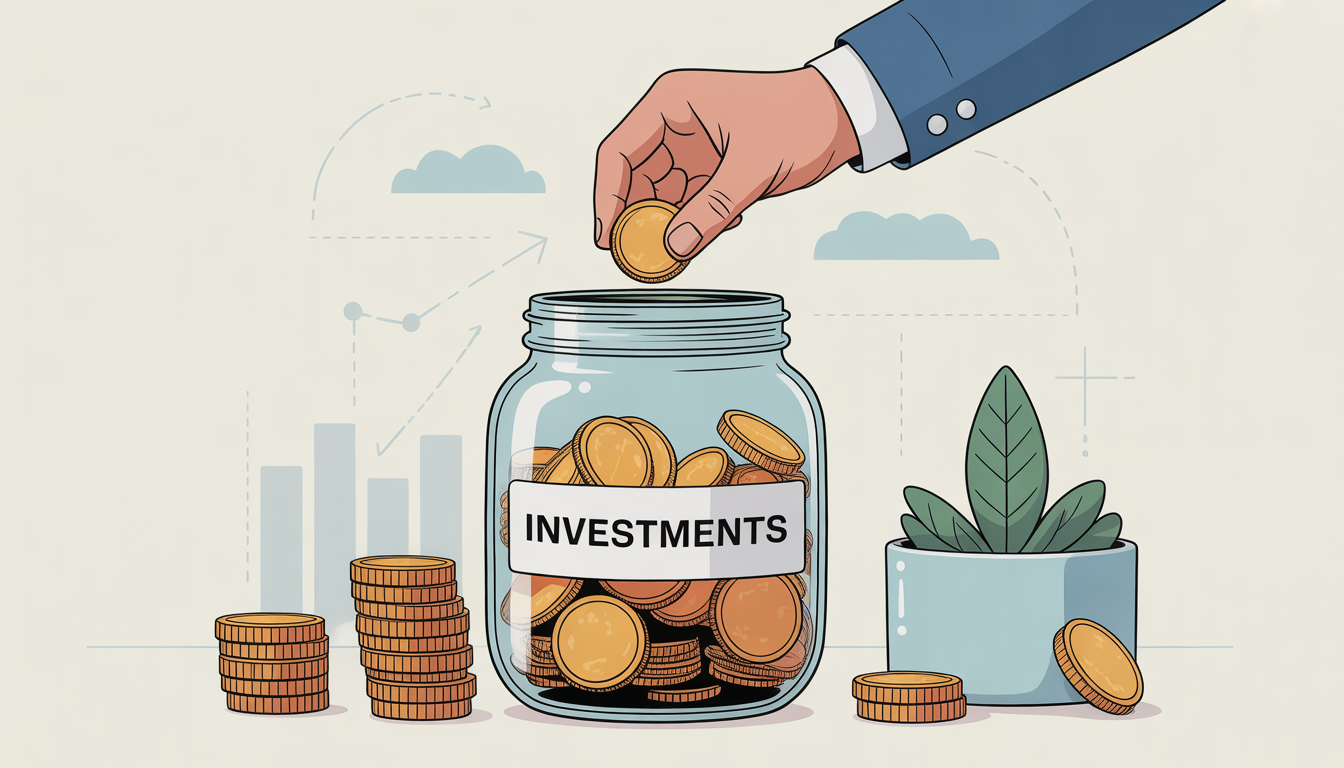
You’re finally ready to take control of your financial future. You’ve read the headlines about the stock market, heard coworkers talking about their 401(k) matches, and maybe even felt a little left out. But one big question is holding you back: What age should you start investing?
If you’re in your 20s, you might worry that you don’t have enough money. If you’re in your 40s, you might stress that you’ve already waited too long.
The truth is simple, but powerful: The best time to start investing was yesterday. The second best time is today.

While age matters, it’s not just about the number of candles on your birthday cake. It’s about strategy, time horizon, and financial readiness. This guide will walk you through exactly when to start, how to prepare, and what to expect, so you can move forward with confidence.
What Is Investing? (A Simple Definition)
Before we talk about timing, let’s clarify the basics. Free Investment Return Calculator
Investing is the act of committing money to an asset—like stocks, bonds, or real estate—with the expectation that it will grow in value over time, generating income or profit. Unlike saving, which is about preserving cash, investing is about building wealth by putting your money to work.
Think of it like planting a tree. You water it, nurture it, and wait. You don’t dig it up every week to check the roots. Over years, it grows strong and provides shade (financial security) that you couldn’t get from just keeping the seed in a jar.
Why Starting Early Matters: The Power of Compound Interest What age should you start investing?
When asking “what age should you start investing,” the core concept you must understand is compound interest. Albert Einstein reportedly called it the “eighth wonder of the world,” and for good reason.
Compound interest is simply earning “interest on your interest.” It’s a snowball effect.
Let’s look at a simple, US-dollar example. What age should you start investing?
- Investor A (The Early Starter): Starts investing $200 a month at age 25.
- Investor B (The Late Starter): Starts investing $200 a month at age 35.
Assuming an average annual return of 7% (a reasonable historical average for the US stock market), let’s see the difference by age 65.
- Investor A will have contributed $96,000 over 40 years. However, thanks to compounding, their portfolio could grow to approximately $525,000.
- Investor B will have contributed $72,000 over 30 years. Their portfolio would grow to approximately $244,000.
The Difference: Investor A contributed only $24,000 more out of pocket, but ended up with $281,000 more in total. That is the magic of giving your money more time to grow.
The Takeaway What age should you start investing?
The best age to start investing is whenever you have a stable income and a handle on your debt. But starting in your 20s gives you the ultimate weapon: time.

Investing By Age Group: A Roadmap for US Beginners
There isn’t a one-size-fits-all answer. Here is a breakdown of how to approach investing based on where you are in life.
In Your 20s: The Golden Decade What age should you start investing?
Advantage: Time is your superpower.
Goal: Build the habit.
If you are in your 20s, you have the ability to take more risk. If the market drops, you have decades to wait for it to recover.
- What to do: Focus on your employer-sponsored 401(k), especially if they offer a match. That is free money.
- The Habit: Aim to save and invest 10-15% of your gross income. Even if you start with $50 a month, the habit is more important than the amount.
- Risk Tolerance: You can afford to be aggressive, meaning your portfolio can be heavily weighted toward US and international stocks.
In Your 30s: The Balancing Act
Advantage: Higher earning potential.
Goal: Maximize contributions.
Life gets busy in your 30s—mortgages, kids, career changes. Time is still on your side, but the window is shrinking slightly.
- What to do: Max out that 401(k) match. If you have extra money, consider opening a Roth IRA. With a Roth IRA, you pay taxes on the money now, but it grows tax-free, and you won’t pay taxes on withdrawals in retirement.
- The Strategy: As your income grows, try to increase your investment percentage by 1% each year.
In Your 40s: The Accelerator What age should you start investing?
Advantage: Peak earning years.
Goal: Catch up and solidify.
If you haven’t started by your 40s, don’t panic. You still have 20-25 years of growth ahead of you. However, you need a more focused strategy.
- What to do: Take full advantage of “catch-up contributions.” The IRS allows people over 50 to contribute extra to their 401(k)s and IRAs.
- Risk Adjustment: You might start shifting from 100% aggressive stocks to a mix that includes more bonds to protect the wealth you are building.
In Your 50s and Beyond What age should you start investing?
Advantage: Experience and clarity.
Goal: Preservation and income.
At this stage, you are protecting what you’ve built while ensuring it lasts through retirement. The goal shifts from growth to wealth preservation.
- What to do: Work with a financial planner to map out your required minimum distributions (RMDs) and ensure your asset allocation matches your retirement date.
Before You Invest: The “Financial House” Checklist
You wouldn’t build a house on a shaky foundation. Before you put a single dollar into the stock market, make sure your personal finances are stable. This is crucial for safe, long-term success.
- Build an Emergency Fund: Before investing, you need 3-6 months of living expenses saved in a high-yield savings account (accessible, not invested). This ensures you don’t have to sell stocks at a loss if your car breaks down or you lose your job.
- Pay Off High-Interest Debt: If you have credit card debt with a 20% interest rate, paying that off is the best “guaranteed return” you can get. Focus on debt with interest rates above 7-8% before aggressive investing.
- Understand Your Cash Flow: Track your income and expenses. You need to know exactly how much you can afford to set aside every month without touching it for years.

Understanding the Risks (Don’t Skip This) What age should you start investing?
Investing involves risk. It is impossible to discuss “what age should you start investing” without discussing the risks involved. This is what separates educated investors from gamblers.
- Market Volatility: The stock market goes up and down. Sometimes it drops 20% or more in a single year (a bear market). This is normal.
- Inflation Risk: This is the silent wealth killer. If your money sits in a regular bank account earning 0.01%, inflation (the rising cost of goods) actually makes you poorer over time. Investing helps you stay ahead of inflation.
- Sequence of Returns Risk: This matters most for those close to retirement. It’s the risk that the market performs poorly right when you start withdrawing money.
The Golden Rule: Never invest money you will need in the next 3-5 years. The stock market is for long-term goals.
4 Common Beginner Mistakes (And How to Avoid Them)
Starting your journey is exciting, but beginners often stumble. Here’s what to watch out for:
1. Trying to Time the Market
Even Wall Street professionals struggle to predict the market’s short-term moves. Waiting for the “perfect” moment to invest usually means missing the best days of growth.
- Fix: Use Dollar-Cost Averaging. Invest a fixed amount every month regardless of what the market is doing. It takes the emotion out of it.
2. Waiting to Have “Enough” Money
You do not need $10,000 to start investing. Many apps and brokerages allow you to buy fractional shares of US companies and ETFs (Exchange-Traded Funds) with as little as $5.
- Fix: Start small. Consistency beats lump sums for beginners.
3. Ignoring Fees
Fees eat into your returns. A 1% fee might not sound like much, but over 30 years, it can cost you tens of thousands of dollars.
- Fix: Look for low-cost options, particularly index funds and ETFs that track the S&P 500.
4. Panicking During a Dip
When the market drops 10%, beginners often sell in a panic to “stop the bleeding.” This locks in the loss.
- Fix: Remember your time horizon. If you are investing for retirement 20 years from now, a drop today is just a sale—you are buying shares at a discount.
Best Practices for Long-Term Success

To build lasting wealth in the US market, follow these time-tested principles:
- Diversify: Don’t put all your eggs in one basket. Spread your money across different types of assets (US stocks, international stocks, bonds) to protect against a downturn in any single area.
- Stay Consistent: Market corrections happen. Recessions happen. The investors who win are the ones who stay the course and keep contributing through the ups and downs.
- Automate: Set up automatic transfers from your checking account to your investment account or 401(k). This is “paying yourself first” and removes the temptation to spend the money.
Final Conclusion: Start Where You Are
So, what age should you start investing?
The textbook answer is as early as possible, ideally in your 20s. But the real answer is right now, with whatever you have.
If you are 22 and just starting your first job, congratulations—you have a massive head start.
If you are 45 and just getting serious, don’t look back with regret. Look forward with determination. You still have two decades of potential growth ahead of you.
The goal isn’t to become a Wall Street expert overnight. The goal is to be a little better today than you were yesterday. By understanding the basics, respecting the risks, and committing to consistency, you are already ahead of the majority of the population.
Start today. Your future self will thank you.
Frequently Asked Questions (FAQ)
1. Is 40 too old to start investing?
Absolutely not. While starting earlier has its advantages, starting at 40 gives you a 20-25 year runway until traditional retirement age. You will need to be more disciplined with your savings rate and consider catch-up contributions, but you can absolutely build a substantial nest egg.
2. Can I invest if I have student loans?
Yes, but it depends on the interest rate. If your student loans have a low interest rate (e.g., 4-5%), it is generally wise to invest while making minimum payments, as the stock market historically returns 7-10%. If your loans are high-interest (7%+), prioritize paying those down first.
3. How much money do I actually need to start investing in the US?
You can start with as little as $5 to $100. Many popular apps like Robinhood, SoFi, and even Fidelity or Vanguard allow you to buy fractional shares of stocks or ETFs. The most important thing is to start the habit, not the amount.
4. What’s the difference between a 401(k) and a Roth IRA?
A 401(k) is an employer-sponsored retirement account. You contribute pre-tax dollars, reducing your taxable income now, but you pay taxes when you withdraw the money in retirement.
A Roth IRA is an individual account you open yourself. You contribute after-tax dollars, so you don’t get a tax break now, but your money grows tax-free, and you pay no taxes on qualified withdrawals in retirement. Both are excellent tools for US investors.
Table of Contents
ADHD Budget Planner App | Debt Tracker, Bill Organizer (Digital Download)
Debt Payoff Tracker 💳 Debt Payoff Tracker Auto-savedFREE DEMO ⭐ Instructions 💳 My Debts 📊 Dashboard ❄️ Snowball Plan 🏔️ Avalanche Plan 📅 Payment Log 🎯 Debt-Free Countdown 🔒 This is a FREE DEMO — you can add up to 2 debts to test it out. Get the full version for unlimited debts, saved data,…
Free Debt Payoff Tracker — Try the Snowball & Avalanche Calculator
Paying off debt feels overwhelming when you don’t know where to start, which balance to attack first, or how much interest you’re really losing each month. That’s exactly why we built the Debt Payoff Tracker — a simple, visual tool that turns your credit cards, loans, and balances into a clear, step-by-step payoff plan. Instead…

Free Vehicle Bill of Sale Template & Generator | Fillable PDF
What Is a Vehicle Bill of Sale Template? A vehicle bill of sale is a document that records the private sale of a car, truck, SUV, motorcycle, ATV, UTV, van, RV, boat, or trailer. It confirms who bought and sold the vehicle, the price paid, the vehicle’s condition, and any disclosures both parties agreed to…

Best Brokerage for Beginners: Top 5 Picks for 2026
I remember staring at my bank balance about eight years ago, convinced I didn’t have “enough” money to start investing. I thought you needed thousands of dollars, a Wall Street connection, and maybe a fancy calculator just to get in the door. So I just… didn’t do anything. I let that money sit in a…
Stock Profit Calculator USA Capital Gains & Commission Tool
📊 Stock Profit Calculator USA 📈 Number of shares 💰 Buy price ($) 💸 Sell price ($) 🛒 Buy commission ($) 🏷️ Sell commission ($) 🏛️ Tax rate (%) 0% (No tax)15% (Long-term)20% (High income)37% (Short-term) 💰 Calculate My Profit Net Buy Cost: $0 Net Sell Proceeds: $0 Profit Before Tax: $0 Tax Amount: $0…
IUL vs Roth IRA vs 401k | Honest Take for Beginners
Here’s the thing nobody tells you when you first start hearing about retirement accounts: there are about a million ways to save for the future, and half of them come with acronyms that sound like government surveillance programs. IUL vs Roth IRA vs 401k free investment return calculator If you’ve ever stared at a benefits…
7 Best Side Hustles for Beginners in 2026
Let me be real with you for a second. Most “side hustle” articles you’ll find online were written by someone who’s never actually done any of them. They list the same seven things, slap some numbers on it, and call it a day. You read it, feel motivated for about eleven minutes, and then do…
Side Hustles for Nurses in 2026: 9 Real Ways to Earn Extra Income
why Start Side Hustles for Nurses Long shifts. Emotional exhaustion. The physical toll. And yet, depending on where you live in the U.S.—say, a coastal city or even a growing spot like Nashville or Austin—that paycheck might vanish faster than a turkey sandwich on a 12-hour night shift. How Much Can Nurses Realistically Earn From…
The Retirement Spending Gap (Real Math)
I used to think retirement was simple math. You save. You stop working. Then you spend what you saved until it runs out. That feels logical, right? Like filling a bathtub and then pulling the drain plug. So Retirement Spending Gap Video is Here But here’s the thing. That’s not what actually happens for a…

I saved $10 per day for 30 days—here’s how much I made
It started as a bet with myself. Not the kind of bet Where you put money on a game or talk yourself into buying something dumb. The boring kind. The kind where you look at your bank account on a random Tuesday and think, surely I can find ten bucks somewhere. So I tried it.…