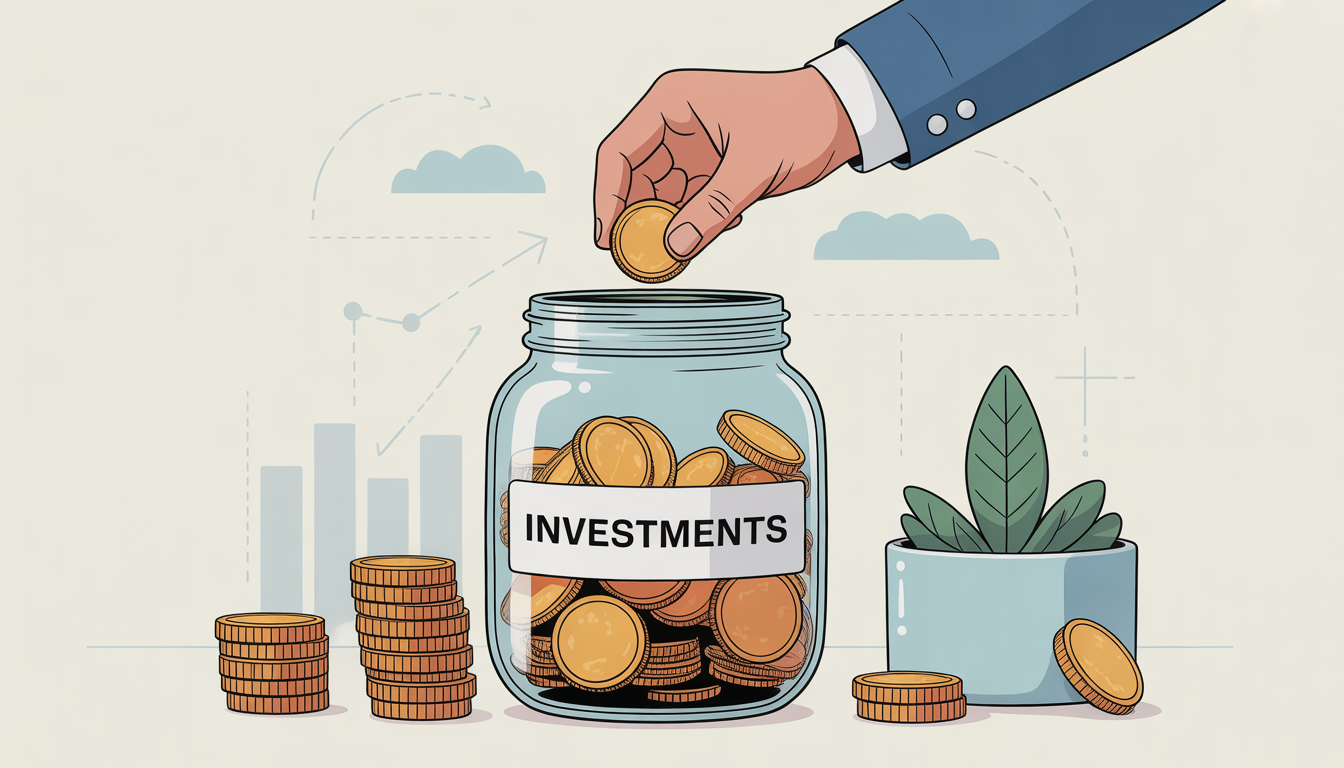
If you’ve just started checking your investment app or your 401(k) balance, you might have noticed that some days the numbers jump up, and other days they drop sharply. If that sinking feeling in your stomach feels familiar, you are not alone. see video on youtube
For beginners, watching the stock market fluctuate can feel like a rollercoaster you never bought a ticket for. One day, financial headlines scream “Markets Plunge!” and the next, they celebrate “Record Highs.”
This constant movement isn’t just background noise—it has a name: volatility. While it might seem scary, understanding what volatility is (and why it matters) is the first step to becoming a confident, long-term investor. Let’s break it down in plain English.

What Is Market Volatility? (A Simple Definition)
Market volatility is the rate at which the price of an asset (like a stock or ETF) increases or decreases over a short period of time. If the price moves up and down wildly, it is considered highly volatile. If the price moves slowly and steadily, it is considered low volatility.
Think of it like the weather:
- Low Volatility is like a calm, sunny day. The ocean is flat; you can sail smoothly.
- High Volatility is like a storm. The waves are high and unpredictable. You wouldn’t be surprised if your boat bobbed up and down violently.
In the stock market, a “storm” (high volatility) usually happens when investors are uncertain about the economy, company profits, or world events. The key takeaway here is that volatility measures the level of uncertainty or risk, but it does not necessarily measure a permanent loss of value.
Why Does Market Volatility Happen?
Markets move because of the simple law of supply and demand. When more people want to buy a stock (demand), the price goes up. When more people want to sell (supply), the price goes down.
But what triggers these shifts in sentiment? Usually, one of the following:
- Economic Data: Reports on inflation, unemployment, or consumer spending in the U.S. can shake things up. For example, if inflation rises faster than expected, markets might dip because investors worry about interest rate hikes.
- Geopolitical Events: Elections, trade disputes, or international conflicts can create uncertainty, which fuels volatility.
- Company News: A specific company’s stock might swing wildly if they announce better-than-expected earnings or a major product recall.
- Investor Emotion: Sometimes, it’s just fear or greed. If a few big investors start selling, others might panic and do the same, causing a rapid price drop.

How Is Volatility Measured? (The VIX)
You might hear financial news anchors mention “The VIX.” Officially, it’s the CBOE Volatility Index, often called the “fear index.”
The VIX measures the market’s expectation of volatility over the next 30 days. When the VIX is low, investors are calm and confident. When the VIX spikes, it means fear is entering the market. While you don’t need to track this daily as a beginner, knowing it exists helps you understand why news anchors get excited during turbulent times.
Why Does Volatility Matter to You?
This is the most important part of the puzzle. Volatility matters because it affects your portfolio value and your emotions. How you react to it will likely determine your success as an investor.
1. It Tests Your Risk Tolerance
If you see your portfolio drop by 10% in a month, do you:
- A) Sell everything to “stop the bleeding”?
- B) Do nothing and wait?
- C) Buy more because stocks are on sale?
Your reaction to volatility defines your risk tolerance. If you lose sleep over small dips, you might have too much money in volatile assets (like stocks) and not enough in stable assets (like bonds or cash).
2. It Creates Opportunity (and Loss)
For long-term investors, volatility is often just “noise.”
- The Bad: If you need your money right now (next month) to buy a house, and the market crashes, volatility hurts you because you have to sell at a low price.
- The Good: If you are investing for retirement 20 years from now, volatility is your friend. It allows you to buy great companies at lower prices during market dips (often called “buying the dip”).
Practical Beginner Guidance: How to Handle Volatility
When the market starts shaking, it’s natural to want to act. However, for long-term goals like retirement, the best action is often inaction. Here is how to handle it like a pro.
1. Zoom Out
Don’t look at the daily chart; look at the 10-year chart. Despite wars, crashes, and pandemics, the U.S. stock market (measured by indexes like the S&P 500) has generally trended upward over long periods.
- Example: If you invested in a broad market fund right before the 2008 financial crisis, you would have felt terrible in 2009. But if you held on until today, you would likely have significant gains.

2. Diversify Your Portfolio
Don’t put all your eggs in one basket. If you only own one single “tech stock,” a bad earnings report will cause extreme volatility in your account. If you own a mix of U.S. stocks, international stocks, and bonds, the volatility is often smoothed out because different assets react differently to the same news.
3. Use Dollar-Cost Averaging (DCA)
You don’t have to time the market perfectly. Instead of investing a giant lump sum right before a potential crash, you can invest a fixed amount of money every month (e.g., $500 into your Roth IRA).
- When prices are high, your $500 buys fewer shares.
- When prices are low, your $500 buys more shares.
Over time, this averages out your cost and takes the emotion out of investing during volatile times.
4. Check Your Asset Allocation
If the ups and downs are giving you anxiety, your portfolio might be too aggressive. A common rule of thumb is to hold a percentage of bonds equal to your age. For example, if you are 25, you might hold 25% in bonds (which are less volatile) and 75% in stocks.
Risk Awareness: The Difference Between Volatility and Loss
As a beginner, you must understand this critical distinction:
- Volatility is temporary. It is the fluctuation in price. If a stock drops from $100 to $80 and you do NOT sell, you haven’t lost money yet (this is called an “unrealized loss”). If the stock goes back up to $100, the volatility was just a bump in the road.
- Capital Loss is permanent. This happens when you sell the stock at $80. You have turned the temporary drop into a real loss.
The biggest risk is not volatility; it is being forced to sell during a volatile downswing. This is why financial experts recommend keeping money you need in the next 3–5 years out of the stock market.
Common Mistakes and Misconceptions
Let’s clear up some confusion that trips up new U.S. investors.
- Mistake #1: Confusing a “Correction” with a “Crash.”
- A Correction is a drop of 10–19%. These happen roughly every two years. They are healthy and normal.
- A Bear Market is a drop of 20% or more. These are less common but part of the cycle.
- Mistake #2: Trying to “Time the Volatility.” Beginners often think they can sell at the top and buy back at the bottom. Even professional fund managers struggle to do this consistently. You are more likely to sell in fear and miss the best recovery days.
- Mistake #3: Assuming Volatility Means “Bad Company.” Sometimes the whole market drops, even great companies like Apple or Microsoft go down. This doesn’t mean those companies are failing; it means the market sentiment is sour.

The Long-Term Perspective: Volatility is the Price of Admission
Imagine you want to grow your wealth faster than inflation (which erodes your cash savings in a bank account). To get those higher returns from stocks, you have to pay a price. That price is volatility.
You cannot have the high returns of the stock market without the short-term stress of price swings. It’s the fee for the growth potential.
For a young professional in the U.S., focusing on a 401(k) or Roth IRA, volatility is largely a psychological hurdle. If you keep buying through the ups and downs, by the time you retire, the specific dips of 2024 or 2025 will be invisible on your long-term chart.
Conclusion Market Volatility
Market volatility isn’t a bug; it’s a feature of the financial system. It reflects the constant flow of information, emotion, and economic changes in the world. As a beginner, your goal isn’t to avoid volatility—that’s impossible. Your goal is to build a portfolio sturdy enough and a mindset calm enough to withstand it.
By understanding that dips are temporary and that time in the market beats timing the market, you turn volatility from a source of panic into a background fact of life. Stay consistent, stay diversified, and keep your eyes on your long-term goals.
Frequently Asked Questions (FAQ) Market Volatility
1. Is market volatility a bad thing for beginners?
Not necessarily. While it can be emotionally uncomfortable, volatility creates opportunities. If you are investing regularly (like through a 401(k)), a volatile market allows you to buy shares at lower prices, which can boost your returns when the market eventually recovers.
2. Should I move my 401(k) to cash during high Market Volatility?
Generally, no. For long-term retirement accounts, moving to cash “locks in” your losses and makes it hard to benefit from the eventual recovery. Unless you are very close to retirement age, it is usually better to stay the course. Consult a financial advisor for advice specific to your situation.
3. How long does market volatility usually last?
It varies. Some volatility spikes last just a few days (like after a surprising news report). Corrections typically last a few months, while bear markets can last a year or more. Historically, the market has always recovered from all downturns, though the time it takes varies.
4. Can I completely avoid Market Volatility?
If you invest in the stock market, you cannot avoid volatility. If you need to avoid volatility entirely, you would need to keep your money in cash or U.S. Treasury bills. However, remember that cash loses purchasing power over time due to inflation, which is a different kind of risk.
Table of Contents
ADHD Budget Planner App | Debt Tracker, Bill Organizer (Digital Download)
Debt Payoff Tracker 💳 Debt Payoff Tracker Auto-savedFREE DEMO ⭐ Instructions 💳 My Debts 📊 Dashboard ❄️ Snowball Plan 🏔️ Avalanche Plan 📅 Payment Log 🎯 Debt-Free Countdown 🔒 This is a FREE DEMO — you can add up to 2 debts to test it out. Get the full version for unlimited debts, saved data,…
Free Debt Payoff Tracker — Try the Snowball & Avalanche Calculator
Paying off debt feels overwhelming when you don’t know where to start, which balance to attack first, or how much interest you’re really losing each month. That’s exactly why we built the Debt Payoff Tracker — a simple, visual tool that turns your credit cards, loans, and balances into a clear, step-by-step payoff plan. Instead…

Free Vehicle Bill of Sale Template & Generator | Fillable PDF
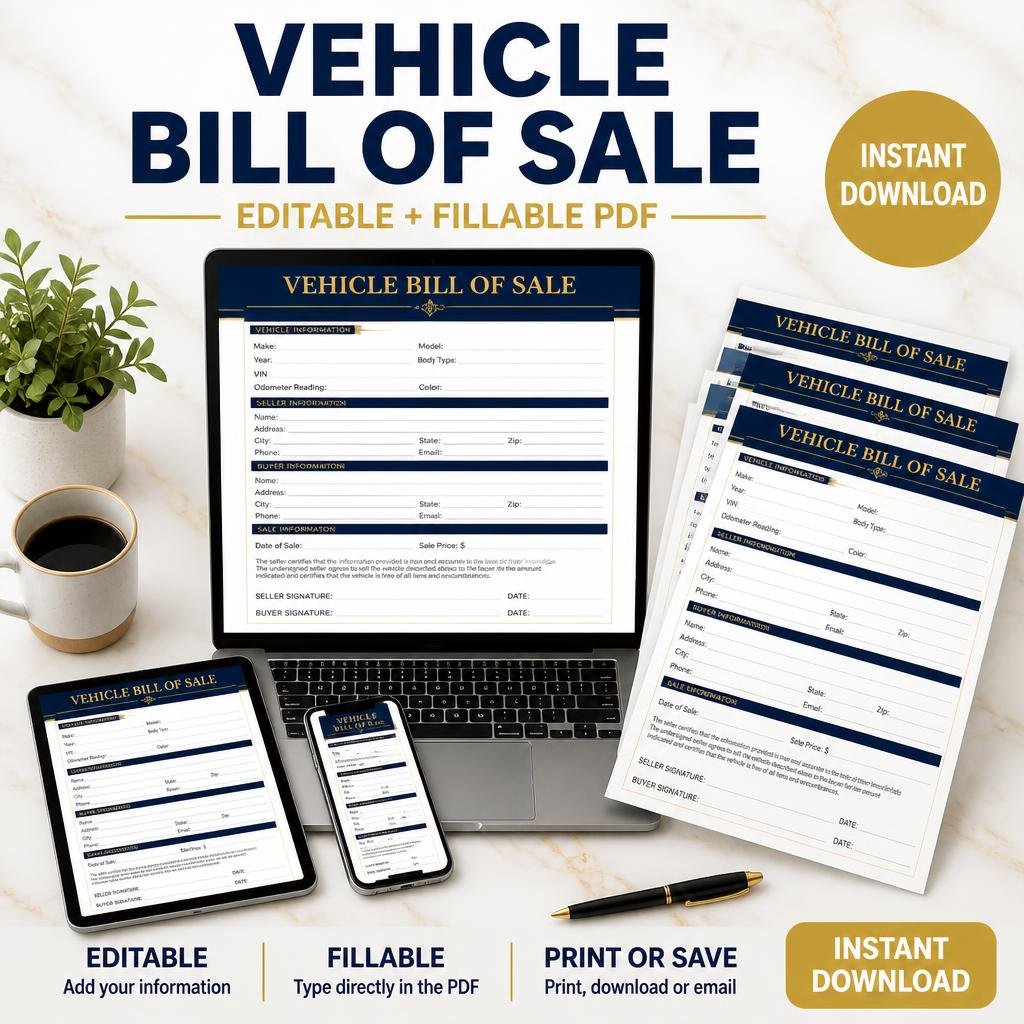
What Is a Vehicle Bill of Sale Template? A vehicle bill of sale is a document that records the private sale of a car, truck, SUV, motorcycle, ATV, UTV, van, RV, boat, or trailer. It confirms who bought and sold the vehicle, the price paid, the vehicle’s condition, and any disclosures both parties agreed to…

Best Brokerage for Beginners: Top 5 Picks for 2026
I remember staring at my bank balance about eight years ago, convinced I didn’t have “enough” money to start investing. I thought you needed thousands of dollars, a Wall Street connection, and maybe a fancy calculator just to get in the door. So I just… didn’t do anything. I let that money sit in a…
Stock Profit Calculator USA Capital Gains & Commission Tool
📊 Stock Profit Calculator USA 📈 Number of shares 💰 Buy price ($) 💸 Sell price ($) 🛒 Buy commission ($) 🏷️ Sell commission ($) 🏛️ Tax rate (%) 0% (No tax)15% (Long-term)20% (High income)37% (Short-term) 💰 Calculate My Profit Net Buy Cost: $0 Net Sell Proceeds: $0 Profit Before Tax: $0 Tax Amount: $0…
IUL vs Roth IRA vs 401k | Honest Take for Beginners
Here’s the thing nobody tells you when you first start hearing about retirement accounts: there are about a million ways to save for the future, and half of them come with acronyms that sound like government surveillance programs. IUL vs Roth IRA vs 401k free investment return calculator If you’ve ever stared at a benefits…
7 Best Side Hustles for Beginners in 2026
Let me be real with you for a second. Most “side hustle” articles you’ll find online were written by someone who’s never actually done any of them. They list the same seven things, slap some numbers on it, and call it a day. You read it, feel motivated for about eleven minutes, and then do…
Side Hustles for Nurses in 2026: 9 Real Ways to Earn Extra Income
why Start Side Hustles for Nurses Long shifts. Emotional exhaustion. The physical toll. And yet, depending on where you live in the U.S.—say, a coastal city or even a growing spot like Nashville or Austin—that paycheck might vanish faster than a turkey sandwich on a 12-hour night shift. How Much Can Nurses Realistically Earn From…
The Retirement Spending Gap (Real Math)
I used to think retirement was simple math. You save. You stop working. Then you spend what you saved until it runs out. That feels logical, right? Like filling a bathtub and then pulling the drain plug. So Retirement Spending Gap Video is Here But here’s the thing. That’s not what actually happens for a…

I saved $10 per day for 30 days—here’s how much I made
It started as a bet with myself. Not the kind of bet Where you put money on a game or talk yourself into buying something dumb. The boring kind. The kind where you look at your bank account on a random Tuesday and think, surely I can find ten bucks somewhere. So I tried it.…













good information