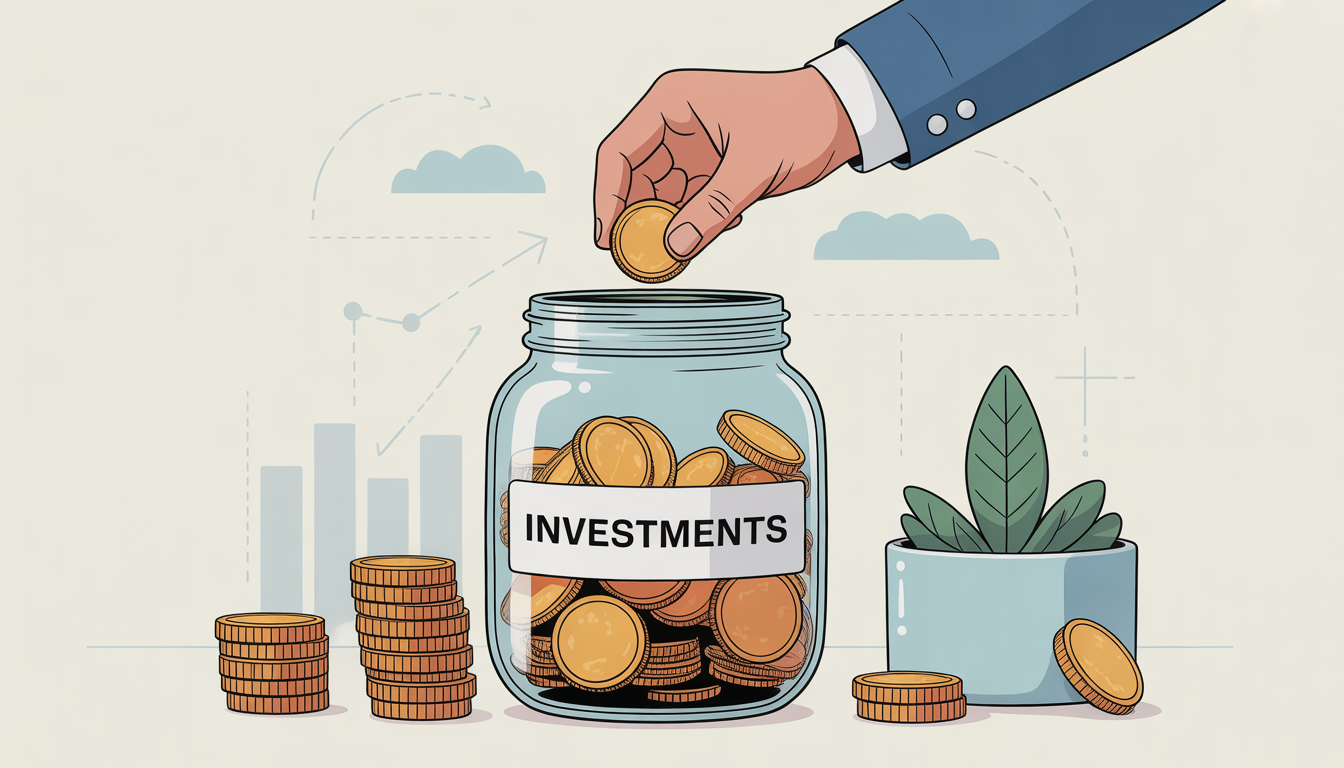
I remember sitting across from a guy named Mark at a Panera in Phoenix back in 2019. He was friendly, drove a nice car, and kept using the phrase “tax-free retirement” like it was some kind of magic spell. He was selling me on an Indexed Universal Life policy—IUL for short—and by the end of our conversation, I almost felt stupid for not having bought one years earlier. Also Reddit post is Why IUL Is a Bad Investment.
What Should You Do Instead of an IUL?
Say: Buy cheap term life insurance. Invest the difference in a Roth IRA or index fund.
Link to investment-accounts-explained and investment-return-calculator.
| IUL Policy | Term Life + Index Fund | |
|---|---|---|
| Annual cost | High (fees + premiums) | Low (term is cheap) |
| Investment growth | Capped (usually 9–12%) | Uncapped (market returns) |
| Flexibility | Very low | High |
| Transparency | Low | High |
| Best for | Insurance agents’ commissions | Your actual retirement |
Almost.
Something about it kept nagging at me. The math felt… fuzzy. And over the next few weeks, as I dug into the fine print (the actual fine print, not the glossy brochure), I started realizing why my gut was sending up red flags.
Now, I’m not here to tell you what to do with your money. I’m just a guy who’s spent a lot of years watching how these things play out for regular people—teachers, electricians, people who work in HR, folks who just want to make sure they’re not eating cat food in retirement. And from where I sit, IUL is one of those products that sounds a whole lot better in a sales pitch than it performs in real life.
Let me walk you through what I’ve seen.

The Sales Pitch Sounds Incredible Why IUL Is a Bad Investment
You’ve probably heard the pitch. Maybe it came from a cousin who just got licensed to sell insurance, or a “financial advisor” who actually works for an insurance company. They’ll tell you that an IUL gives you the best of both worlds: life insurance protection plus a cash value account that grows with the stock market. But here’s the kicker—you don’t actually lose money when the market drops. Zero downside. Participation in the upside, protection on the downside. Who wouldn’t want that, right?
The way they explain it, the insurance company takes your premiums, puts some into a cash value bucket, and that bucket’s growth is tied to an index like the S&P 500. If the index goes up, you get credited interest—up to a cap, usually somewhere between 10% and 12%. If the index goes down, you get zero. Not negative. Just zero.
Sounds like a free lunch.
But here’s something nobody told me at that Panera: there’s no such thing as a free lunch in finance. Ever. If it sounds like you’re getting market-like returns without the risk, there’s always a catch. Usually several.
The Participation Rate That Nobody Explains Why IUL Is a Bad Investment
Let me tell you about something called a participation rate. I didn’t know this existed until I pulled out my calculator and started questioning everything.
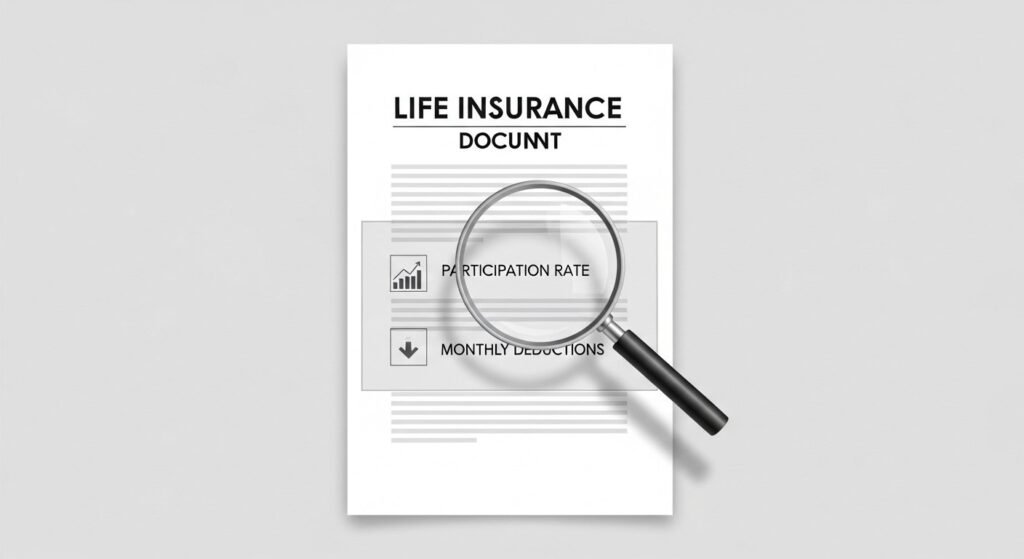
When you buy an IUL, you’re not actually invested in the stock market. The insurance company is just using an index to decide how much interest to credit to your policy. But that interest isn’t the full return of the index. You might only get 80% of the index’s gain. Or 70%. Or sometimes they change it year to year.
So let’s say the S&P 500 goes up 20% in a year (which does happen). If your policy has a 10% cap and an 80% participation rate, you’re not getting 10%. You’re getting 8%. Actually, wait—let me run that math again because even I get tripped up. They apply the participation rate first. So 20% times 80% is 16%, but then the cap cuts you off at 10%. So you get 10%. Not the full index return. Not even close.
Now, if the market goes up 6% in a year, you might get 4.8% after the participation rate, assuming there’s no floor that kicks in at a lower number. And if the market goes up 30%? Still 10% for you. But if the market goes down 15%? You get zero.
That’s not “upside without downside.” That’s upside with a ceiling and downside with a floor that’s zero. Over time, that math doesn’t work out in your favor the way the brochures suggest.
Fees Are Everywhere (And They Move) Why IUL Is a Bad Investment
Another thing I learned the hard way—well, not the hard way because I didn’t actually buy one, but I learned it by staring at policy illustrations until my eyes crossed—is that these things have fees layered on top of fees.
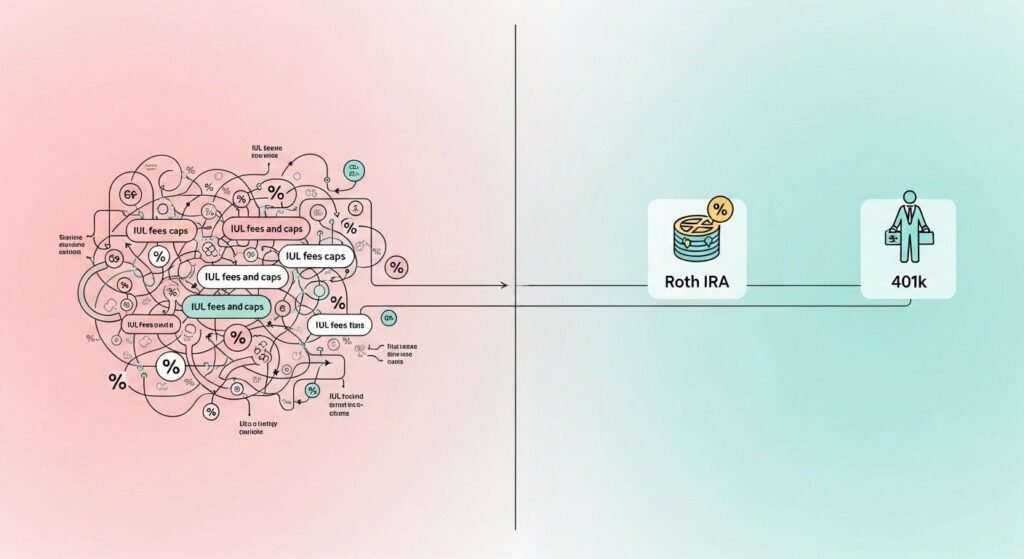
There’s the cost of insurance, which goes up as you get older. That’s true for any life insurance, but with IUL, those costs get deducted from your cash value. Then there are administrative fees. Then there are charges for the riders—you know, the “extras” they sell you like guaranteed insurability or long-term care access. Then there’s something called a surrender charge, which is basically a penalty if you try to get out of the policy in the first 10 or 15 years.
And here’s the part that really got me: the insurance company can change some of these fees. Not all of them, but enough that the illustration they showed you in year one might not reflect what actually happens in year ten.
I’m not saying they’re being sneaky. I’m saying the contract gives them flexibility, and flexibility usually benefits the company, not the customer.
The “Tax-Free” Part Is Real, But… Why IUL Is a Bad Investment
Okay, let’s give credit where it’s due. The tax treatment on IUL policies is legit. The cash value grows tax-deferred, and if the policy is structured correctly, you can take loans against the cash value tax-free in retirement. That’s not a gimmick. That’s the actual tax code.
But here’s what the salesperson might not emphasize: those loans aren’t free. The insurance company charges interest on them, typically between 4% and 8%. And if the policy lapses—meaning you stop paying premiums or the cash value drops too low—the IRS can treat all those “tax-free” loans as taxable income. In one year. All at once.
I’ve heard stories from people who thought they had this beautiful tax-free retirement income stream set up, then something went sideways—they couldn’t afford the premiums anymore, or the policy underperformed—and they ended up with a tax bill they never saw coming.
Is that likely to happen if you fund the policy perfectly and never miss a payment? Probably not. But life doesn’t always cooperate with “perfectly fund and never miss a payment.” People lose jobs. People get sick. People have kids and realize they overextended on premiums.
What the Illustrations Don’t Show You Why IUL Is a Bad Investment
If you’ve ever seen an IUL illustration, you know they’re beautiful pieces of paper. Columns of numbers showing cash value growing year after year, hitting six figures, then seven, then this beautiful “retirement income” stream that lasts until age 100.
What they don’t show you is what happens if the market has a string of flat years. Or what happens if the insurance company raises the cost of insurance. Or what happens if you take that loan out and the market drops right after, causing your cash value to dip below what you owe.
I remember looking at one illustration where the policy was projected to have $450,000 in cash value by age 65, assuming a 7% average return on the index. Then I looked at the guaranteed column—the one that shows what happens if the market does nothing—and it showed $0. Actually, it showed that the policy would lapse by age 75 if returns were at the guaranteed minimum.
That gap between the “illustrated” scenario and the “guaranteed” scenario is enormous. And I’m not saying you should assume the worst-case scenario. But you should at least know how wide the gap is.
Why I Think People Buy These Anyway
I’ve thought a lot about why IULs have become so popular, especially with people in their 30s and 40s who are smart, successful, and usually pretty skeptical about financial products.
I think it comes down to two things.
First, fear of the stock market. After 2008, a lot of people just don’t trust that their 401(k) will be there when they need it. The idea of “market protection” is incredibly appealing. If you can grow your money without the risk of losing it, why wouldn’t you?
Second, the allure of “doing something special” with your money. There’s a certain type of person—and I’ve been this person before—who doesn’t want to just put money in a boring old IRA or 401(k). That feels too ordinary. An IUL feels sophisticated. It feels like you’ve found a secret that most people don’t know about.
But here’s what I’ve learned over the years: the boring stuff usually works. Maxing out a 401(k) match, contributing to a Roth IRA, keeping an emergency fund in a high-yield savings account—none of that is exciting, but none of it comes with hidden fees or participation rates or surrender charges.

Who Actually Benefits From an IUL? Why IUL Is a Bad Investment
I want to be fair here because I know people who own IULs and genuinely believe they’re a good fit for their situation. And for a very small slice of people, maybe they are.
If you’re already maxing out your 401(k), maxing out your IRA, have a paid-off house, and need a place to park additional money for estate planning purposes—like you have enough assets that estate taxes are a real concern—then an IUL might make sense as a piece of a larger plan. But even then, I’d want to look at it from ten different angles before signing anything.
For the other 98% of people? The ones who still have student loans, or a mortgage, or haven’t yet hit their 401(k) match? I just don’t see the math working.
What I’d Do Instead Why IUL Is a Bad Investment
If you’re someone who’s been pitched an IUL and you’re trying to figure out what to do, here’s what I’d suggest—not advice, just what I’d personally do if I were in your shoes.
I’d ask myself: do I actually need life insurance? If you have people who depend on your income—kids, a spouse, aging parents—then term life insurance is probably the move. It’s straightforward, it’s cheap, and it does exactly what it’s supposed to do. A 20- or 30-year term policy for $1 million might cost you $50 to $100 a month, depending on your age and health. That’s it. No complexity.
Then, separately, I’d focus on investing. Not through an insurance product, but through tax-advantaged accounts that were designed for that purpose. A Roth IRA is hard to beat for tax-free growth. A 401(k) with an employer match is literally free money. Even a simple taxable brokerage account gives you more control, lower fees, and no insurance company middleman.
The separation matters. When you mix insurance and investing, you end up with something that’s mediocre at both.
A Question I Still Think About
I’ll leave you with something that’s stuck with me since that conversation with Mark.
I asked him: if this product is so great for building wealth, why don’t we see wealthy people buying them? Like, why aren’t Warren Buffett or the partners at Goldman Sachs loading up on IULs?
He had an answer, of course. Something about how wealthy people don’t need the tax benefits, or how they have other strategies. But the more I’ve thought about it over the years, the more I’ve realized something: if a financial product is primarily sold by insurance agents (who earn hefty commissions) rather than bought by sophisticated investors, there’s probably a reason for that.
I’m not saying it’s a scam. It’s not. It’s a legal, regulated product that serves a purpose for certain situations. But for most people, it’s a solution in search of a problem—and a pretty expensive one at that.
FAQ About Why IUL Is a Bad Investment
How do IUL commissions work?
Sales commissions on IULs are typically higher than on term life insurance—often 50% to 100% of the first year’s premium, plus smaller ongoing commissions. That doesn’t make the product bad on its own, but it does create an incentive to sell it even when a simpler product might be better for the customer.
Is IUL a scam?
A: Not technically a scam, but it is consistently sold to people for whom it provides worse outcomes than simpler alternatives. The combination of high fees, participation caps, and complexity makes it a poor choice for most Americans seeking retirement savings.
Can you lose money in an IUL?
Yes. While IUL policies often advertise a “floor” preventing losses, the fees can exceed any floor protection in poor-performing years, resulting in a net loss of cash value.
What is better than IUL for most people?
A term life insurance policy combined with a Roth IRA invested in index funds typically delivers better outcomes at significantly lower cost.
Table of Contents Why IUL Is a Bad Investment
ADHD Budget Planner App | Debt Tracker, Bill Organizer (Digital Download)
Debt Payoff Tracker 💳 Debt Payoff Tracker Auto-savedFREE DEMO ⭐ Instructions 💳 My Debts 📊 Dashboard ❄️ Snowball Plan 🏔️ Avalanche Plan 📅 Payment Log 🎯 Debt-Free Countdown 🔒 This is a FREE DEMO — you can add up to 2 debts to test it out. Get the full version for unlimited debts, saved data,…
Free Debt Payoff Tracker — Try the Snowball & Avalanche Calculator
Paying off debt feels overwhelming when you don’t know where to start, which balance to attack first, or how much interest you’re really losing each month. That’s exactly why we built the Debt Payoff Tracker — a simple, visual tool that turns your credit cards, loans, and balances into a clear, step-by-step payoff plan. Instead…

Free Vehicle Bill of Sale Template & Generator | Fillable PDF
What Is a Vehicle Bill of Sale Template? A vehicle bill of sale is a document that records the private sale of a car, truck, SUV, motorcycle, ATV, UTV, van, RV, boat, or trailer. It confirms who bought and sold the vehicle, the price paid, the vehicle’s condition, and any disclosures both parties agreed to…

Best Brokerage for Beginners: Top 5 Picks for 2026
I remember staring at my bank balance about eight years ago, convinced I didn’t have “enough” money to start investing. I thought you needed thousands of dollars, a Wall Street connection, and maybe a fancy calculator just to get in the door. So I just… didn’t do anything. I let that money sit in a…
Stock Profit Calculator USA Capital Gains & Commission Tool
📊 Stock Profit Calculator USA 📈 Number of shares 💰 Buy price ($) 💸 Sell price ($) 🛒 Buy commission ($) 🏷️ Sell commission ($) 🏛️ Tax rate (%) 0% (No tax)15% (Long-term)20% (High income)37% (Short-term) 💰 Calculate My Profit Net Buy Cost: $0 Net Sell Proceeds: $0 Profit Before Tax: $0 Tax Amount: $0…
IUL vs Roth IRA vs 401k | Honest Take for Beginners
Here’s the thing nobody tells you when you first start hearing about retirement accounts: there are about a million ways to save for the future, and half of them come with acronyms that sound like government surveillance programs. IUL vs Roth IRA vs 401k free investment return calculator If you’ve ever stared at a benefits…
7 Best Side Hustles for Beginners in 2026
Let me be real with you for a second. Most “side hustle” articles you’ll find online were written by someone who’s never actually done any of them. They list the same seven things, slap some numbers on it, and call it a day. You read it, feel motivated for about eleven minutes, and then do…
Side Hustles for Nurses in 2026: 9 Real Ways to Earn Extra Income
why Start Side Hustles for Nurses Long shifts. Emotional exhaustion. The physical toll. And yet, depending on where you live in the U.S.—say, a coastal city or even a growing spot like Nashville or Austin—that paycheck might vanish faster than a turkey sandwich on a 12-hour night shift. How Much Can Nurses Realistically Earn From…
The Retirement Spending Gap (Real Math)
I used to think retirement was simple math. You save. You stop working. Then you spend what you saved until it runs out. That feels logical, right? Like filling a bathtub and then pulling the drain plug. So Retirement Spending Gap Video is Here But here’s the thing. That’s not what actually happens for a…

I saved $10 per day for 30 days—here’s how much I made
It started as a bet with myself. Not the kind of bet Where you put money on a game or talk yourself into buying something dumb. The boring kind. The kind where you look at your bank account on a random Tuesday and think, surely I can find ten bucks somewhere. So I tried it.…
ETF Fees: The Hidden Cost That Hurts Returns
Most people who start investing—especially young people finally ditching their latte-and-avocado-toast guilt—obsess over the wrong number. They stare at the big bold return percentage on a fund’s front page. 10% average annual return? But here’s what nobody puts on the billboard: fees. ETF fees I remember my first 401(k) rollover. I was 26, making $48k…
What Does Expense Ratio Mean in ETFs? Easy Explain
Here’s the Expense Ratio Mean in ETFs: everyone loves how easy they are to buy. You open an app, type a ticker, click a button, and bam—you own a slice of hundreds of companies. Feels almost too simple. See video on Youtube And that’s where the trouble starts. Because buried in that simplicity is a…
Can ETFs Lose Money? Understanding the Risks
I remember the first time I bought an ETF. It was a few years back, right around the time everyone was talking about “passive investing” can ETFs lose money. Yes why like it was some kind of cheat code. I’d just switched jobs, rolled over an old 401(k), and figured I’d play it smart. Low…
Diversification With ETFs: Why Beginners Get It Wrong
You hear “Diversification With ETFs” and your eyes glaze over. Sounds like something a guy in a suit says before charging you 1% to do nothing. But here’s the thing—most people. See video about ETEs I know, including some who are pretty smart with money, accidentally end up doing the exact opposite. They buy a…
Next Stock Market Crash Prediction (Beginners Get Wrong)
Here’s the thing nobody tells you about stock market crash predictions: they’re everywhere, all the time, and most of them are wrong. But that doesn’t mean we should ignore the possibility entirely. I was grabbing coffee last week—overpriced oat milk latte, because that’s how I cope—and overheard two guys at the next table. One was…
What Is a Collective Investment Trusts? (CITs)
You ever check your 401(k) statement and see something called a “collective investment trusts ” buried in the fine print? Yeah, me too. For the longest time, I just assumed it was some fancy legal term for “we’re moving your money around, don’t worry about it.” Which, honestly, is not a great feeling when it’s…
How to Invest in Apartment Buildings (1 Easy Guide)
I remember standing outside a four-plex in Tulsa about seven years ago, thinking. I was about to make the biggest mistake of my life. Or the smartest move. Turns out, it was a little of both. see more in Video click here how to invest in apartment buildings My hands were sweating. The numbers on…
Why IUL Is a Bad Investment for Most People (And What to Do Instead)
I remember sitting across from a guy named Mark at a Panera in Phoenix back in 2019. He was friendly, drove a nice car, and kept using the phrase “tax-free retirement” like it was some kind of magic spell. He was selling me on an Indexed Universal Life policy—IUL for short—and by the end of…
What Are Specified Investment Products? Easy Guide
I remember sitting across from a guy named Dan at a coffee shop in Austin a few years back. Dan was the kind of friend who made decent money as a project manager but kept most of it in a savings account because, in his words, “the stock market feels like gambling.” I was trying…
How to Make Money Fast as a Woman: Investing Guide
In a world where financial independence is more important than ever, many women are searching for ways to take control of their economic future. Whether you are looking to build an emergency fund, pay down student loans, or simply stop living paycheck to paycheck, the question often arises: how to make money fast as a…
Dave Ramsey Investment Calculator: How to Build Wealth
The Dave Ramsey investment calculator is a powerful financial planning tool designed to help investors estimate the long-term growth of their retirement savings. Inspired by the investment principles popularized by financial expert Dave Ramsey, this calculator focuses on three key elements: How To Use It Click Here Unlike basic interest calculators, this tool factors in…

What Is a Collective Investment Trust? 401(k) Guide
If you’ve ever looked at your 401(k) statement and felt a little knot in your stomach—not because of the balance, but because you weren’t quite sure what you were looking at—you’re in the right place. See Videos On Youtube Maybe you saw a line item labeled “CIT” or “Collective Trust” and thought, “Is that a…
5 Passive Income Ideas for Beginners in the USA (2026) — With Real Numbers
Passive Income Ideas For many Americans, the traditional 9-to-5 job is the primary source of income. You trade your time for a paycheck, and when the work stops, so does the money. If you are reading this, you might be feeling the pressure of that reality. You may be looking for a way to reduce…
How To Start Up Business With Little Capital & Easy Money
You have a great business idea. You can see the logo in your mind, and you know there is a market for what you want to sell. But when you look at your bank account, the excitement fades. You assume that starting a business requires a massive loan, expensive office space, or a huge inventory…
How Do You Get Rich with No Money? Beginner’s Guide
We have all seen the headlines: “From Rags to Riches” and “How I Made Millions by 30.” If you are currently staring at a bank account that feels stuck at zero, the concept of building wealth can feel like a fantasy reserved for lottery winners or tech entrepreneurs. You might be asking yourself: How do…
What to Know Before Choosing Steady Capital Solutions
If you are new to investing, the sheer number of financial firms and platforms available can feel overwhelming. You might have heard the name “Steady Capital Solutions” floating around in online forums or social media ads, and now you are searching for steady capital solutions reviews to determine if it is the right place to…
What Is an ETF? A Beginner’s Guide to Exchange-Traded Funds
Imagine a world where investing in the stock market feels as easy as shopping for groceries online. In recent years, Exchange-Traded Funds, or ETFs, have revolutionized the way both novice and seasoned investors approach the financial markets. But what is an ETF and how does it work? As the financial landscape continues to evolve rapidly,…
What Happens to Stocks During a Market Crash?
Let’s be honest: turning on the news and hearing that the stock market crash is “plunging” or “in the red” can feel terrifying. If you are new to investing, the word “crash” probably brings up images of the Great Depression—panic, chaos, and people losing everything. Your stomach might drop. You might wonder if you should…
Market Volatility Explained: What It Means for Your Money
If you’ve just started checking your investment app or your 401(k) balance, you might have noticed that some days the numbers jump up, and other days they drop sharply. If that sinking feeling in your stomach feels familiar, you are not alone. see video on youtube For beginners, watching the stock market fluctuate can feel…
7 Stock Market Myths Beginners Still Believe (Debunked)
Many Americans want to start investing but hesitate because of things they’ve heard about the stock market. Some believe you need thousands of dollars to begin. Others think investing is basically gambling. The truth is that many beginners stay out of the market because of misinformation. These myths often come from outdated advice, social media…